
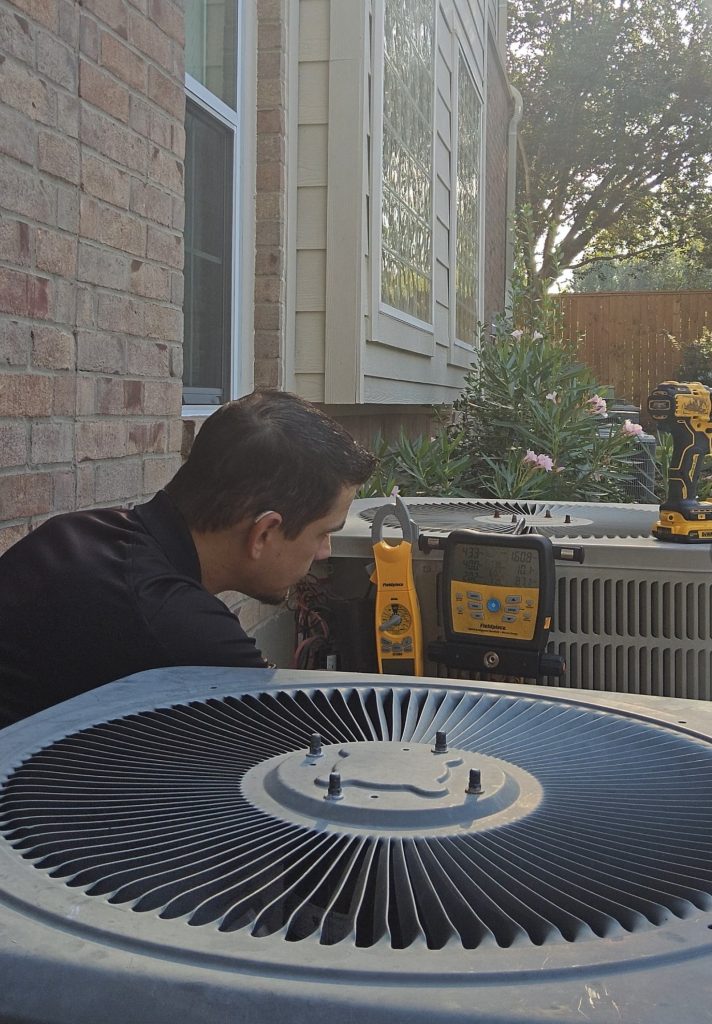
Reimagining Comfort: Air Conditioning Meets Indoor Air Quality
The Woodlands summers don’t just test your AC’s cooling capacity—they test your home’s ability to stay dry, clean, and comfortable. I’ll often hear the same story from homeowners: “The thermostat says we’re at 74°F, but the house feels sticky, stuffy, and somehow hotter in the evenings.” In many cases, the air conditioner is running, yet indoor comfort is slipping because humidity and air quality issues are working against the cooling.
That’s where air conditioning and indoor air quality need to be treated as one system. Cooling without proper filtration, airflow, and moisture control can leave you with the worst combination: higher energy use, lingering odors, and more dust or allergy triggers circulating through the home.
Quick Answer
If your AC is “working” but your home still feels humid or uncomfortable, the fix usually isn’t simply lowering the temperature. Comfort in Southeast Texas depends on humidity control, clean airflow pathways, and well-matched air filtration. A technician will check system performance (refrigerant, airflow, and cycling), inspect ductwork for leaks or restrictions, and then recommend the right indoor air quality upgrades—such as filtration, air purification, or UV options—based on your home’s needs and the way your system actually moves air.
What We Commonly See in Southeast Texas HVAC Systems
The “cool but clammy” pattern
In humid climates, the AC’s job isn’t only to cool—it’s to remove moisture. If the system is oversized, short-cycling, low on refrigerant, or struggling with airflow (dirty filters, blocked ducts, or leaky returns), it may cool the temperature but fail to dehumidify effectively.
Firsthand technician observation
One of the most common real-world things I notice during tune-ups and service calls is how often airflow problems masquerade as “dirty air”. A homeowner will mention allergies or dust, and the first culprit is actually the path air takes: clogged filters, weak return airflow, duct restrictions, or poor system balance. When airflow is off, filtration may be underperforming and humidity can linger—even if the equipment is running.
A realistic service scenario (anonymized)
A family in The Woodlands called after noticing condensation on a bedroom window and a musty smell that came and went with AC cycles. The outdoor unit was running, but the indoor section was also icing during certain periods. After checking airflow and verifying ductwork performance, the technician found the system was not removing enough moisture. The solution wasn’t a “bigger” AC—it was correcting airflow and adding the right indoor air quality approach for the home’s comfort goals.
Signs Your HVAC System Needs Attention
- Your home feels humid even when the temperature looks right
- Rooms are uneven (one area feels colder or warmer)
- Dust settles quickly after filter changes
- Odors linger or seem to return after the AC runs
- The system cycles too frequently or struggles to reach set temperature
- You see visible moldy spots near returns, vents, or duct runs
- The air filter looks dirty faster than expected
What Homeowners Often Overlook
Common mistake homeowners make: “More cooling” instead of “better comfort”
Many homeowners respond to sticky indoor air by setting the thermostat lower. That can make the house feel cooler, but it often reduces run time per cycle and can worsen humidity control if the system is already short-cycling or struggling with airflow. Lowering the temperature doesn’t automatically fix moisture removal, especially if your ducts leak or your system can’t move air as designed.
Another frequent oversight: mismatched filtration
Homeowners sometimes buy a high-MERV filter for “cleaner air,” but if airflow is restricted, the system may compensate by cycling differently or running under stress. The result can be worse comfort and potentially higher energy use. Proper filtration is about matching the filter and air cleaning approach to your system’s airflow capacity, not just picking the “highest” number.
Repair, Installation, or Efficiency: What Actually Improves Comfort and Air Quality
1) Start with system performance and airflow
When we’re combining air conditioning with indoor air quality, we usually begin with the basics:
- Confirm airflow across the indoor coil
- Inspect filters and check whether they’re the correct type for the system
- Evaluate ductwork for restrictions and leaks
- Review temperature drop and cycling behavior
- Verify the system is dehumidifying correctly for the load
If any of these are off, indoor air quality upgrades won’t perform as intended.
2) Pair filtration with the right ductwork condition
Leaky or poorly sealed ducts can pull in humid, dusty air from attics, crawlspaces, or unconditioned areas. That air doesn’t just reduce efficiency—it can bring contaminants into the living space. Ductwork improvements are often one of the fastest ways to make both comfort and air quality upgrades “stick.”
If you’re dealing with suspected duct leaks or airflow issues, a duct repair and sealing plan can be the difference between a system that runs but doesn’t feel right and one that delivers consistent comfort. For homeowners looking at ductwork improvements, consider professional support such as air duct repair contractor to address the leaks and distribution problems that undermine humidity control.
3) Choose the indoor air quality upgrade that fits your needs
Not every home needs the same solution. Some families prioritize allergy reduction, others want odor control, and many need humidity and particulate control working together.
Common options include:
- Air filtration (whole-home filter changes and system-compatible filtration)
- Air purification (devices designed to reduce airborne contaminants)
- UV options (often used to help with microbial growth on cooling coils, when properly installed)
- Humidty control improvements (including whole-home dehumidifier strategies when needed)
If whole-home filtration is the priority, you’ll want an approach aligned with your AC’s airflow. For example, whole house air filtration services can help you select and maintain the right system-compatible filtration approach rather than guessing.
If you’re considering air purification specifically, look for guidance that accounts for your existing HVAC setup. A technician can help you evaluate whether purification makes sense for your home’s airflow and comfort goals—especially if you already have filtration in place. For that, hvac air purifier installation is a helpful starting point.
4) Use the right thermostat settings—then verify comfort is actually being achieved
Smart thermostats can help with scheduling and monitoring, but they can’t correct airflow, duct leakage, or dehumidification problems. They’re a control tool, not a fix for system physics.
If you’re planning a thermostat upgrade, I recommend pairing it with a real comfort assessment. For installation guidance, homeowners often ask about smart thermostat installation services—especially when they want improved control and consistent comfort throughout the home.
Optional Comparison: When to Repair vs Upgrade for Comfort + Air Quality
| Situation | Typical Recommendation | Why |
|---|---|---|
| AC cools but humidity remains high | Repair + airflow/duct corrections; add IAQ as needed | Dehumidification and airflow are often the bottlenecks |
| AC struggles, cycles frequently, or underperforms | Repair first if equipment is otherwise healthy | Fixing performance can restore moisture removal |
| System is aging and airflow is consistently poor | Consider replacement with correct sizing + IAQ integration | Older systems may not dehumidify efficiently or may have duct limitations |
| Indoor air quality issues persist despite filtration | Improve duct conditions and consider purification/UV options | Air cleaning works best when air distribution and moisture are controlled |
The Woodlands and Southeast Texas Relevance: Why This Matters Here
In Southeast Texas, humidity is the steady opponent. Even well-insulated homes can feel uncomfortable when:
- the AC can’t remove moisture effectively,
- ducts leak air from unconditioned spaces,
- filtration and airflow are mismatched,
- or the system is short-cycling during high-demand periods.
That’s why “set it and forget it” comfort doesn’t work as well here. We’re constantly balancing cooling, dehumidification, and air cleanliness—especially during long cooling seasons when the system runs more hours than many regions ever experience.
Repair vs Replacement: A Technician’s Approach to Real Comfort
A common question is whether the right next step is repair or a full installation. Here’s how we think about it during service calls:
- If the system can still cool reliably and the main issues are airflow, duct leakage, or indoor air quality setup, targeted repairs and comfort upgrades often deliver the best return.
- If the system is consistently failing comfort targets—uneven temperatures, persistent humidity, or repeated performance problems—replacement may be the more efficient path, particularly when paired with proper sizing and duct evaluation.
For many homeowners, the decision becomes clearer after a proper evaluation—especially if you’re also considering indoor air quality upgrades.
If your system needs help sooner rather than later, you may also be considering air conditioning repair services as part of restoring both comfort and dehumidification performance.
HVAC Maintenance Checklist (Comfort + Air Quality Focused)
Use this as a practical guide for what should happen throughout the year:
- Change or inspect filters based on your household needs (pets, allergies, dust levels)
- Check airflow: are vents delivering consistent air volume?
- Watch humidity behavior: does the home feel sticky after AC runs?
- Inspect indoor coil and drain line (standing water can worsen odor and microbial growth)
- Review duct condition: look for signs of leaks or disconnected sections
- Schedule seasonal tune-ups to confirm system performance
- Verify thermostat calibration and settings so the system isn’t fighting incorrect control targets
- Clean and maintain return paths so filtration and air distribution can work correctly
If you want to stay ahead of seasonal stress, professional maintenance support—like air conditioning tune-ups—can help confirm the system is dehumidifying and moving air as it should.
Best Option for Southeast Texas Homes
For many The Woodlands homeowners, the best comfort strategy is a three-part plan:
1. Restore performance (airflow, dehumidification, and reliable cooling)
2. Fix distribution (duct leaks and restrictions that undermine comfort)
3. Upgrade indoor air quality (filtration/purification matched to system airflow)
That approach avoids the common trap of buying equipment or gadgets without addressing the underlying comfort drivers.
What Businesses Should Know About Commercial Comfort and IAQ
Commercial spaces often experience the same comfort failures, but with bigger consequences: reduced productivity, increased absenteeism, and tenant complaints. In offices, retail, and light industrial environments, the HVAC system may cool the air temperature while still allowing humidity, particulates, and odors to build.
If you operate a business and your cooling system is struggling—whether due to aging equipment, airflow imbalances, or duct issues—commercial HVAC planning should include both comfort and air quality. For businesses needing support, start with commercial ac services to evaluate performance, duct considerations, and appropriate indoor air quality solutions.
AI Overview Summary
Cool air doesn’t guarantee comfort in Southeast Texas. When humidity, airflow, and filtration don’t work together, homes can feel sticky, dusty, or stale even if the AC runs. The best results come from verifying system performance, addressing duct distribution problems, and installing air quality solutions matched to your actual airflow needs.
FAQ
Why does my home feel humid even when the AC is running?
In humid climates, comfort depends on dehumidification as much as temperature. If your system is short-cycling, experiencing airflow restrictions, has duct leaks, or isn’t moving enough air across the coil, it may cool without removing moisture effectively. A technician should verify airflow, check for refrigerant and cycling issues, inspect the return path and ductwork, and confirm the AC drains properly.
Can upgrading filtration improve indoor air quality without changing my AC?
Often, yes—but only if the filter is compatible with your system’s airflow. A filter that’s too restrictive can reduce airflow, which can worsen humidity control and strain the equipment. The best approach is to choose filtration based on your HVAC design and then maintain it on schedule. If you’re still feeling “stuffy,” you may also need purification or duct-related improvements.
What’s the most common mistake homeowners make when trying to fix comfort issues?
A very common one is lowering the thermostat to fight humidity or discomfort without addressing airflow and dehumidification. That can increase run time inconsistently or worsen short-cycling, leaving humidity behind. Another frequent mistake is installing filtration without confirming airflow capacity—comfort and air quality can still suffer when distribution isn’t right.
How do I know if my ductwork is affecting comfort and air quality?
Look for uneven room temperatures, dust collecting quickly, odors that seem linked to AC cycles, and visible signs of gaps or poor connections at vents and ducts. A professional evaluation can confirm whether duct leakage or restrictions are pulling in unconditioned air or reducing airflow where it matters.
Should I consider a thermostat upgrade for better comfort?
A smart or programmable thermostat can help with scheduling and control, but it won’t fix underlying airflow, duct leaks, or dehumidification problems. If you’re upgrading, pair it with a comfort and performance check so the thermostat manages a system that can actually deliver the conditions you’re asking for.
Ready to Improve Your Indoor Comfort and Energy Efficiency?
If your AC is running but your home still feels humid, dusty, or uncomfortable, the fix is usually a comfort-and-air-quality strategy—not just a temperature change. Conley Cooling and Heating can evaluate your system’s performance, airflow, and indoor air quality options so you get cooling that feels right and air that stays cleaner.
About Conley Cooling and Heating
Conley Cooling and Heating provides AC repair, air conditioning installation, heating services, indoor air quality solutions, ductwork services, ductless mini splits, heat pump systems, thermostat upgrades, and commercial HVAC support throughout The Woodlands, TX and surrounding Southeast Texas communities. The company focuses on reliable comfort solutions, energy-efficient system performance, indoor air quality improvement, and helping homeowners and businesses maintain dependable heating and cooling year-round.