
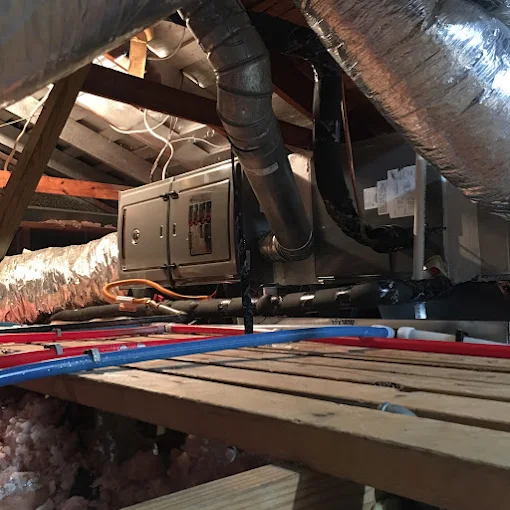
Heating Installation Comfort Calculations for Every Room
The first cold snap after a long stretch of summer can catch homeowners in The Woodlands off guard—especially when the heating system “works,” but the house doesn’t feel comfortable. You might notice the living room is warm while bedrooms stay cool, or you feel drafts near supply vents and cold spots around exterior walls. In many cases, the issue isn’t that the furnace can’t produce heat—it’s that the installation calculations didn’t match the building and the airflow realities of each room.
Comfort problems like these matter because Southeast Texas homes spend a lot of time dealing with humidity, leaky ductwork, and uneven pressure—factors that don’t disappear when the weather turns mild. A heating system should deliver stable temperature and consistent airflow, not just “heat somewhere.”
Quick Answer
A proper heating installation starts with room-by-room load calculations (heat loss), then pairs that with real airflow design (duct sizing, static pressure, and register placement). If the system is oversized, undersized, or the ductwork isn’t balanced, you can get uneven temperatures, short cycling, and higher energy bills.
For reliable comfort, choose an installation approach that includes:
- Accurate heat loss calculations for each room
- Proper equipment sizing (not “rule of thumb”)
- Ductwork verification (leaks, sizing, and airflow balance)
- Thermostat and control setup that matches how the home actually behaves
What We Commonly See in Southeast Texas HVAC Systems
During heating season, we often hear variations of the same complaint: “The furnace kicks on, but some rooms never feel right.” Here’s what that usually looks like during a technician’s on-site assessment:
- Cool bedrooms over garage or exterior walls: Those rooms often have higher heat loss due to insulation gaps, more window area, or duct runs that lose heat before air reaches the room.
- Hot living areas with cold corners: This points to airflow imbalance—either duct sizing, register balancing, or supply return problems.
- Furnace short cycling: The system may be “heating the air” too quickly without delivering it where it’s needed, or airflow is restricted (dirty filter, blocked return, duct restrictions).
- Condensation or musty smells near vents: In humid climates, poor airflow and duct leakage can create moisture issues that affect comfort and indoor air quality, even when the house is not “cold.”
A firsthand technician observation
One of the most revealing things we do during heating installs is check supply airflow at multiple rooms while the system runs. If the living room is receiving strong airflow but a hallway or bedroom barely moves air, the heat loss calculation may be correct on paper—but the distribution design isn’t. That mismatch is where comfort complaints usually originate.
What Homeowners Often Overlook
Many comfort problems come from assumptions that seem harmless:
1) “If the furnace is new, the comfort should be automatic.”
New equipment doesn’t fix duct leakage, incorrect airflow paths, or room-specific heat loss. A furnace can be properly sized and still fail to feel “right” if the air can’t reach the right places consistently.
2) Oversizing to “make it warmer faster”
Oversized systems can heat quickly, but they may not run long enough to remove humidity properly or deliver stable temperatures. The result is a thermostat that “sees” comfort while other rooms remain cool—or the system cycles too often.
3) Ignoring returns and pressure balance
Returns matter as much as supplies. If a return is undersized or located poorly, the furnace can push air into some areas while pulling from others inefficiently, creating pressure imbalances that show up as drafts and uneven temperatures.
Common Mistakes That Increase Energy Costs
Here are the installation mistakes we see most frequently when homeowners switch from “good enough” to “fully comfortable”:
- Using generic sizing estimates instead of room-by-room heat loss
- Skipping ductwork verification (leaks, crushed sections, undersized runs)
- Failing to measure system static pressure and match the blower to the duct system
- Not addressing airflow restrictions like clogged filters, blocked returns, or closed dampers
- Thermostat setup that doesn’t match the home’s zoning or airflow behavior
If you’re planning a new home project or replacing an aging furnace, these are the details that separate “it runs” from “it feels right.”
Repair, Installation, or Efficiency: The Comfort Calculation Checklist
A professional heating installation should treat your home like a system of rooms, not a single temperature target. Here’s a practical checklist we use to keep comfort consistent:
Room-by-room heat loss (the foundation)
- Exterior wall type and insulation quality
- Window size, orientation, and efficiency
- Ceiling height and attic conditions
- Floor type (slab vs. crawlspace vs. over garage)
- Air infiltration (drafts, gaps, and pressure effects)
Equipment sizing (so it matches the load)
- Confirm the heating capacity is appropriate for the whole home and the room distribution needs
- Account for how the furnace will cycle based on airflow and thermostat operation
Ductwork design and verification (where comfort is won or lost)
- Duct sealing and leak checks when needed
- Supply/return placement verification
- Airflow balance to match the room loads
- Register sizing and adjustment for proper distribution
If your home’s ductwork has known issues, it’s worth addressing them early. For example, if you’re considering residential air duct installation, the goal should be airflow paths that match the calculated loads, not ducts that simply “fit.”
Thermostat and control alignment
A thermostat can’t fix a bad distribution plan, but it can improve comfort when paired with correct airflow. Many homes benefit from proper setup or upgrades, especially if you’re trying to manage comfort across multiple areas. If you’re exploring smart thermostat installation services, we recommend confirming the system’s airflow and cycling behavior first so the thermostat settings reflect real comfort.
Optional Comparison: “Same Furnace, Different Comfort” (Why It Happens)
| Scenario | What’s installed | What often happens | Comfort result |
|---|---|---|---|
| Furnace replaced, ducts not checked | Same duct system | Airflow imbalance remains | Some rooms never fully warm |
| Furnace replaced, duct sizing verified | Ductwork measured and balanced | System delivers heat where needed | More even temperatures |
| Furnace sized correctly, returns improved | Better pressure balance | Fewer drafts, steadier cycles | Comfort improves across rooms |
| Furnace + controls matched | Proper thermostat setup | Better cycling and recovery | Comfort stabilizes without waste |
This is why “comfort calculations” are more than math—they guide the whole design.
The Woodlands / Southeast Texas Relevance: Why Loads and Airflow Both Matter Here
In Southeast Texas, the heating season may be shorter, but indoor humidity and airflow behavior still play a big role. We commonly see homes where:
- duct leakage lets conditioned air escape into attics or crawlspaces,
- humidity can concentrate where air movement is weak,
- and pressure differences influence how air moves through rooms.
So even if temperatures aren’t extreme, comfort can still feel inconsistent. When we design heating installations here, we’re thinking about how the home holds heat, how air travels, and how duct performance affects both comfort and energy use.
If you’re dealing with uneven room temperatures, it’s also worth considering that duct leakage and distribution problems can show up as heating discomfort long before they become an obvious “failure.” Addressing ductwork early can help prevent repeated repairs and reduce wasted runtime.
When ductwork needs attention, we often recommend starting with duct repair services or sealing work as part of the installation plan (when appropriate for your layout and system).
Best Option for Southeast Texas Homes: A Realistic Service Case
Here’s an anonymized example that mirrors what we see frequently:
A homeowner replaced an aging furnace because the old unit couldn’t keep up on cold mornings. The new furnace was installed and ran properly, but the hallway and two bedrooms stayed noticeably cooler than the thermostat setting in the living area. The system didn’t “fail”—it just didn’t distribute heat the way the home needed.
During the follow-up visit, we found:
- one return path was pulling from a less efficient area than intended,
- a supply run had long duct length with poor airflow,
- and register positions weren’t balanced to match room loads.
After correcting airflow balance and addressing the duct distribution constraints, the home’s temperatures became steadier and the furnace cycled less often. The homeowner didn’t need a different furnace model—they needed a comfort-centered installation plan.
Signs Your HVAC System Needs Attention
Even before a full replacement, you may have installation or distribution issues if you notice:
- rooms that stay cool despite frequent heating cycles
- recurring temperature swings within a single day
- drafts at vents or near exterior walls
- furnace short cycling or unusual burner behavior
- rising bills with no clear comfort improvement
If any of these are happening, it’s worth a professional inspection before you assume the equipment is the only problem.
What Businesses Should Know About Heating Installations
Commercial comfort complaints often start as “temperature issues,” but they’re usually tied to air distribution, control zoning, and ductwork performance. If a rooftop unit or packaged system is underperforming, the solution isn’t always swapping components.
Common business scenarios include:
- uneven heating in offices vs. warehouse space,
- comfort complaints during morning startup,
- or staff reporting “drafts” near air outlets.
A proper approach includes verifying airflow pathways, return adequacy, and control strategy—especially in buildings with high airflow demand variation throughout the day.
If your installation is commercial and involves system planning, you may also want to consider partnering design work early in the process so equipment size, ductwork, and controls align from day one.
HVAC Maintenance Checklist
Whether you’re installing a new furnace or keeping one running, these steps protect comfort and efficiency:
- Replace filters on schedule (and confirm the right filter size and airflow rating)
- Inspect and clean burners and heat exchanger components (as recommended)
- Check blower operation and verify airflow matches design targets
- Inspect ductwork for visible leaks or loose connections
- Test thermostat operation and confirm it isn’t fighting the system
- Schedule a seasonal inspection before peak demand periods
If you’re preparing for the heating season and want a maintenance plan that supports system reliability, consider seasonal heating maintenance services to catch issues early.
Quick Repair vs. Replacement Guidance
Sometimes the right move is repair; sometimes comfort requires a redesigned approach. Here’s a practical way to think about it:
Repair makes sense when:
- the furnace is relatively new or has failed components that are easy to correct
- airflow problems stem from filters, returns, or minor duct issues
- the installation is mostly sound but needs balancing or control adjustments
Replacement is often the better path when:
- the equipment is near end-of-life and cycling excessively
- heat output is consistently inadequate across multiple rooms
- ductwork problems require major rework and the system design no longer matches the home
If your system is older and you suspect distribution issues, we recommend starting with a comfort assessment before making assumptions. In some cases, an installation upgrade (equipment plus airflow design) gives better long-term value than repeated repairs.
Ready to Improve Your Indoor Comfort and Energy Efficiency?
If your heating system runs but rooms still feel uneven, don’t guess. Ask for a comfort-focused installation plan that includes room-by-room heat loss thinking, verified airflow, and ductwork review—so the system delivers heat where you actually need it.
About Conley Cooling and Heating
Conley Cooling and Heating provides AC repair, air conditioning installation, heating services, indoor air quality solutions, ductwork services, ductless mini splits, heat pump systems, thermostat upgrades, and commercial HVAC support throughout The Woodlands, TX and surrounding Southeast Texas communities. The company focuses on reliable comfort solutions, energy-efficient system performance, indoor air quality improvement, and helping homeowners and businesses maintain dependable heating and cooling year-round.