
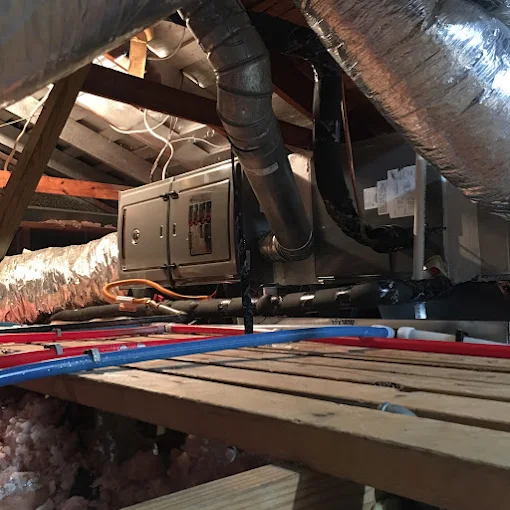
Duct Installation for Consistent Temperatures Everywhere
If some rooms in your The Woodlands, TX home feel stuffy while others run cold, the ductwork often has more to do with it than the thermostat. This guide walks you through what to check, what to avoid, and how to plan duct installation for balanced airflow you can feel.
One of the most common homeowner complaints we hear around The Woodlands is simple: “Our AC works, but the temperatures never match from room to room.” You might close vents in one area, crank the thermostat, or add fans, but the imbalance keeps coming back.
Often the issue is not just the air conditioner. It is the duct installation itself: routing, sizing, sealing, and how the system balances airflow. In this guide, you will learn how ductwork affects comfort, what questions to ask before work begins, and how to spot duct problems early so you do not end up paying twice.
Quick Answer
If you want consistent temperatures, duct installation has to be planned and built for balanced airflow, not just “run some duct and connect it.” Start by confirming the system design (airflow path and supply/return balance), then focus on sealed connections, proper duct sizing, and correct insulation for comfort. If you are seeing hot or cold rooms, ask about ductwork diagnosis before replacing parts. A professional duct installation should also be coordinated with your HVAC equipment and airflow needs so the system can distribute air evenly across the home.
What to Check First
Before you commit to new duct installation, check for the most common reasons comfort feels uneven. These quick checks help you avoid unnecessary work and point you toward the right ductwork solution.
Room-to-room temperature clues
Note which areas run hot or cold, and whether it changes when the system cycles. Persistent imbalance often points to duct sizing, routing, or airflow restrictions.
Airflow at registers
Compare airflow across rooms. A register that barely moves air usually means the duct system is not delivering enough volume to that area.
Return path matters
Supply air and return air must work together. If returns are undersized or poorly routed, rooms can feel uncomfortable even with strong supply airflow.
If your home has existing ductwork that is damaged, poorly sealed, or difficult to balance, you may also need duct repair or related indoor air quality improvements. For duct-focused options, explore duct installation services and duct repair services.
Professional observation: Uneven temperatures are often “air distribution” problems. The fastest way to reduce callbacks is to verify that the duct layout, sealing, and airflow balance match the home’s actual needs, not just the equipment size.
Main Things Customers Should Understand
Duct installation affects comfort, humidity control, and how efficiently your cooling and heating system can deliver conditioned air. Here are the biggest factors that influence consistent temperatures throughout the house.
1) Duct sizing and airflow balance
Even if your air conditioner or heat pump is sized correctly, ducts that are too small, too large, or poorly routed can limit airflow where it is needed most. Balanced airflow helps each room receive the airflow it requires to reach and maintain the thermostat setting.
2) Sealed duct connections
Leaky seams and joints can bleed air before it reaches the living space. That can cause rooms to feel under-conditioned and force the system to run longer to compensate.
3) Correct insulation where it matters
In areas where ducts run through spaces that are not fully conditioned, insulation helps protect the temperature of the air traveling through the duct system. Inconsistent insulation can create “hot air loss” during cooling and “heat loss” during heating.
4) Supply and return design
Supply ducts deliver conditioned air. Return ducts bring air back to the system. When return paths are constrained or unbalanced, pressure differences can disrupt airflow and make some rooms feel drafty, stale, or difficult to regulate.
5) Coordination with your thermostat and controls
Thermostat placement and settings can expose ductwork issues. If your thermostat is satisfied while a distant room is still uncomfortable, you may notice cycling patterns that feel confusing. If you are also considering control upgrades, review thermostat installation services.
Practical recommendation: If the goal is consistent temperatures “everywhere,” treat duct installation and system setup as one project. Ask how your ductwork plan will be matched to the indoor unit and how airflow will be verified after installation.
Representative scenario: new ducts after a comfort complaint
A Woodlands homeowner noticed that the upstairs bedrooms stayed warm during the day while the downstairs living area felt comfortable. The AC never “failed,” but the temperature differences persisted. After a duct-focused inspection of routing, connections, and airflow delivery, the plan included updated duct installation to correct distribution and improve the home’s supply and return balance. Once airflow was balanced, the thermostat cycles matched the comfort pattern much more closely.
Why This Matters in The Woodlands, TX
The Woodlands homes often experience long cooling seasons and humidity swings, which can make uneven airflow feel worse. When ductwork delivers less air to one area, that room may also struggle to maintain comfort because the system cannot remove heat and humidity as effectively.
During hot, humid stretches, duct leaks and poor insulation can also increase strain on the cooling system. The result is not only temperature differences, but also inconsistent humidity comfort. That is why duct installation should be paired with the right airflow design for your home, especially if you are upgrading or adding conditioned space.
| What you notice | Likely duct-related cause | What to consider next |
|---|---|---|
| Hot or cold rooms that do not change much with thermostat adjustments | Airflow distribution issues from duct sizing, routing, or supply/return imbalance | Discuss duct installation changes to improve balance and delivery |
| Rooms feel uncomfortable and stale even when supply air seems present | Return path restrictions or uneven return airflow | Ask about supply/return layout improvements as part of the duct plan |
| System runs longer than expected for the same thermostat setting | Leaky connections or ducts with poor insulation | Have ductwork assessed for sealing and insulation needs before replacing equipment |
| Temperature issues plus indoor air quality concerns | Airflow problems that can impact how filtration and purification perform | Review indoor air quality options like air filtration system installation alongside duct improvements |
Ready to make temperatures match room to room?
Tell Conley Cooling and Heating about where comfort breaks down in your The Woodlands home. We can help you understand whether duct installation is the right path and how it should connect with your HVAC system.
Contact Conley Cooling and HeatingCommon Mistakes to Avoid
Most duct installation problems are preventable. Here are common mistakes customers run into when ductwork is designed or installed without a full comfort plan.
- Replacing equipment without fixing airflow: A new air conditioner or heat pump will still struggle if duct distribution is off.
- Choosing a duct route based on convenience only: Routing affects pressure, airflow resistance, and how evenly air reaches each room.
- Overlooking return air: Good supply airflow does not solve comfort issues if returns are undersized, blocked, or poorly placed.
- Ignoring sealing and connection quality: Leaks at joints can quietly reduce delivered airflow and increase system runtime.
- Skipping insulation considerations: Ducts that pass through non-conditioned spaces can lose conditioned air, creating temperature swings.
- Assuming vents alone will fix the problem: Vents can help adjust room delivery, but they cannot correct major sizing or distribution problems.
Customer Checklist
- Identify which rooms are consistently hot or cold and when it happens (day vs. night, upstairs vs. downstairs).
- Ask how the duct layout will be designed to improve supply and return balance for your home.
- Confirm how duct connections will be sealed and how workmanship will be verified after installation.
- Discuss insulation needs for any ducts that run through unconditioned or partially conditioned spaces.
- Make sure the duct plan is coordinated with your HVAC equipment so airflow targets match the system.
- Check thermostat placement and settings, especially if comfort still seems uneven after duct changes.
- Request a clear explanation of what will be different after duct installation and how comfort should improve.
Frequently Asked Questions
How do I know if my problem is ductwork or my AC unit?
In many homes, the AC unit “works” but comfort still feels uneven because duct airflow is not balanced. Clues include room-to-room temperature differences that persist regardless of small thermostat changes, weak airflow at certain registers, and issues that correlate with supply or return placement. A duct-focused inspection can help determine whether airflow distribution, sealing, or insulation is the main driver. If ductwork is the bottleneck, duct installation or duct repair is often the more direct fix.
What should I ask about during duct installation planning?
Ask how the duct layout will be designed to deliver air evenly across your home, including supply and return paths. You can also ask how connections will be sealed, how duct insulation will be handled for ducts running through less-conditioned spaces, and how airflow balance will be verified after work. If your goal is consistent temperatures everywhere, make sure the plan is coordinated with your HVAC equipment and that the contractor can explain what changes will improve comfort.
Can duct sealing alone fix uneven temperatures?
Sometimes. If leaks and poor connections are the primary issue, sealing can improve delivered airflow and reduce temperature differences. However, uneven temperatures can also come from duct sizing, routing, or return airflow problems. That is why it helps to diagnose the cause instead of assuming. If certain rooms consistently struggle, it may point to distribution or return constraints that sealing alone cannot fully correct.
Does duct installation affect indoor air quality?
Yes, indirectly. When airflow is balanced and the system delivers air where it should, filtration and purification can work more effectively in the rooms you occupy. If you are noticing comfort issues plus concerns like dust, odors, or humidity discomfort, consider pairing duct improvements with an air filtration strategy. Conley Cooling and Heating offers indoor air quality solutions such as air purification system installation and related services that can complement duct installation.
Should I upgrade my thermostat at the same time?
A thermostat upgrade can help, especially if you want more precise control or better monitoring. But thermostat changes should not be used to “mask” duct problems. If ducts are delivering uneven airflow, the thermostat may satisfy one area while another still feels uncomfortable. It is often best to address duct distribution first, then confirm controls are set up to match your comfort goals. If you want to discuss options, you can review thermostat installation services.
Get a duct installation plan built for your The Woodlands home
If you are ready to address uneven temperatures the right way, Conley Cooling and Heating can help you evaluate your ductwork needs and next steps. Call to talk through what you are experiencing in your home.
(936) 444-4534