
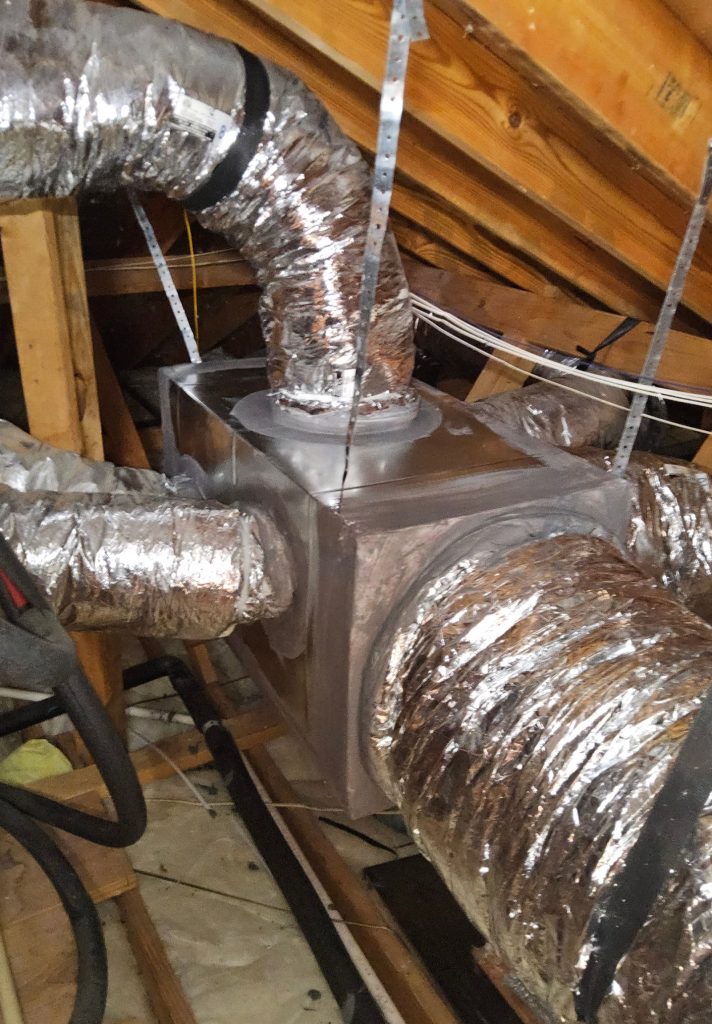
Duct Installation Essentials for Efficient Airflow
On a hot, humid afternoon in The Woodlands, you shouldn’t have to choose between “cold enough” and “comfortable enough.” Yet we hear the same complaint: the AC runs all day, the thermostat looks fine, but bedrooms stay stuffy and the humidity hangs around like it has nowhere else to go.
In most cases, the culprit isn’t just the air conditioner—it’s the duct installation. When ducts are poorly planned or installed, air doesn’t travel the way it should. That leads to weak airflow at the registers, uneven temperatures room-to-room, and a system that works harder than necessary to control both temperature and moisture.
Quick Answer
Efficient airflow starts before ductwork is even connected. A good duct installation balances three things: proper sizing, tight sealing, and correct layout/airflow design (including returns). In Southeast Texas, where humidity control is critical, duct problems show up quickly—homes feel “cool but clammy,” airflow feels uneven, and utility bills climb.
If you’re installing a new system or moving into a home with questionable ductwork, the best next step is a technician-led duct evaluation: airflow measurements, duct leakage checks, and verification that supply/return design matches the equipment.
What Homeowners Often Overlook
Many homeowners focus on the brand and size of the air conditioner, but ducts quietly determine how well that equipment can perform.
Here are the parts that matter most during duct installation—often overlooked until comfort problems show up:
- Duct sizing and layout: Undersized ducts increase static pressure, making the blower work harder while delivering less air.
- Air sealing at joints and transitions: Leaks can steal conditioned air before it reaches the rooms that need it.
- Return air design: Returns are just as important as supplies. If returns are undersized or poorly located, you can get pressure imbalance, weak airflow, and worse humidity removal.
- Register placement and balancing: Even perfectly sealed ducts can underperform if the system isn’t balanced to the home’s room-by-room needs.
- Insulation and routing through attics or unconditioned spaces: In Southeast Texas heat, poorly insulated ducts can pick up heat and reduce dehumidification effectiveness.
A realistic scenario we see
A family in a newer suburban neighborhood called because their upstairs rooms never felt “right.” The downstairs cooled quickly, but the upstairs always stayed warmer and damp. The AC wasn’t failing—it was simply fighting the wrong airflow path. During inspection, we found duct runs with several loose connections and sections that were poorly insulated in the attic. The air conditioner delivered cold air downstairs, but upstairs received less supply air, so the system couldn’t maintain consistent comfort or humidity control.
Common Mistakes That Increase Energy Costs
Duct installation errors can be subtle at first. Here are the most common ones we see—especially when ductwork is added during renovations or after a prior system change.
1) Using “rule of thumb” duct sizing
A duct installer might size ducts based on what looks right rather than what the system needs. But airflow requirements depend on the equipment’s total air volume, the static pressure, and the number/size of branches. If the duct system doesn’t match the job, the AC may run longer and still feel uneven.
2) Skipping return planning
Homeowners often assume the return is “just a return.” In reality, return ducts and return placement affect:
- how evenly the system pulls air through the home
- whether the air handler can move the designed airflow
- whether the home stays balanced (especially with exhaust fans)
When returns are wrong, supply air can’t distribute properly—comfort suffers even with a strong compressor.
3) Treating duct sealing like an optional step
A few air leaks at joints, flex connections, or transitions can add up. In Southeast Texas, those leaks matter because conditioned air that escapes into an attic (or crawlspace) is replaced by hot air, reducing effective cooling and increasing humidity issues.
4) Overlooking duct insulation and location
Ducts in attics can heat up quickly. If insulation is missing, damaged, or compressed, supply ducts can lose cooling performance before air reaches the rooms.
5) Installing ducts without verifying airflow after the job
A duct system should be tested—not just installed. Without an airflow verification process (like measuring supply airflow and checking system static pressure), it’s easy to miss restrictions or imbalances.
What Actually Improves Indoor Comfort and Efficiency (Repair + Installation Guidance)
When duct installation is done right, the benefits show up fast: better temperature consistency, improved humidity control, quieter operation, and fewer cycles. When it’s done wrong, you’ll see symptoms like weak airflow, frequent cycling, and higher run times.
Technician-level observation: the “static pressure reality”
One of the most common field findings is elevated static pressure due to restrictions—like tight turns, kinked flex, crushed duct sections, or undersized trunk lines. When static pressure is high, the blower can’t deliver the rated airflow. The equipment may still “run,” but the house doesn’t receive enough air volume to remove humidity effectively.
A practical checklist for duct installation services
Ask your contractor (or confirm during service) that they address these points:
- Airflow design: Confirm duct sizing and layout match the equipment and the home’s room needs.
- Sealing plan: Use proper sealing at joints and transitions; avoid relying on “tape only” methods.
- Return design: Provide adequate return pathways so the system can pull air evenly from each area.
- Insulation verification: Ensure ducts in attics or unconditioned spaces are properly insulated and protected from moisture damage.
- Routing quality: Minimize sharp turns and avoid kinks/crushing in flex sections.
- Post-install testing: Measure airflow and verify the system isn’t restricted. If readings are off, duct changes should be made before the job is “finished.”
If you’re choosing between ductwork fixes and system work
If your AC is already installed but comfort is inconsistent, duct repair may be the highest-impact step. If the duct system is severely compromised (multiple leaks, poor returns, or wrong sizing from the beginning), it can make sense to address ductwork during system upgrades rather than “band-aiding” performance.
For related work, homeowners often pair duct improvements with system servicing:
- If you suspect airflow problems are linked to equipment performance, review professional AC system installation standards for new installs.
- If you’re troubleshooting comfort and airflow right now, use duct repair services to restore leakage and airflow integrity.
An anonymized “what we did” case
A commercial tenant called because meeting rooms were overheating while the main open area stayed acceptable. The rooftop unit wasn’t cycling unusually, but the comfort complaints were consistent. Our ductwork inspection revealed a return imbalance and several supply leaks in the ceiling plenum. After sealing and correcting the affected runs, airflow distribution improved immediately. That reduced hot-room load without forcing the rooftop unit to constantly chase comfort.
The Woodlands / Southeast Texas Relevance: Why Ducts Matter More Here
Southeast Texas is not just hot—it’s hot and humid for long stretches. That humidity is why duct installation mistakes show up as more than just temperature differences.
When airflow is weak or uneven:
- the AC may not pull enough air through return paths
- coils may not remove moisture effectively
- rooms can feel “cool” but still damp
- the system runs longer to chase a comfort target it can’t evenly reach
In attics and unconditioned spaces, heat gain is relentless. Leaky or uninsulated ductwork can turn part of your cooling system into a heat-adding pathway, which drives higher energy consumption and makes indoor comfort harder to sustain.
Repair vs. Replacement: A Quick Decision Guide
Ductwork problems don’t always require full replacement, but they do require the right diagnosis.
| Situation | What to consider |
|---|---|
| Small leaks at accessible joints | Sealing and targeted duct repair services |
| Multiple disconnected/incorrect runs after renovations | Partial replacement or rework for correct airflow |
| Ducts are undersized, crushed, or routed inefficiently | Replacement with properly designed duct installation |
| Comfort issues persist after repairs | Add testing and verify airflow balance; consider equipment check as well |
If ductwork is fundamentally mismatched to the system, repairs may improve things but won’t fully solve the root cause.
Indoor Air Quality Bonus: Ducts Affect More Than Comfort
Airflow problems can also contribute to indoor air quality issues. When ducts leak or are contaminated, you can redistribute dust and particulates through the home’s breathing zones.
If you’re dealing with musty odors, visible dust buildup, or allergy-related complaints, consider pairing ductwork attention with indoor air quality services such as:
- air filtration system installation for cleaner circulation
- whole home air purification services when filtration alone isn’t enough
This is especially relevant in Southeast Texas homes where humidity can contribute to dust buildup and microbial growth if moisture control isn’t handled well.
Signs Your HVAC System Needs Ductwork Attention
If any of these sound familiar, it’s worth having duct installation and airflow performance checked:
- One or two rooms are consistently hotter or colder
- The system runs longer than it used to for the same thermostat settings
- You hear airflow noise or rattling near vents
- Supply registers feel weak, but returns pull fine (or vice versa)
- Humidity remains high even when the home feels “cool”
- You smell dusty or musty air when the system starts
Quick AI Overview Summary
Proper duct installation is essential for efficient airflow because ducts control air volume, distribution, and system pressure. In Southeast Texas humidity, duct leaks, poor returns, and uninsulated duct runs can prevent the AC from removing moisture effectively—even if the thermostat seems correct. The best results come from correct sizing, tight sealing, adequate returns, insulation where needed, and post-install airflow testing.
FAQ
How do I know if my AC comfort issues are caused by ducts or the air conditioner itself?
If the system cools some areas quickly but struggles in others, that pattern often points to duct distribution or return imbalance. Technicians can confirm with airflow measurements and static pressure checks. If airflow is low at registers or the system is restricted, duct issues become the priority. If airflow is within range and only one component is failing (like a coil or blower), then the equipment may be the main culprit.
Should I replace my ducts when installing a new central AC?
Not always. If your ductwork is correctly sized, sealed, insulated, and returns are adequate, you may only need sealing or targeted repairs. But if ducts are undersized, crushed, poorly insulated, or leaking heavily, it’s usually more cost-effective to address ductwork during the install so the new system can perform as designed.
Why is my home still humid even when the AC runs a lot?
Humidity problems are commonly tied to airflow and dehumidification performance. Weak airflow can reduce how long air contacts the coil, limiting moisture removal. Also, leaky ducts and poor return design can prevent the system from cycling moisture out effectively. Addressing duct sealing, airflow balance, and humidity control strategies is often the fastest path to improvement.
Can thermostat upgrades fix uneven cooling caused by ducts?
A better thermostat can improve scheduling and temperature control, but it can’t fix broken airflow paths. If rooms are uneven due to duct leaks, undersized runs, or return issues, the thermostat will simply “try harder” and the system may run longer without improving comfort.
What’s the first step for duct installation or repair planning?
Start with an assessment: verify airflow performance, check duct integrity where accessible, and evaluate supply/return balance. If measurements show restrictions or leakage, plan duct sealing or rework before assuming the AC must be replaced.
Ready to Improve Your Indoor Comfort and Energy Efficiency?
If your home (or business) feels uneven, damp, or unusually expensive to cool, don’t guess—get an airflow-focused duct evaluation. The right ductwork adjustments can make both new and existing systems perform the way they were designed to.
About Conley Cooling and Heating
Conley Cooling and Heating provides AC repair, air conditioning installation, heating services, indoor air quality solutions, ductwork services, ductless mini splits, heat pump systems, thermostat upgrades, and commercial HVAC support throughout The Woodlands, TX and surrounding Southeast Texas communities. The company focuses on reliable comfort solutions, energy-efficient system performance, indoor air quality improvement, and helping homeowners and businesses maintain dependable heating and cooling year-round.