
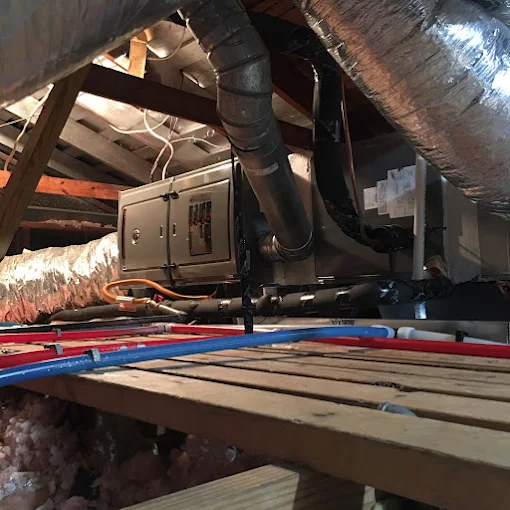
If your Woodlands home feels dusty, unevenly cooled, or harder to keep comfortable, the problem often starts with how air is delivered. This guide explains how duct installation and air conditioning work together for cleaner ventilation, better airflow, and healthier indoor air in The Woodlands, TX and surrounding areas.
You swap filters, keep the vents clear, and still notice the air feels “off.” Maybe one room runs warmer, another smells musty, or dust seems to settle faster than you expect.
When ducts are poorly installed or poorly matched to the system, airflow can become uneven and the air path can pull in contaminants. The result is ventilation that never quite feels fresh, even when the air conditioner is running.
Below, you’ll learn what to check first, which duct and system details matter most, and how to avoid common installation mistakes that can affect comfort and indoor air quality in The Woodlands.
Quick Answer
Cleaner ventilation usually depends on both the air conditioner and the duct system working correctly together. During duct installation, focus on proper sizing, straight and sealed duct runs, correct register placement, and matching the duct layout to the equipment’s airflow needs. If your system is blowing from leaky or poorly designed ducts, contaminants can be pulled in and comfort can stay uneven. A practical next step is to ask for a duct installation plan that includes airflow considerations and sealing details, then pair it with appropriate indoor air quality options like filtration or humidity control.
What to Check First
Before you assume the air conditioner itself is the only issue, check the air delivery path. These items tend to reveal whether duct installation details are affecting ventilation and cleanliness:
Airflow balance
Do some rooms feel consistently warmer or cooler? Uneven airflow often points to duct sizing, duct layout, or register balancing issues.
Duct leakage and sealing
Leaky connections can waste cooling and pull contaminants into the system, especially when pressure differences occur.
Filter and air cleaning fit
Even with new ductwork, the right filter strategy matters. If filtration is mismatched, dust can circulate more than you’d expect.
If you’re planning a new system, it’s also worth pairing duct work decisions with the right cooling setup. For example, if you’re considering equipment upgrades, see duct installation services and review how ductwork should integrate with your air conditioning plan.
Main Things Customers Should Understand
Duct installation and air conditioning performance are tightly linked. Here are the details that typically make the biggest difference in cleaner ventilation and day-to-day comfort.
Professional observation: Cleaner ventilation is not just about “more airflow.” It’s about controlled airflow through properly sealed ducts that are designed to deliver air where you need it, with filtration and humidity control that match your home.
1) Correct duct sizing and layout
Duct sizing affects velocity, sound, and how air is distributed. Undersized ducts can restrict airflow and make the system work harder. Oversized ducts can reduce velocity, leading to weaker delivery and inconsistent comfort.
2) Sealing at every connection
Connections, joints, and transitions are the most common places where leaks happen. When ducts are sealed properly, you reduce wasted air and limit the pathway for dust or other contaminants to enter the system.
3) Register placement and balance
Even well-built ducts can underperform if registers are placed without regard to the room’s airflow needs. Balancing helps keep temperature differences smaller, which also helps the system run more steadily.
4) Pairing duct work with the right cooling equipment
If you’re installing or upgrading cooling, ductwork should be planned alongside the air conditioner. If you’re comparing system options, you may also want to explore air conditioning installation services so the equipment and airflow design are aligned.
5) Indoor air quality features that work with ducts
“Cleaner ventilation” often means addressing what the air carries. Depending on your needs, indoor air quality solutions such as filtration and humidity control can reduce how much dust and moisture remain in the air stream. Explore options like air filtration and humidity control services.
| Home symptom | Likely duct-related focus | Helpful next step |
|---|---|---|
| Dust seems to return quickly | Connection sealing, airflow control, and filtration fit | Review duct sealing and pair duct installation with a filtration plan |
| Hot or cold spots across rooms | Duct sizing and register balancing | Ask for airflow distribution considerations during duct installation |
| Musty smell when the system runs | Moisture management and the air path integrity | Discuss humidity control and indoor air quality options |
| Airflow feels weak in certain areas | Duct routing and pressure effects | Confirm duct layout and ensure the system is matched to the duct design |
Why This Matters in The Woodlands, TX
The Woodlands homes often deal with humidity swings and long cooling seasons. When ducts are leaky or poorly matched to airflow demands, the system can pull in outside particulates and moisture-laden air through unintended pathways. That can show up as a “stale” feel indoors, more dust buildup on surfaces, or rooms that never fully settle into comfort.
A thoughtful duct installation process helps keep air moving where it should, with sealing and air distribution that support stable cooling. Pairing that with indoor air quality solutions like filtration and humidity control is a practical way to support cleaner ventilation throughout the year.
Plan duct installation that supports cleaner ventilation
If you’re preparing for duct work or a cooling system upgrade in The Woodlands, Conley Cooling and Heating can help you consider how the duct layout, airflow, and indoor air quality needs fit together.
Contact Conley Cooling and HeatingCommon Mistakes to Avoid
Many ventilation issues are blamed on “the air conditioner,” but duct installation details are often the root cause. Here are common mistakes homeowners run into:
- Choosing ductwork without considering airflow distribution. The best duct plan accounts for room-by-room delivery, not just total square footage.
- Skipping sealing at joints and transitions. Leaks can reduce cooling efficiency and add an unintended pathway for contaminants.
- Assuming all registers are interchangeable. Register placement and balancing affect how evenly air reaches each space.
- Upgrading cooling without reviewing duct condition. If the duct system is already compromised, the new equipment can still feel “underpowered” in certain rooms.
- Neglecting indoor air quality needs after duct installation. Cleaner ventilation usually requires both good duct performance and an appropriate air cleaning approach.
Representative scenario: A Woodlands home with uneven cooling
A homeowner in The Woodlands noticed that the front bedrooms stayed warmer even when the thermostat was set the same as the rest of the house. Filters were changed regularly, but dust still built up quickly near the return area.
During review, the duct layout and connection integrity became key focus points. The team addressed duct installation details that affected airflow delivery and worked with indoor air quality considerations to support cleaner ventilation. After the improvements, the home felt more consistent room-to-room, with less “stale” air when the system cycled.
Customer Checklist
Use this checklist to prepare questions and make sure duct installation supports cleaner ventilation from day one.
- Confirm the duct sizing approach matches the cooling equipment’s airflow needs.
- Ask how connections and joints will be sealed and how the installer will protect the system during work.
- Review duct routing and register placement for your room layout, especially bedrooms and living areas.
- Discuss filtration and indoor air quality options that fit your goals for cleaner ventilation.
- Plan for humidity management if moisture is part of the comfort problem.
- Request a clear walkthrough of what was changed in the duct system and how airflow will be balanced.
Frequently Asked Questions
How does duct installation affect air quality?
Duct installation affects air quality because it controls the path air takes through your home. When ducts are installed with proper routing, sealing, and airflow balance, the system is less likely to pull in unwanted dust or create conditions where contaminants spread through the air stream. Even with a clean filter schedule, duct integrity and air distribution play a role in how consistently the system delivers clean, conditioned air to each room.
Should I repair ducts or replace them during an air conditioning upgrade?
The right choice depends on the duct condition and how it impacts airflow. If ductwork has leaks, poor distribution, or damage that affects airflow, repair may not fully solve the comfort and ventilation issues. If you’re moving toward a new air conditioning system, it’s helpful to review duct work alongside equipment needs so the overall setup supports even cooling and cleaner ventilation.
What indoor air quality options work best with new ductwork?
Many homeowners see the best results when duct performance is paired with indoor air quality solutions like air filtration and humidity control. Filtration helps manage dust and airborne particles that circulate through the system, while humidity control can improve comfort and reduce moisture-related issues that can affect how “fresh” the air feels. Your priorities and home conditions in The Woodlands should guide which options make the most sense.
Can duct issues cause uneven room temperatures?
Yes. Uneven temperatures commonly relate to duct sizing, airflow balance, and register placement. If some ducts deliver less air or the distribution is off, rooms can lag behind or overshoot comfort levels. Correcting duct installation details can help the air conditioner deliver more evenly across your home, which often makes temperature control feel more stable.
Do duct problems require air conditioning repair first?
Not always. If the cooling system is operating but the home still feels uneven or dusty, the duct system may be the limiting factor. It can be smart to evaluate both the air conditioner and ductwork together so you don’t spend time troubleshooting the equipment when the real issue is airflow delivery or sealing. For cooling system troubleshooting, you can also review air conditioning repair services.
Ready for duct installation that supports cleaner ventilation?
Conley Cooling and Heating serves The Woodlands, TX and surrounding areas. If you want to improve airflow balance, reduce duct-related issues, and support cleaner indoor air, call today.
(936) 444-4534