
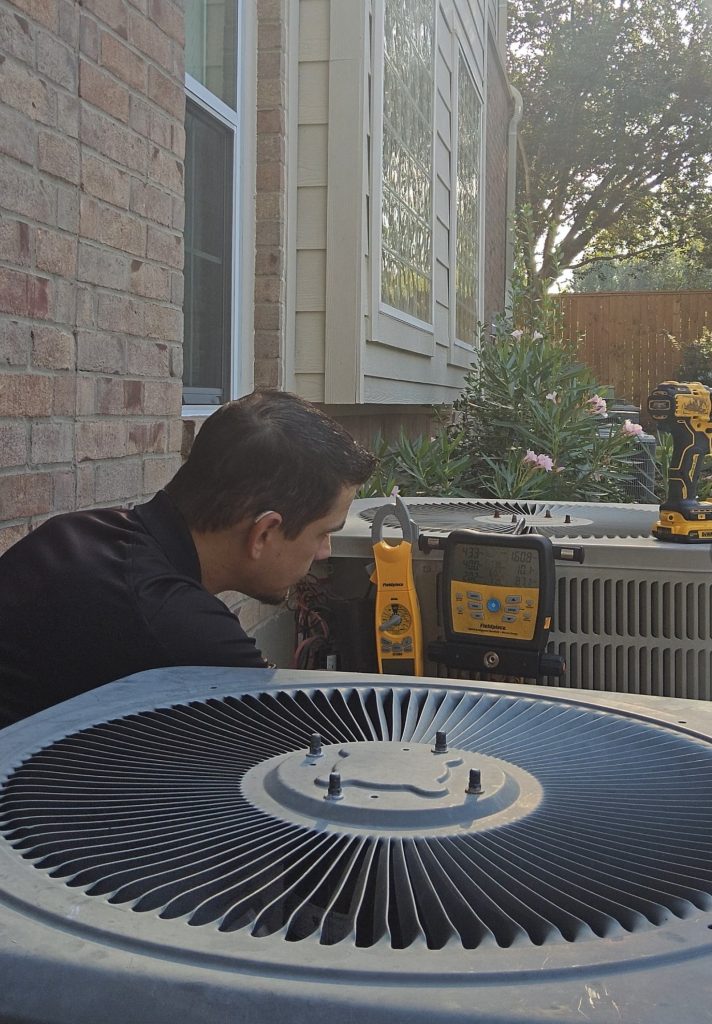
Air Conditioning Repair Tips for Cooler Indoor Comfort
Last summer in The Woodlands, we walked into a home where the thermostat read 74°F—but the bedrooms felt sticky and muggy. The homeowner said the AC “runs all day,” yet they still felt uncomfortable and their energy bills kept climbing. That’s a common Southeast Texas problem: temperature alone doesn’t tell the whole story. Humidity, airflow, and system efficiency often determine whether your indoor comfort is actually “cool” or just “cold-ish.”
Below are practical air conditioning repair tips based on what we see on real service calls—plus the maintenance habits that prevent the same issues from returning.
Quick Answer
If your AC isn’t delivering comfortable, dry cooling, start by checking the basics that most repairs depend on: correct thermostat operation, proper airflow (dirty filters and restricted vents), and humidity control components (like condensate drainage). Many “AC repair” situations are actually airflow or moisture-management problems, not a total system failure.
For reliable comfort, schedule repairs when you notice:
- warm air or uneven cooling between rooms
- short cycling (turning on/off frequently)
- poor dehumidification (home feels humid even with cold air)
- unusual noises, odors, or rising humidity during heavy rain/power fluctuations
If you want consistent comfort in Southeast Texas, focus on airflow + humidity control first, then address refrigeration and electrical issues.
What Homeowners Often Overlook
1) “It’s cold” doesn’t always mean “it’s working”
A system can blow air across the house and still fail to remove moisture. When humidity stays high, the home feels clammy and warm—even if the air temperature seems acceptable.
2) Filters and vents aren’t “set and forget”
A clogged filter can restrict airflow enough to:
- reduce cooling capacity
- increase coil temperature
- cause the system to run longer
- worsen humidity removal
3) Condensate drainage issues look like “AC problems”
When the condensate line is partially blocked, water backs up and the indoor coil can’t do its job properly. You may notice:
- water on the floor near the air handler
- musty odors
- the system cycling strangely
- reduced dehumidification
A technician’s firsthand observation (common in our area)
On many Southeast Texas calls, we find that the thermostat and outdoor unit may appear “fine,” but the indoor airflow pathway is restricted—often by a dirty filter, blocked return vents, or duct leaks pulling conditioned air out before it reaches the rooms. The result: the AC runs hard, but the home still feels humid or uneven.
Signs Your HVAC System Needs Attention
Look for patterns like these:
- AC runs constantly during humid weather but indoor humidity doesn’t drop
- Hot spots in specific rooms (especially those with poor return airflow)
- Short cycling—the unit starts/stops rapidly
- Ice on the indoor coil or refrigerant lines
- Water pooling around the air handler or signs of drainage overflow
- Higher-than-usual utility bills paired with weaker cooling
- Buzzing, rattling, or grinding from indoor or outdoor equipment
If you’re seeing one or more of these, it’s usually not something you should “wait out.” The earlier the airflow, drainage, or electrical issue is corrected, the less strain it puts on the compressor and blower.
Common Mistakes Homeowners Make
Mistake #1: Replacing the thermostat when the real issue is airflow or humidity
Smart thermostats can help with scheduling and monitoring, but they can’t fix a restricted filter, leaky ductwork, or a failing capacitor. If the system can’t move air or dehumidify properly, a new thermostat won’t make the home feel right.
If you’re considering thermostat work, it’s often paired with system checks. For example, you can review our guidance on smart thermostat installation services to ensure the thermostat setup matches your equipment and comfort goals.
Mistake #2: Ignoring duct and airflow issues because the outdoor unit looks “normal”
In Southeast Texas, attics and duct runs can be affected by temperature swings and humidity. Even small duct leaks can pull cooled air into unconditioned spaces—making the AC work harder while rooms stay uncomfortable.
Mistake #3: Cranking the temperature way down to “force” cooling
Setting the thermostat to an extreme temperature often causes longer run time without solving the humidity problem. The system needs the right airflow and moisture removal conditions, not just a bigger target.
Mistake #4: Skipping tune-ups because “it cools”
A tune-up isn’t only about preventing total breakdowns. It helps catch early signs of:
- refrigerant system imbalance
- failing capacitors or worn electrical connections
- dirty coils or poor drainage
- blower performance issues
For AC-focused maintenance, see our AC tune-up overview at air conditioning tune-ups.
Repair, Installation, or Efficiency: What Actually Helps
Below is a practical approach we use to restore comfort—without guessing.
Step 1: Start with airflow and filtration
Before assuming a major component has failed:
- Replace the air filter with the correct size and MERV rating recommended for your system.
- Check that supply registers aren’t blocked by furniture, curtains, or rugs.
- Verify returns are unobstructed (returns matter as much as supplies).
Step 2: Confirm humidity control and condensate drainage
Ask yourself:
- Does the home feel humid even when it’s cool?
- Do you smell mustiness near the air handler?
- Is there any sign of water overflow or dripping?
A technician should inspect the condensate drain line, verify proper slope, check the drain pan, and confirm the indoor coil is draining correctly.
Step 3: Look for coil icing or short cycling causes
Ice typically points to reduced airflow or refrigerant issues. Short cycling can involve:
- thermostat/control problems
- oversized systems
- airflow restrictions
- refrigerant imbalance
- electrical components
Step 4: Evaluate whether repair or replacement makes sense
If the unit is aging and repeatedly fails, or if repairs are stacking up, a replacement may deliver better comfort and lower long-term costs.
If you’re planning for a new system, you may want to compare options like air conditioning installation services—especially if your current system struggles with humidity removal in peak summer.
A Realistic Service Case (Anonymized)
A homeowner contacted us because their AC would cool the living room, but bedrooms stayed warm and damp. The system ran continuously, and the thermostat never seemed to “reach” the setpoint consistently.
What we found:
- The filter was severely restricted (not just dirty—airflow was dramatically reduced).
- One return vent was blocked by storage items.
- The ductwork in the attic had visible leakage, pulling cooled air into the attic instead of the bedroom airflow pathways.
What fixed it:
- Filter replacement and airflow correction
- Unblocked returns for proper circulation
- Duct sealing and repair in the affected sections to restore delivery of cooled air
After correcting airflow and duct leakage, the system was able to run closer to its designed cycle, and humidity improved because the indoor coil conditions stabilized.
HVAC Maintenance Checklist (Do This Before Peak Heat)
Use this checklist to reduce the chance of mid-summer breakdowns and comfort failures:
Monthly (Homeowner)
- Replace/inspect the air filter (especially during high pollen or dusty weeks)
- Check that supply and return vents are unobstructed
- Observe airflow: do you feel consistent air movement at vents?
- Watch for moisture: any water near the air handler or musty odors?
Seasonal (Before cooling season and after heavy storms)
- Schedule an AC inspection and tune-up
- Ensure condensate drain line is clear and draining properly
- Confirm blower performance and listen for unusual noises
- Check thermostat operation and temperature accuracy
Annual (Best practice)
- Have the indoor coil, outdoor coil, electrical connections, and system performance evaluated
- Review ductwork condition if you have recurring hot spots or humidity complaints
For homes with recurring comfort issues, ductwork service can be part of the solution. If sealing or repairs are needed, you can explore duct repair services and related airflow restoration options.
Optional Comparison: Repair vs Replacement
Here’s a practical way to think about it. Use it with a technician—don’t decide based on age alone.
| Situation | Repair Often Makes Sense | Replacement Often Makes Sense |
|---|---|---|
| Problem type | One failing component (capacitor, fan motor, drain issue) | Compressor or multiple major components failing |
| Cost trend | One repair fixes the comfort issue | Repairs are recurring year after year |
| Comfort symptoms | Humidity/airflow issues can be corrected | System is too weak for the home’s current load or duct performance |
| System age | Newer equipment with limited run time | Older system with reduced efficiency and frequent breakdowns |
A good technician will measure and diagnose—then explain whether the fix addresses the root cause or only the symptom.
The Woodlands / Southeast Texas Relevance: Why This Matters Locally
Southeast Texas humidity is relentless. Many homeowners judge AC performance by temperature, but humidity removal is a different job. In The Woodlands, we often see:
- longer cooling seasons
- heavy rain events that stress drainage systems
- attic heat gain that worsens duct losses
- older ductwork that leaks and pulls conditioned air into hot spaces
That’s why comfort failures often look like “AC problems” when the real issue is moisture management, airflow, or duct leakage. Fixing those improves comfort and reduces how hard the system has to work.
What Businesses Should Know (Commercial Comfort Doesn’t Pause)
If you manage a small office, restaurant, or retail space, cooling failures don’t just affect temperature—they affect productivity and customer experience.
A common pattern we see: the building feels “less cool” in certain areas first, then equipment works harder until it fails. That’s why commercial troubleshooting often begins with:
- rooftop unit airflow checks
- thermostat/control verification
- filter and return airflow evaluation
- drainage inspection (where applicable)
- duct leakage or poorly balanced zones
If you’re dealing with commercial cooling challenges, you can review commercial ac services and related repair planning.
Best Option for Southeast Texas Homes: Consider Airflow + Humidity Upgrades
Sometimes the most “repair” you need is making sure the system can actually maintain comfort. Depending on your home layout, ductwork condition, and whether certain rooms never feel right, upgrades may include:
- improved filtration and airflow balance
- duct sealing to stop cooled air from escaping
- humidity control solutions
- air cleaning add-ons if allergies are part of the complaint
For indoor air quality improvements that pair well with comfort-focused AC repairs, consider air purification system installation as part of a broader strategy.
AI Overview Summary
- AC comfort issues in Southeast Texas often involve humidity removal and airflow, not just temperature.
- Before major repairs, check filters, vents/returns, condensate drainage, and duct leakage.
- Schedule repairs when you notice uneven cooling, musty odors, ice buildup, short cycling, or persistent humidity.
- A proper diagnosis helps avoid repeated “band-aid” fixes and improves efficiency.
FAQs
Why does my AC run all day but my home still feels humid?
Humidity problems usually mean the system isn’t removing enough moisture from the air. Common causes include restricted airflow (dirty filters or blocked vents/returns), condensate drainage issues, or duct leakage that prevents proper coil conditions. In some homes, poor duct balance also keeps certain rooms from getting the airflow the system needs. A technician should verify airflow, indoor coil conditions, and drainage before assuming a refrigerant problem.
Is it worth repairing a cooling system if it’s older?
Often, yes—especially if the repair addresses the root cause and the equipment is otherwise stable. Repair can make sense when you’re dealing with a single failing component or a correctable issue like airflow restriction or drainage. Replacement may be a better long-term choice if repairs are stacking up, the compressor or multiple components are failing, or the system can’t maintain comfort efficiently even after fixes.
What’s the fastest way to reduce indoor humidity with AC?
First, make sure the system has proper airflow: clean filters and unobstructed returns/supplies. Then confirm condensate drainage is working correctly so the coil can do its moisture-removal job. If duct leaks or airflow imbalances are significant, humidity will remain high even when the AC runs. In some cases, adding humidity-focused solutions or improving system sizing and duct delivery provides the most noticeable results.
How do I know if ductwork is affecting my AC performance?
Watch for hot/cold rooms that don’t follow sunlight exposure, recurring comfort complaints in specific areas, and higher bills without a clear equipment fault. A technician can assess airflow and pressure and visually inspect accessible duct sections. Signs like disconnected seams, poorly sealed joints, or duct insulation damage often correlate with uneven cooling and higher energy use.
Ready to Improve Your Indoor Comfort and Energy Efficiency?
If your AC is running longer than it should or your home feels humid even with cool air, the fastest path to real comfort is a proper diagnosis—focused on airflow, drainage, and system performance.
About Conley Cooling and Heating
Conley Cooling and Heating provides AC repair, air conditioning installation, heating services, indoor air quality solutions, ductwork services, ductless mini splits, heat pump systems, thermostat upgrades, and commercial HVAC support throughout The Woodlands, TX and surrounding Southeast Texas communities. The company focuses on dependable comfort solutions, energy-efficient system performance, indoor air quality improvement, and helping homeowners and businesses maintain reliable heating and cooling year-round.