
Duct Installation Insulation Benefits for All Seasons
The first thing most homeowners notice in The Woodlands isn’t always the temperature—it’s the feeling. A room might be “cool” on the thermostat, but it still feels clammy, stuffy, or uneven compared to the rest of the house. In homes with older ductwork (or ducts installed in unconditioned spaces), we often find the culprit isn’t the air conditioner itself—it’s the way the duct system is installed and insulated.
When ducts aren’t insulated properly—or when duct runs are poorly planned—air loses temperature on the way to the rooms and moisture can condense where it shouldn’t. In Southeast Texas, where humidity is persistent, that combination can create comfort problems all year: cooling that feels weak, heating that takes too long, and indoor air quality issues that show up as dust, odors, or allergy flare-ups.
Quick Answer
Insulating ductwork during duct installation helps in four big ways:
- Energy efficiency: Less heat gain in summer and less heat loss in winter means your system works less to maintain comfort.
- Humidity control: Proper insulation reduces the chance of condensation inside ducts.
- Airflow consistency: Well-installed ducts with sealed joints help deliver the right amount of air to each room.
- Indoor air quality: Cleaner, drier ducts reduce the conditions that allow dust and microbial growth.
If you’re upgrading, replacing, or adding ductwork, insulation should be treated as part of the installation quality—not an afterthought.
What We Commonly See in Southeast Texas HVAC Systems
In the field around The Woodlands and the broader Southeast Texas area, there are a few recurring duct installation issues:
1) Ducts in hot attics and vented crawlspaces
Attics can run extremely hot for long stretches. If duct insulation is missing, thin, or damaged, supply air warms up before it reaches the living spaces. The result is that the AC may run longer, yet rooms still feel uneven.
2) Condensation inside poorly insulated ducts
When humid outdoor air infiltrates spaces (through leaks, pressure imbalances, or poorly sealed transitions), cold duct surfaces can cause moisture to form. Over time, that moisture can contribute to musty odors and increase dust sticking to surfaces.
3) Air leaks at connections and seams
Even with good insulation, leaky duct joints waste conditioned air. In many homes, we see “cooling” that’s really just air escaping before it arrives—forcing the system to compensate.
A technician observation we rely on
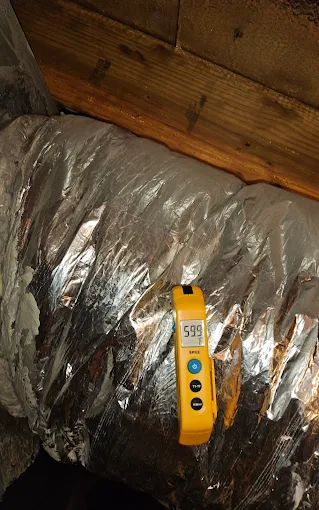
One of the clearest signs we look for is temperature separation along duct runs: if one section is noticeably colder/hotter than adjacent sections, insulation may be compromised or the duct may not be installed tightly. We’ll also inspect for gaps at elbows, transitions, and boot connections—those are frequent leak points.
What Homeowners Often Overlook
Most people focus on the AC unit or furnace. But ducts are the “delivery system,” and insulation is what keeps that delivery efficient and dry.
Here are the most common oversights we see:
- “The ducts are in the attic, so insulation doesn’t matter.” It matters a lot in Southeast Texas.
- Thin insulation that looks “fine” but doesn’t match the duct size and airflow conditions. Comfort suffers even if the insulation is present.
- Insulation installed after the fact without addressing sealing. If joints aren’t sealed first, insulation can’t fully solve the problem.
- Ignoring duct layout for long runs. A longer route increases losses; insulation helps, but design choices matter too.
Common Mistakes That Increase Energy Costs
Common mistake homeowners make: insulating without fixing airflow leaks
A lot of duct insulation projects fail because they treat insulation like the only variable. If the duct system has leaky joints, the AC air escapes into the attic or wall cavities. The homeowner still feels “hot spots,” but the root cause is delivery loss—not just heat transfer.
What this looks like in real life:
- The thermostat shows a target temp was met, but the house never feels evenly comfortable.
- The AC runs for long cycles and humidity stays high.
- Utility bills jump after ductwork is disturbed (renovation, add-on rooms, or partial replacements).
Other installation errors to watch for
- Compression or gaps in insulation: Insulation should fit snugly; crushed sections reduce effectiveness.
- Missing insulation at transitions: Boots, collars, and transitions often get skipped.
- Wrong insulation type for the duct location: Some materials and thicknesses perform better depending on whether the duct is exposed to heat, moisture, or mechanical damage.
Repair, Installation, or Efficiency: What Actually Improves Indoor Comfort
When duct installation insulation is done correctly, you’ll feel it in day-to-day comfort—especially with Southeast Texas humidity swings.
Here’s what “good duct insulation” should accomplish:
1) Prevent temperature swings in supply air
- In summer: Insulation slows heat gain, so supply air stays cooler longer.
- In winter: Insulation reduces heat loss, so warm air reaches rooms closer to target temperature.
2) Reduce condensation risk
Proper insulation helps keep duct surfaces from dropping to dew-point conditions. That’s a big deal where humidity is high and indoor-outdoor pressure differences can drive moisture-laden air into concealed spaces.
3) Keep the duct system stable under airflow changes
When ducts are sealed and insulated, airflow is more predictable. That improves comfort balance—fewer rooms that are consistently too warm or too cool.
A realistic anonymized example
We recently inspected a home where the homeowner said, “The AC is new, but the bedrooms never feel right.” The system had been serviced recently, and filters were replaced, but the ductwork included several long attic runs with incomplete insulation coverage at elbows and transitions. There were also small gaps at a few supply boots. After insulation was repaired and joints were properly sealed, the homeowner reported:
- bedrooms cooled faster,
- fewer “humidity” complaints,
- and a noticeable reduction in how often the system ran at the highest setting.
That’s the difference between treating the equipment and treating the distribution system.
Where insulation ties into other upgrades
If you’re already improving comfort, duct installation quality pairs well with:
- air filtration improvements to help with dust and allergens
- air purification options for odor and particle control
- humidity control strategies if your home stays damp even when it feels cool
If your ducts are being updated, it’s also a great time to review whole-home indoor air quality options like air filtration system improvements or whole home air purification services.
You can explore related services here:
- duct installation services
- duct repair services
- whole house air filtration services
HVAC Maintenance Checklist (Ducts + Comfort)
Even the best insulation can’t compensate for poor maintenance. Use this checklist to keep comfort steady through summer and winter:
- Replace or clean filters on schedule (and use the right filter type for your system).
- Inspect visible duct sections for gaps, torn insulation, or disconnected seams.
- Check supply registers and returns for unusual airflow (weak flow or whistling often indicates duct issues).
- Keep indoor humidity under control—especially during rainy weeks and high dew-point stretches.
- Schedule seasonal HVAC service so airflow measurements, refrigerant performance, and system settings are verified.
- Consider duct sealing support if you notice persistent hot/cold rooms.
For broader comfort system upkeep, you may also want to review tune-up and repair planning:
- air conditioning tune-ups
- seasonal heating maintenance services
Quick Comparison: Insulation vs. Sealing (Why Both Matter)
| Problem you see | Likely issue | Best fix |
|---|---|---|
| Hot rooms, weak airflow | Leaks or poor duct sizing/layout | Seal joints + confirm airflow balance |
| Condensation/musty smell | Cold duct surfaces + moisture pathways | Repair insulation + address leakage/infiltration |
| High utility bills, long run times | Heat gain/loss through duct surfaces | Restore insulation to correct coverage/thickness |
| Dust buildup near vents | Leaks pulling in dust or dirty duct surfaces | Seal + consider duct cleaning/fogging only when appropriate |
Best Option for Southeast Texas Homes: Insulated, Sealed Ductwork
In Southeast Texas, the “all seasons” part is real. Summer discomfort isn’t just temperature—it’s humidity. Winter discomfort isn’t just warmth—it’s how quickly rooms reach and maintain temperature when duct losses occur.
That’s why we recommend thinking about duct installation insulation as part of a year-round comfort strategy. If you’re building new construction ductwork or updating an existing system, the best outcomes come from:
- correct insulation coverage for the duct’s location,
- proper sealing at joints and transitions,
- and airflow that matches the equipment’s design.
If you’re also dealing with humidity and comfort complaints, it may be worth discussing indoor humidity control solutions with your contractor. You can learn more here:
- humidity control solutions
Signs Your HVAC System Needs Attention
If any of these sound familiar, it’s a good time to have ductwork and insulation evaluated (not just the thermostat settings):
- One or two rooms are always noticeably warmer or colder.
- The AC runs a lot during humid weather, but the home still feels damp.
- You hear rattling or airflow noises near registers.
- There’s visible insulation damage in accessible areas.
- Dust seems to “appear” faster than expected.
Repair vs Replacement
Sometimes insulation and sealing repairs are enough. But if ductwork is severely deteriorated, disconnected, or repeatedly leaking, replacing sections—or the duct system—may be the more cost-effective comfort solution. A technician can usually identify this by checking duct integrity, airflow performance, and the extent of moisture risk.
What Businesses Should Know About Commercial Comfort
If you manage offices, warehouses, or light industrial spaces, duct insulation issues show up differently: productivity complaints, uneven zones, and “mystery” comfort issues that don’t correlate to the thermostat.
For commercial systems, rooftop units and long duct runs can be especially sensitive to heat gain and airflow loss. Addressing insulation and duct sealing can reduce temperature swings and improve consistency across work areas. If you’re evaluating commercial HVAC downtime risks or system performance, you may also want to review commercial AC support options:
- commercial air conditioning installation
- commercial heating services
Ready to Improve Your Indoor Comfort and Energy Efficiency?
If you’re planning duct installation, replacing existing ductwork, or trying to fix persistent comfort issues, start with the distribution system. Insulation and sealing are often the difference between “the system runs” and “the system works.”
About Conley Cooling and Heating
Conley Cooling and Heating provides AC repair, air conditioning installation, heating services, indoor air quality solutions, ductwork services, ductless mini splits, heat pump systems, thermostat upgrades, and commercial HVAC support throughout The Woodlands, TX and surrounding Southeast Texas communities. The company focuses on reliable comfort solutions, energy-efficient system performance, indoor air quality improvement, and helping homeowners and businesses maintain dependable heating and cooling year-round.