
Air Conditioning Maintenance Checklist for Summer Relief
It’s 2:00 p.m. in The Woodlands and your thermostat says the house is “cool,” but the air feels sticky anyway. That’s a common Southeast Texas problem: the AC may be running, yet humidity isn’t being controlled well—so rooms feel clammy, allergies flare up, and your utility bill climbs faster than your comfort does.
In my day-to-day work, I’ll often hear something like, “The system is blowing cold, so it must be fine.” Then we check airflow, check the drain line, inspect the coil, and measure temperature drop across the indoor unit. The equipment is cooling—but it’s not removing moisture the way it should.
This checklist is designed to help you catch the most common summer performance issues before they turn into breakdowns.
Quick Answer
Use this summer AC maintenance checklist to protect comfort and efficiency:
- Replace/clean filters (and verify proper airflow)
- Inspect outdoor unit airflow and coil cleanliness
- Check condensate drain line and signs of pan overflow
- Confirm thermostat settings and sensor placement
- Test airflow balance (registers free, vents not blocked)
- Verify safe electrical operation and refrigerant-related symptoms (not DIY recharging)
- Pair AC maintenance with indoor air quality upgrades when humidity or allergies are recurring
If you notice warm air at one room, strong humidity, frequent cycling, or water leaks, schedule service before the next heat spike.
What Homeowners Often Overlook
Most summer AC issues don’t start with a dramatic failure. They start with “small” problems that quietly rob comfort:
- Filters that are overdue: Even a few weeks can reduce airflow enough to freeze the coil or make the system short-cycle.
- Outdoor units blocked by landscaping or debris: In humid climates, airflow restrictions also trap heat around the condenser.
- Condensate drain problems: A clogged line can cause overflow or pull moisture back into the air path.
- Thermostat placement: If the thermostat is in direct sun, near a heat source, or blocked by curtains, it can “lie” about actual comfort.
- Duct issues that aren’t visible: Leaks and poor sealing can make the AC work harder while delivering less dehumidified air.
The Field-Test Insight We Use (So You Don’t Guess)
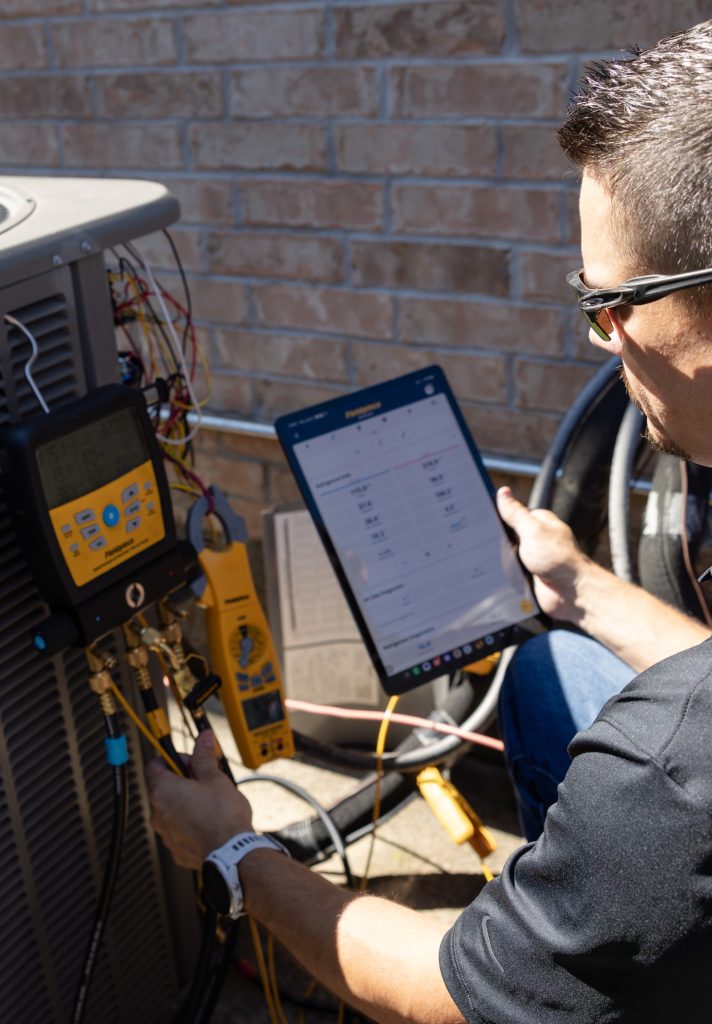
One technician observation I’ve seen repeatedly: systems that “run a lot” often still perform poorly when airflow is restricted—dirty filters, blocked returns, closed dampers, or duct leakage. When airflow drops, the indoor coil temperature can fall below normal, and the system may cycle off to protect itself. The result is a home that never fully dries out.
During seasonal tune-ups, we typically confirm:
- the filter condition and whether the indoor blower is moving adequate air
- coil cleanliness and airflow restriction
- drain line condition (and whether condensate is actually leaving the system properly)
- temperature split across the indoor coil and the refrigerant circuit symptoms we can safely evaluate
That’s why this checklist focuses heavily on airflow, moisture removal, and thermostat accuracy—not just “is it cold?”
Common Mistakes Homeowners Make
1) Waiting for total failure
A lot of AC breakdowns in summer are preceded by warning signs: rising humidity, weaker airflow, odd odors, or frequent cycling. If you ignore those, the system often fails when the demand is highest.
2) Changing the thermostat but not the problem
A thermostat can improve comfort only when the system can move air and remove moisture. If the coil is dirty or the filter is choking airflow, thermostat changes won’t fix the root cause.
3) Overlooking ductwork leaks
You can have a perfectly maintained unit and still lose comfort if conditioned air is leaking into attics, crawlspaces, or walls. In hot, humid climates, leaks also allow moisture-laden air to mix back into the living space.
4) DIY “recharges” or refrigerant work
Refrigerant systems require proper diagnostics and leak testing. Adding refrigerant without finding the cause can damage the compressor and create a recurring failure.
5) Blocking returns and registers
Closed doors and blocked vents may feel like “comfort control,” but they can disrupt airflow and humidity removal.
HVAC Maintenance Checklist
Use this as a home or light-commercial checklist. If anything looks off, it’s usually better to schedule service before the next heat wave.
A. Easy checks you can do today
- Check the filter
- Look for heavy dust, discoloration, or a visibly clogged surface.
- If it’s dirty, replace it.
- Verify airflow
- Ensure returns are not blocked by furniture, rugs, or curtains.
- Confirm supply vents aren’t obstructed.
- Check thermostat operation
- Make sure it’s set for cooling (and not accidentally set to “fan only”).
- Confirm it isn’t mounted where it receives direct sun or heat from appliances.
- Inspect the outdoor unit area
- Clear leaves, grass clippings, and debris around the condenser.
- Make sure nothing is restricting airflow on the intake or discharge sides.
B. Moisture and drainage checks (critical in Southeast Texas)
- Look for water around the indoor unit
- If you see moisture, note where it collects.
- Listen/observe during cooling
- A system with drainage issues may gurgle, smell musty, or show signs of overflow.
- Check the condensate drain line
- If you’ve had recurring clogs, consider professional drain maintenance rather than repeating temporary fixes.
C. System performance checks (what to watch for)
- Short cycling
- If the AC turns on and off quickly, airflow or control issues may be involved.
- Warm air in some rooms
- That often points to duct leakage, airflow imbalance, or a blower/coil issue.
- Uneven comfort
- One side of the home feels humid while another is drier—often airflow distribution or duct sealing needs attention.
D. What to leave to a technician
- Refrigerant diagnostics, leak testing, and charging
- Electrical testing beyond basic observation
- Coil cleaning procedures that require safe access and correct handling
- Duct sealing inside inaccessible areas
If you’re planning a seasonal service, you can also ask about tune-up options. For example, you might want to confirm your system is properly set up with the right airflow and control settings during air conditioning tune-ups.
Repair, Installation, and Efficiency Recommendations
When “maintenance” isn’t enough
If your system is older, constantly running, or can’t maintain humidity control, you may be past what a simple tune-up can solve. A good technician will evaluate:
- compressor condition (symptoms and safe diagnostics)
- coil condition and airflow reality
- ductwork impact on delivered comfort
- whether the system is sized correctly for the home’s heat load and humidity profile
A realistic service case (anonymized)
We once serviced a Southeast Texas home where the homeowner said, “The AC is new, but the upstairs never feels dry.” The outdoor unit ran often, but upstairs remained humid. After checking airflow and verifying indoor performance, we found the system couldn’t distribute air effectively to the upstairs due to duct leakage and poor sealing at connections. We also addressed the return airflow path. After duct sealing and correcting airflow balance, the system’s humidity performance improved—without replacing the entire unit.
If you’re considering a new system
If you’re shopping for cooling upgrades, reputable installation practices matter as much as the equipment itself. Poor airflow setup, incorrect refrigerant practices, or ignoring duct performance can lead to chronic humidity issues. If you’re exploring air conditioning installation services, ask how they’ll verify airflow, duct condition considerations, and proper system setup—not just “swap and go.”
Ductless option for complex layouts
Some homes in our area have additions, garages, or rooms that never behave like the rest of the house. In those cases, ductless can be a comfort-focused solution—especially when you want multi-zone control. If ductless is on your radar, review ductless mini split installation options and ask about multi-zone strategies for consistent comfort.
Thermostat upgrades (useful, but not a magic wand)
If you want better control and smarter scheduling, thermostat placement and configuration are key. For homeowners who want remote control and more accurate comfort logic, consider smart thermostat installation company. But remember: if airflow or humidity control is failing, a smart thermostat will only make the problem happen more predictably.
The Woodlands / Southeast Texas Relevance: Why Humidity Changes Everything
In Southeast Texas, summer comfort isn’t just temperature—it’s moisture. Warm, humid outdoor air plus daily heat load means the AC has to remove moisture effectively to keep indoor surfaces comfortable and reduce musty odors.
Here’s what we see locally:
- systems can satisfy temperature setpoints while indoor humidity remains high
- duct leakage can pull humidity back into the home
- condensate drains can clog faster during peak use due to dirt and biological growth
- oversized or poorly matched systems may cool quickly but struggle to dehumidify
That’s why a “summer relief” plan should include humidity control awareness, not just basic cooling performance.
Best Option for Southeast Texas Homes: Add Airflow + Moisture Checks to Every Tune-Up
If you want one practical improvement beyond the basics, make sure your maintenance includes verification of airflow and moisture removal. If your indoor air quality is also part of the problem—like allergies, persistent odors, or dryness/irritation—ask about filtration and whole-home air purification approaches.
If you’re evaluating upgrades, you can start by exploring air filtration system installation and matching the filtration level to your system’s airflow capacity. Over-restricting airflow with the wrong filter or setup can worsen humidity control.
Signs Your HVAC System Needs Attention
If you’re seeing any of these, don’t wait for the next breakdown:
- AC runs constantly but humidity stays high
- strong musty odor when the system starts
- water pooling near the indoor unit or on the ceiling below
- ice on the indoor coil or unusually cold supply air
- rooms that never match the rest of the house
- unusual noises: rattling, grinding, persistent humming
Quick Repair vs Replacement Reality Check
| Situation | Usually what we recommend |
|---|---|
| Humidity issues + airflow problems + manageable equipment age | Tune-up + airflow/duct/controls corrections |
| Repeated refrigerant-related symptoms or major component failures | Repair first if diagnostics show a clear fix; otherwise evaluate replacement |
| System can’t maintain comfort after proper maintenance | Replacement may be the most cost-effective long-term comfort move |
| Comfort complaints driven by duct problems | Ductwork repair/sealing + airflow balancing before replacing equipment |
A professional diagnosis should separate “unit issues” from “delivery issues.” Often, the fix is less expensive than homeowners expect because the system isn’t actually failing—it’s being prevented from doing its job.
Optional FAQ
How often should I schedule AC maintenance in Southeast Texas?
For most homeowners, a seasonal tune-up once in the spring (before the hottest weeks) is the best baseline. If you run your AC heavily, have pets, or live in a home with frequent dust, consider checking filters monthly and asking about a second visit when you notice performance drift—like rising humidity or weaker airflow.
Why is my home still humid even when the AC runs?
Humidity staying high usually points to airflow restriction, coil cleanliness issues, drain problems, or duct leakage that allows moisture to re-enter the home. Another common factor is that the system may be cooling the air but not removing enough moisture due to restricted airflow or improper settings. A technician can verify temperature drop, indoor coil condition, and drainage operation.
What’s the most common early sign of AC trouble?
In our experience, the earliest sign is often comfort drift: “It used to feel drier” or “the system cycles more.” Then you may see uneven cooling, dustier air, or musty odors. These signs often show up before the system stops working completely, so catching them early prevents larger repairs.
Can ductwork repair really improve AC comfort?
Yes—especially for homes where certain rooms stay warm or humid. Leaks and poor connections can reduce delivered airflow and cause the system to run longer to compensate. When ducts are sealed and airflow is balanced, the AC can remove moisture more effectively, which improves comfort and can reduce energy waste.
Ready to Improve Your Indoor Comfort and Energy Efficiency?
If your AC is struggling with humidity, uneven comfort, or frequent cycling this summer, a professional inspection can pinpoint whether the fix is maintenance, repair, ductwork support, or a system update. The goal isn’t just cold air—it’s dry, consistent comfort you can count on through peak Texas heat.
About Conley Cooling and Heating
Conley Cooling and Heating provides AC repair, air conditioning installation, heating services, indoor air quality solutions, ductwork services, ductless mini splits, heat pump systems, thermostat upgrades, and commercial HVAC support throughout The Woodlands, TX and surrounding Southeast Texas communities. The company focuses on dependable comfort solutions, energy-efficient system performance, humidity-aware cooling, and indoor air quality improvements—helping homeowners and businesses maintain reliable heating and cooling year-round.