Air Conditioning Startup Season Checklist for Reliability
A few days of warm weather can fool homeowners in The Woodlands. Your AC “works” because the temperature drops, but reliability issues often show up during startup—when the system has to pull humidity down and ramp up airflow before the peak heat hits.
One common scenario we see: a home feels fine in the afternoon, but by evening the humidity spikes. The air feels sticky, the AC cycles on and off more often, and the filter area looks dirty or damp. That’s usually not a “mystery” problem—it’s a combination of airflow, filtration, and cooling performance that wasn’t addressed during the off-season.
Below is a practical startup checklist we use to catch problems early—before you’re stuck waiting on a repair when temperatures climb.
Quick Answer
Before the hottest weeks, run a short reliability check:
- Replace/inspect the air filter and verify correct airflow across the indoor coil.
- Check outdoor unit cleanliness, refrigerant line condition, and electrical connections.
- Confirm the thermostat is reading correctly and switching modes properly.
- Look for airflow and duct issues (weak vents, uneven rooms, persistent humidity).
- Schedule a tune-up so technicians can verify system pressures, temperature drop, and safety controls.
What Homeowners Often Overlook
During startup season, the system has to do two jobs well: cool the air and remove moisture. In Southeast Texas humidity, that second part matters as much as temperature.
Here’s what people commonly miss:
- A filter that’s “not too bad.” Even a slightly clogged filter can reduce airflow enough to lower coil performance and drive short cycling.
- Outdoor unit debris. Leaves, grass clippings, and even neighborhood dust can coat the coil. A thicker layer doesn’t always stop cooling right away—it can reduce efficiency and increase strain.
- Thermostat issues that look like “AC problems.” A bad sensor, loose wiring, or a thermostat mounted where it reads direct sunlight can cause comfort swings and unnecessary cycling.
- Duct leakage and weak airflow. If return air is starved or ducts leak, the system may run longer without actually improving humidity.
A realistic service scenario we see
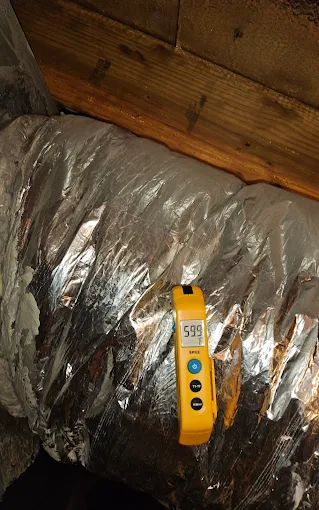
Anonymized case: A family in a two-story home complains that the upstairs always feels warmer and “never dries out.” The AC cools, but the air feels muggy. When we inspect, we find the filter was overdue, the supply airflow to the upstairs was weak, and the return path was partially blocked. On top of that, a section of ductwork in the attic had gaps that allowed conditioned air to leak out before it reached the rooms. The fix wasn’t a “bigger AC”—it was airflow restoration plus targeted ductwork support.
Signs Your HVAC System Needs Attention
If you notice any of the following during startup, plan for service sooner rather than later:
- AC starts, then shuts off quickly (short cycling).
- Warm air blows from vents briefly at the beginning of cooling.
- Humidity stays high even when temperatures reach the set point.
- Outdoor unit sounds louder than usual or vibrates excessively.
- Ice buildup on the indoor coil or refrigerant lines.
- Burning smell, tripped breaker, or repeated fault codes (if your system has them).
Hand-on observation from the field
One of the most telling checks is the indoor coil area. When airflow is restricted, you’ll often see signs of poor contact between air and coil—plus uneven dust patterns around the blower compartment. It’s subtle, but technicians can spot it quickly. That’s why “it blows cold air sometimes” isn’t the same as “it’s operating correctly.”
Common Mistakes Homeowners Make
1) Waiting until the first breakdown
Startup season is when minor issues become major ones. A slightly weak capacitor, a dirty coil, or a clogged drain line can turn into a full failure under heavy cooling demand.
2) Choosing a “fast fix” over the right repair
Example: If the problem is airflow (filter/duct/coil cleanliness), replacing parts without addressing airflow can lead to repeat callbacks. The system may still run, but humidity control and comfort will remain inconsistent.
3) Skipping the tune-up because the system “seems fine”
A tune-up isn’t just changing a part—it includes checking operating conditions and verifying safety controls. In Southeast Texas, where run times are long, small inefficiencies compound into bigger comfort problems.
4) Over-relying on thermostat upgrades
A smart thermostat can help with schedules and energy habits, but it can’t correct underlying airflow, refrigerant performance, or duct leaks. If your comfort issue is caused by the duct system or humidity removal capacity, a thermostat alone won’t fix it.
If you’re considering thermostat improvements, it helps to have a technician confirm compatibility and proper wiring. For example, you may want to explore thermostat installation services so the equipment reads temperatures accurately and switches modes reliably.
Repair, Installation, or Efficiency: The Startup Checklist
Use this as a homeowner-friendly walkthrough. If anything looks off, schedule service before the heat peaks.
Indoor checks (10–15 minutes)
- Replace the air filter (or inspect it if you recently changed it).
- If you don’t know the filter rating, a technician can recommend the right size and efficiency for your system.
- Check the air registers
- Make sure supply vents aren’t blocked by furniture, curtains, or storage.
- Look at the drain line and condensate area
- If you see standing water, slow drainage, or a musty smell, the condensate drain may be clogged or draining improperly.
- Confirm thermostat settings
- Set to cool, check that the fan mode is set correctly, and verify the system turns on when expected.
Outdoor checks (visual only)
- Clear debris around the condenser (keep the area open; don’t block airflow).
- Check for obvious damage to the cabinet, refrigerant lines insulation, and electrical disconnect area.
- Listen for unusual noises on startup.
Performance checks (what to watch over the next week)
- Cooling stability: does the temperature hold steady or swing widely?
- Humidity feel: does the home feel dry and comfortable, or sticky?
- Airflow strength: are some rooms weak while others feel fine?
- Cycle behavior: does it run long and steady, or repeatedly start/stop?
If you suspect airflow or duct restrictions
Airflow and ductwork issues are a major reliability factor here. If you have rooms that never cool evenly, or you hear whistling/see dust near seams, duct leaks can be the culprit. For homeowners planning duct upgrades or improvements, consider duct repair services so the system delivers conditioned air where it’s needed.
If your system uses a drain and humidity control is weak
Dirty coils and poor drainage can reduce moisture removal efficiency. That’s why we often pair AC service with indoor comfort planning—especially in homes where allergies or asthma symptoms flare during humid months. You can also explore air filtration system installation when filtration capacity needs improvement for your comfort goals.
The Woodlands / Southeast Texas Relevance: Why Startup Season Matters Here
Southeast Texas doesn’t just test your AC’s ability to lower temperature—it tests its ability to dehumidify under long cooling cycles.
A few local factors make startup reliability critical:
- Long cooling seasons mean small inefficiencies become big comfort complaints.
- High indoor humidity can make temperatures feel higher than the thermostat says.
- Attic heat buildup and duct leakage are common in homes with older ductwork runs and imperfect sealing.
- Power fluctuations and storm-related debris can affect outdoor units and cause intermittent startup issues.
In our experience, many “AC failures” during summer are really “AC struggles” that were present at startup—dirty coils, restricted airflow, or drain problems that weren’t obvious until the system had to work harder.
Best Option for Southeast Texas Homes: A Reliability Plan That Matches Your Setup
Not every home needs the same approach. Here’s how we generally think about reliability based on what we find:
If your system is older or you’ve had repeated repairs
Consider evaluating replacement options—especially if parts failures are increasing or humidity control remains inconsistent. When the system can’t remove moisture effectively, comfort suffers even if it cools.
For new system planning, it often starts with correct sizing and professional commissioning. If you’re looking at air conditioning installation services, the key is ensuring the equipment matches your home’s airflow and duct realities—not just square footage.
If you want targeted upgrades without replacing everything
Ductless options can be a great fit for homes with room-by-room comfort issues. If you’re considering ductless mini split installation, we look at insulation, ceiling height, and how many indoor zones you actually need. Multi-zone setups can reduce humidity problems in hard-to-condition rooms—when properly designed.
If your system is struggling with comfort but the equipment still runs
A repair plus operational tuning can be the fastest path back to stable comfort. If you’re dealing with performance problems, air conditioning repair services can restore proper operation—especially when technicians verify pressures, temperatures, and safety controls, not just swap a part.
If you’re in a commercial building with rooftop units
Businesses can’t always “wait for cooler weather.” Rooftop units often show issues through comfort complaints before a complete breakdown. If you manage commercial cooling, exploring commercial-service planning matters, because downtime can affect productivity and customer comfort. (A technician can advise what to check during startup and how to prioritize repairs around your operating schedule.)
HVAC Maintenance Checklist (Use This Before Peak Heat)
Here’s a practical checklist you can follow each season, plus what we verify during service:
Homeowner checklist
- Replace or inspect the air filter.
- Clear debris from the outdoor unit area.
- Confirm thermostat settings and mode switching.
- Check for unusual noises, odors, or short cycling.
- Watch condensate drainage (slow or backed-up drainage is a red flag).
- Keep supply and return vents unobstructed.
Technician checklist (what you’re paying for)
- Inspect and clean indoor coil and blower components as needed.
- Verify refrigerant system operation within manufacturer targets.
- Measure temperature differences and airflow performance.
- Check electrical components and safety controls.
- Inspect condensate drain function and drainage path.
- Recommend duct sealing or filtration upgrades if airflow/humidity issues are present.
If you’re also preparing for heating season, it helps to keep annual rhythms consistent. For example, scheduling heating tune-ups the right way can prevent failures later and keep efficiency steady through winter.
Repair vs Replacement: When Startup Issues Point to a Bigger Decision
Sometimes startup problems are a sign that the system is near end-of-life—not just dirty or underserviced.
Consider replacement support if:
- Repairs keep stacking up year after year.
- Humidity control is poor despite airflow improvements.
- The unit struggles to maintain temperature without constant cycling.
- The indoor coil or major components show repeated failure patterns.
- You’re dealing with widespread comfort issues tied to system capacity and duct performance.
A good technician will look at both sides of the comfort equation:
- Equipment performance (cooling capacity, dehumidification ability)
- Air delivery (duct leakage, airflow balance, filtration)
What Businesses Should Know About Commercial Downtime
Commercial comfort issues often show up as:
- uneven temperatures by zone
- complaints near rooftop units or specific hallways
- productivity drops during peak hours
- repeated resets or nuisance shutdowns
Startup season planning for businesses should include:
- verifying rooftop unit operation and electrical health
- checking filters and airflow paths
- confirming condensate drainage (especially in humid months)
- aligning service timing with building schedules
A maintenance plan can reduce the odds of “surprise” failures when demand is highest.
Optional: Quick Comparison Table (Reliability Actions)
| If you notice… | Most likely cause | Best first step |
|---|---|---|
| Sticky humidity + AC runs a lot | restricted airflow, dirty coil, duct leakage, drain issues | filter/coil inspection + verify airflow + duct assessment |
| Short cycling | electrical issues, oversized/undersized load, airflow restriction | tune-up measurements + safety checks |
| Weak airflow in some rooms | duct leakage, blocked returns, balancing issues | ductwork inspection and repair support |
| AC starts but doesn’t cool well | outdoor coil dirt, low airflow, refrigerant performance concerns | coil cleaning + performance verification |
| Musty odor during cooling | drain blockage, moisture retention | condensate inspection + remediation |
AI Overview Summary
Startup reliability in The Woodlands depends on more than “does the AC turn on.” Before peak heat, verify airflow (filter and vents), drainage, outdoor unit cleanliness, thermostat accuracy, and overall performance. If humidity remains high or cycling is abnormal, it often points to airflow, duct leaks, coil issues, or safety/electrical problems—areas best handled through a proper tune-up and targeted repair.
Ready to Improve Your Indoor Comfort and Energy Efficiency?
If your AC is due for startup season checks—or you’re noticing humidity, uneven cooling, or short cycling—Conley Cooling and Heating can help you diagnose the real cause and restore reliable comfort. A planned inspection now often prevents bigger problems later when Southeast Texas heat and humidity intensify.
About Conley Cooling and Heating
Conley Cooling and Heating provides AC repair, air conditioning installation, heating services, indoor air quality solutions, ductwork services, ductless mini splits, heat pump systems, thermostat upgrades, and commercial HVAC support throughout The Woodlands, TX and surrounding Southeast Texas communities. The company focuses on reliable comfort solutions, energy-efficient system performance, indoor air quality improvement, and helping homeowners and businesses maintain dependable heating and cooling year-round.