
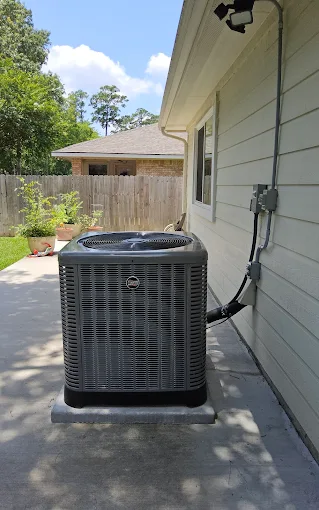
Duct Installation Zoning Ideas for Personalized Comfort
Last summer, a homeowner in The Woodlands told us their AC “worked fine,” yet three rooms never felt right. The thermostat might read 74°F, but the bedrooms stayed sticky and muggy, while the living area felt cooler than expected. When we got into the attic and checked airflow, the issue wasn’t just the equipment—it was how the duct system was laid out and how the house’s cooling loads were being distributed.
In Southeast Texas, comfort isn’t only about temperature. Humidity and airflow balance matter just as much. That’s why duct installation zoning—designing the ductwork to deliver different amounts of air to different areas—can make a noticeable difference in everyday comfort and energy use.
Quick Answer
Duct zoning for personalized comfort usually means planning how air travels through your duct system so some areas receive more conditioning and others receive less, based on how the home actually functions. Options include:
- True zoning with motorized dampers (best comfort control)
- Balanced duct layouts to reduce hotspots and under-conditioned rooms
- Room-by-room airflow strategies using supply registers, returns, and careful duct sizing
- Hybrid approaches that pair zoning with smart thermostats or ductless mini-splits for tough rooms
A quality duct installation plan should focus on static pressure, duct sizing, air balancing, and humidity control, not just adding dampers.
What Homeowners Often Overlook
Many homeowners assume that if they install a new AC system, the whole house will automatically cool evenly. In practice, the duct system determines how much air reaches each room—and how well the system can manage humidity.
We often see these overlooked factors during duct installations or system upgrades:
- Return air limitations: If returns are undersized or poorly located, the AC can cool the supply side but fail to remove moisture efficiently.
- Supply register placement: A room that needs more airflow may be served by a duct run that’s effectively “bleeding” air elsewhere.
- Attic heat and duct losses: In Southeast Texas, the attic can turn ductwork into a heat source. Even small leaks can raise the load your AC must work against.
- Wrong airflow for the job: Oversized equipment can short-cycle and move less air than needed for dehumidification—zoning can help, but it won’t fix fundamentally poor duct design.
The Woodlands / Southeast Texas reality: comfort is humidity + airflow
Because cooling season stretches long and humidity stays high, many homes feel “cool but clammy.” That’s the classic sign of a system that may be running, but not delivering the right airflow pattern for moisture removal.
During inspections, we look for evidence like:
- condensation near returns or supply leaks
- uneven air velocities at registers
- rooms that feel cool yet have elevated humidity
- duct sections that are crushed, poorly insulated, or disconnected in the attic
One firsthand observation we make often: zoning that isn’t balanced correctly can make humidity worse, because the system may deliver cooler air to one area while starving others of airflow needed to maintain consistent, controlled conditions.
Common Mistakes Homeowners Make
1) Installing a “zoning” add-on without resizing ducts
Motorized dampers and zoning panels can’t magically fix undersized duct runs. If duct sizes and lengths weren’t calculated for the airflow targets, the system may struggle to deliver the correct volume—leading to weak airflow, noise, or pressure problems.
2) Thinking the thermostat alone will solve comfort
Thermostats help manage temperature, but duct zoning controls where the conditioned air goes. A common mistake is spending money on thermostat upgrades while the ductwork still limits airflow to problem rooms. If the air can’t reach the room effectively, temperature control will always be inconsistent.
3) Ignoring return air when adding zones
Supply-only zoning is a frequent DIY trap. Without adequate return paths, you can create pressure imbalances—rooms may feel stuffy, doors may not open/close normally, and the system may short-cycle.
4) Skipping pressure testing and system commissioning
A proper duct installation and zoning plan requires measuring static pressure and verifying airflow results after changes. Without commissioning, you’re guessing.
Repair, Installation, or Efficiency: Duct Zoning Ideas That Actually Work
Below are practical duct installation zoning ideas we recommend based on how homes in Southeast Texas tend to behave.
Option A: Multi-zone dampers (best for whole-home personalization)
This is the most “traditional” zoning approach: multiple zones are served by the same central AC system, but motorized dampers direct airflow based on demand.
How it’s usually planned:
- Identify areas with different cooling needs (sun-exposed rooms, bedrooms, bonus rooms, home offices)
- Design duct paths so each zone has a clear airflow route
- Ensure returns support each zone
- Commission the system so each zone receives the designed airflow
When it shines:
- Homes with noticeable room-to-room temperature differences
- Families with different schedules (daytime living area vs. nighttime bedrooms)
- Large homes where one thermostat can’t represent the whole load
Option B: “Strategic balancing” zoning (simpler, often cost-effective)
Not every home needs true multi-zone dampers. Sometimes, comfort improves dramatically with a well-balanced duct layout:
- Re-sizing or re-routing certain duct branches
- Adjusting register sizes and placement
- Improving duct sealing in high-loss areas
- Adding or correcting returns to support airflow
Technician insight:
We’ve seen homes where the ductwork was technically “installed,” but air distribution was skewed by small design oversights—like an early trunk branch taking too much airflow, starving later rooms. Correcting that distribution can feel like “zoning,” even without full dampers.
Option C: Hybrid zoning with ductless mini-splits (great for hard-to-condition rooms)
If a room is consistently uncomfortable—like a sunroom, upstairs bedroom, or a garage-converted space—ductless mini-splits can complement central AC zoning.
Why hybrid works:
Central systems are designed around the whole-house airflow plan. Ductless units allow you to target specific rooms without forcing the central duct system to stretch beyond its ideal airflow design.
If you’re considering this path, we can help with ductless mini-split installation planning and integration so it doesn’t fight your central system’s operation. For related options, see: duct installation services and ductless mini split installation.
Option D: Thermostat-driven zoning logic (only after ductwork is right)
Some homeowners want “smart control” as a starting point. In reality, zoning logic works best when the duct system can deliver the airflow the control system expects.
If you’re upgrading controls alongside a duct plan, pair zoning with the right thermostat strategy—especially in homes with variable occupancy. Start with thermostat considerations here: thermostat installation services.
Option E: Humidity-first zoning strategy (important in Southeast Texas)
In humid climates, zoning should support dehumidification. That means maintaining airflow patterns that allow the indoor coil to remove moisture effectively.
If a zone repeatedly calls for cooling but doesn’t receive sufficient airflow, you may see:
- higher indoor humidity
- persistent “clammy” comfort complaints
- uneven comfort even when temperature seems close
This is where commissioning and humidity-focused design decisions matter.
HVAC Maintenance Checklist (for Zoning-Ready Comfort)
Whether you’re planning a new duct install or updating an existing system, this checklist keeps zoning performance on track:
- Inspect and seal ducts in attics and crawlspaces (air leaks undermine both comfort and efficiency)
- Verify airflow balance after any duct or damper changes
- Measure static pressure to confirm the system isn’t being choked by restrictions
- Check return air paths for each zone (pressure balance affects comfort and humidity)
- Replace or clean filters on schedule (dirty filters change airflow and comfort)
- Confirm thermostat settings and schedules match how the home is occupied
- Review condensation and humidity indicators, not just room temperature
- Schedule an AC tune-up before peak load season so dampers and airflow dynamics are ready
If you’re doing system updates, you may also want to plan around seasonal reliability. Consider air-conditioning tune-ups as part of the timeline.
The Woodlands or Southeast Texas Relevance Section
In The Woodlands and throughout Southeast Texas, homes often have:
- long cooling seasons
- high outdoor humidity
- attics that trap heat and add load
- duct systems that may have been installed decades ago with different airflow assumptions
That’s why zoning plans here should be built around air movement and moisture control, not only temperature setpoints. A duct system that’s slightly leaky or poorly balanced can quietly increase runtime and reduce humidity removal—then homeowners blame the thermostat, the AC size, or “the weather.”
When we design zoning for Southeast Texas homes, we prioritize:
- balanced airflow delivery
- well-supported return paths
- duct sealing and insulation where it matters most
- verification testing after installation
A realistic service case (anonymized)
A customer with a two-story home complained that upstairs bedrooms stayed humid even when the thermostat was set low. After inspection, we found that one upstairs branch had significantly reduced airflow due to duct restrictions and an imbalance in trunk routing. The system ran longer to reach temperature, but the indoor coil didn’t dehumidify as intended for that upstairs load.
We corrected airflow distribution, addressed duct leakage in the attic, and redesigned the register strategy so upstairs received airflow consistent with the cooling demand. The result wasn’t just “cooler”—it was noticeably less clammy.
Why Some HVAC Repairs Fail Early
Zoning and duct improvements can fail when the underlying system isn’t assessed as a whole. Common failure points include:
- Damper installation without system pressure review
- Duct repairs that seal leaks but ignore airflow balance
- Filter and return neglect that gradually changes system performance
- Control changes without verifying actual airflow delivery
If you’re dealing with an AC system that won’t respond normally after duct changes, troubleshooting becomes important. For related support, see air-conditioning repair services.
Repair vs Replacement (quick guidance for duct + system planning)
Zoning can be added to many existing systems, but ductwork condition matters. If your ducts are deteriorated, heavily leaking, or severely undersized, zoning dampers alone may not deliver the comfort you expect.
A practical way to decide:
- Repair/upgrade ductwork when leaks or balance issues are the main problem
- Consider system replacement when the equipment is old and inefficient, and the duct system can’t be meaningfully corrected without major rework
For duct repairs that often pair well with zoning planning, review duct repair services.
Key Takeaway
Duct installation zoning is about controlled airflow and humidity management. The best results come from a plan that considers duct sizing, return air, static pressure, and commissioning—not just adding dampers or changing thermostat settings.
Optional FAQ Section
Can I zone my home without replacing my AC?
Often, yes. If your current AC has the capacity and the ductwork can be balanced or modified, zoning dampers or strategic balancing may be possible. The key is testing: static pressure, airflow measurements, and ensuring each zone has adequate return air. If the duct system is severely compromised, repairs or duct replacement may be needed before zoning will perform properly.
Why does my home feel humid even when the AC runs?
Humidity can stay high if airflow is inadequate, if ducts leak and dilute indoor conditions, or if the system cycles in a way that prevents proper dehumidification. In Southeast Texas, this is especially common when airflow is uneven between zones or when return air paths are restricted.
Will a smart thermostat fix uneven temperatures between rooms?
A smart thermostat can optimize temperature scheduling, but it can’t correct airflow distribution. If some rooms receive less conditioned air due to duct design, zoning, balancing, or register placement, the thermostat will only “chase” the setpoint without fixing the root cause.
How do I know if my ducts are leaking?
Common signs include higher utility bills, rooms that feel inconsistent, dust accumulation, and weak airflow from certain registers. A professional duct inspection can confirm leakage and also identify where duct sealing will meaningfully improve comfort.
Ready to Improve Your Indoor Comfort and Energy Efficiency?
If you’re ready to explore duct installation zoning for more personalized comfort—especially for uneven rooms or humidity issues—Conley Cooling and Heating can help you plan the right approach and verify performance after the work is done.
About Conley Cooling and Heating
Conley Cooling and Heating provides AC repair, air conditioning installation, heating services, indoor air quality solutions, ductwork services, ductless mini splits, heat pump systems, thermostat upgrades, and commercial HVAC support throughout The Woodlands, TX and surrounding Southeast Texas communities. The company focuses on reliable comfort solutions, energy-efficient system performance, indoor air quality improvement, and helping homeowners and businesses maintain dependable heating and cooling year-round.