
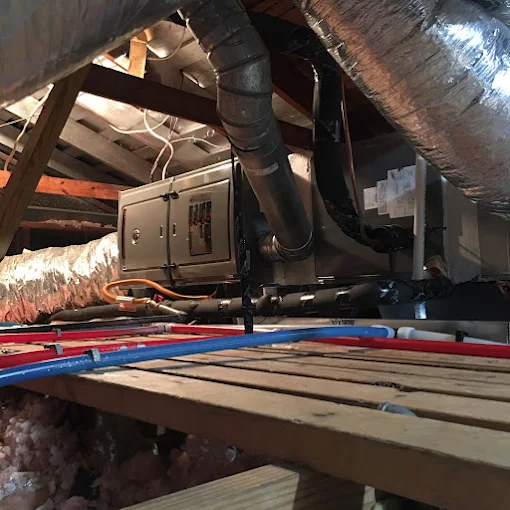
Duct Installation Maintenance Myths Homeowners Should Skip
On a hot, humid Southeast Texas afternoon, it’s common to hear homeowners say, “The AC is running, so why isn’t the house staying comfortable?” In The Woodlands, that complaint usually isn’t about the thermostat alone—it’s often about duct installation quality, airflow balance, and whether the duct system is staying sealed and clean after the system is installed.
When ductwork is done right (and maintained), your central system doesn’t have to work as hard to deliver cold air to the rooms that need it. When it’s done wrong—or “fixed” with the wrong shortcuts—comfort problems show up fast: weak airflow at registers, uneven temperatures between rooms, persistent musty odors, and higher utility bills that don’t make sense.
Quick Answer
Homeowners should skip duct installation and maintenance myths like “ducts don’t matter if the AC is sized correctly” or “you only need duct repairs when there’s a visible problem.” In reality, airflow losses from leaky or poorly installed ductwork can rob your system of efficiency and humidity control, making even a newer AC feel ineffective.
For best results, rely on professional duct installation services, periodic duct inspection, and targeted duct repair services—not guesswork.
What Homeowners Often Believe vs. What We See on Real Jobs
Myth 1: “If the AC is new, the ducts don’t matter.”
This is one of the most expensive assumptions we hear. Even with a correctly sized air conditioning system, ducts can quietly undermine performance.
Field observation: During installs and service calls, we routinely find duct joints that were never properly sealed, sections that were crushed during construction, and supply runs that were disconnected or partially blocked. The homeowner may feel “cold air,” but not enough of it reaches the rooms that need it most—especially bedrooms and second floors.
What it causes in Southeast Texas: Poor airflow can limit dehumidification. You may hit the thermostat setpoint, but the indoor humidity stays high, leaving the home feeling sticky even when temperatures look “okay.”
Myth 2: “Leaky ducts only waste energy—humidity won’t change.”
Duct leakage is not just an energy issue. In a humid climate, duct leaks can pull in warmer, moisture-laden air from attics, crawlspaces, or wall cavities. That moisture enters the supply stream and interferes with comfort.
The result is a system that cycles longer or struggles to maintain stable humidity. You might notice condensation around registers, damp drywall smells, or recurring “wet” odor after heavy rain.
Myth 3: “Duct sealing is a one-time thing.”
Ducts can loosen over time. Common causes include:
- vibration from aging equipment
- shifting in framing or attic structures
- poor initial installation practices
- changes from later renovations (new insulation, flooring, or wall updates)
A duct system isn’t a static object—especially in older homes with attic heat buildup and seasonal expansion/contraction.
Common Mistakes Homeowners Make
1) Treating duct problems like “just a filter issue”
Yes, dirty filters reduce airflow. But if the register airflow feels weak in multiple rooms, or you hear the system running longer than usual, ducts are often the real bottleneck.
2) Overlooking airflow balance after installation
A frequent installation failure is not the equipment—it’s the duct layout and balancing. If supply airflow is concentrated in one area and starved in another, the system can’t deliver consistent temperatures or humidity control.
3) DIY “repairs” with duct tape or foam that doesn’t last
Some homeowners patch visible leaks with tape that doesn’t hold up to temperature swings, airflow pressure, or long-term aging. We’ve seen tape applied over foil-faced insulation or on surfaces that weren’t cleaned—so it peels again within months.
4) Waiting until comfort complaints become emergencies
By the time there’s a strong odor, persistent humidity, or repeated breaker trips, duct issues may have already contributed to other system stress. Early attention is cheaper than emergency fixes.
5) Assuming “new vents” solve the problem
Replacing a register doesn’t address the duct length, sizing, leakage, or pressure issues behind it. If the duct trunk is leaking or undersized, new grilles won’t restore real airflow.
Repair, Installation, and Efficiency: What Actually Helps
Here’s what we recommend when homeowners want better comfort and lower energy bills—without falling for myths.
Start with the right foundation: ductwork installation and sealing quality
If you’re upgrading or replacing HVAC equipment, duct installation services should be evaluated as part of the project—not an afterthought.
For example, we often see homes where the AC was replaced but the ductwork wasn’t reviewed for:
- disconnected seams
- mismatched duct sizes
- missing or incorrect dampers
- crushed duct sections
- supply airflow that doesn’t match the new equipment’s air delivery needs
If you’re planning new construction or replacing a system, it’s also worth discussing whether you need residential air duct installation adjustments based on your floorplan and airflow priorities.
Address duct problems with targeted duct repair services
Not every duct issue requires “replacing everything.” Many comfort problems are driven by a few key leak points or blocked runs.
A solid duct repair approach typically includes:
- locating leaks at seams and transitions
- checking for obstruction or improper bends
- ensuring connections are sealed correctly with HVAC-rated materials
- verifying airflow at multiple registers after repairs
If you suspect leaks or poor sealing, ask specifically about hvac duct sealing and repair and whether the technician will verify airflow changes afterward.
Keep indoor air quality in the conversation, not on the sidelines
In humid climates, duct cleanliness and air filtration matter more than many homeowners expect. If your ducts are contaminated or if moisture is entering the system, indoor air quality can suffer even if temperatures are comfortable.
Depending on your situation, indoor air quality solutions may include air filtration system improvements or air purification system installation, especially for allergy concerns.
If you’re dealing with moisture and odor issues, duct fogging services and related hvac duct sanitizing and fogging are sometimes discussed—but they should never be a substitute for fixing the moisture source and sealing leaks. The goal is long-term control, not short-term masking.
Thermostat changes won’t fix duct airflow problems
Smart thermostats can help with scheduling and monitoring, but they can’t force adequate airflow through leaky or restrictive ducts.
If you’re considering upgrades, pair it with a comfort-focused check of airflow and duct performance. For example, thermostat installation services and smart thermostat installation services can be valuable—but only after the duct system is delivering air where it’s supposed to go.
HVAC Maintenance Checklist (Ductwork + Comfort)
Use this checklist to keep duct performance from quietly slipping:
- Change filters on schedule (and choose the right MERV level for your system)
- Inspect register airflow periodically—do you feel consistent air in every room?
- Check for musty odors or dampness near vents, closets, or return paths
- Look for condensation signs around registers during humid stretches
- Confirm thermostat readings match comfort (if the house feels humid at “setpoint,” something’s off)
- Have ducts inspected after renovations, insulation upgrades, or attic/crawlspace work
- Verify airflow balance after any major repair or replacement
- Schedule seasonal heating maintenance services (yes, ducts matter in winter too—airflow restrictions can affect heat distribution)
A Realistic Example From a Southeast Texas Home (Anonymized)
A family in The Woodlands replaced their air conditioner after it started short-cycling. The new system cooled the living room quickly, but the upstairs remained warm and humid. They tried changing the thermostat settings and replacing the air filter more frequently.
When our team evaluated the ductwork, we found:
- several supply trunk connections that had separated slightly
- a crushed section in the attic that reduced airflow to the upstairs
- leakage at a transition between the main trunk and a branch line
After duct repair services were completed and airflow was rechecked at key registers, the upstairs stopped feeling “stuffy.” The system also ran more efficiently because it wasn’t constantly fighting for airflow that never reached the target rooms.
The Woodlands / Southeast Texas Relevance: Why Duct Myths Cost More Here
Southeast Texas has a unique challenge: humidity. Even when your AC cycles on and off, duct leakage and airflow restrictions can prevent proper dehumidification. That’s why many homeowners interpret the problem as “my AC isn’t strong enough,” when the real issue is that the system can’t move and condition air effectively.
Attics and unconditioned spaces are especially vulnerable—heat and moisture load can be intense during long cooling seasons. If ductwork is poorly installed or degraded, comfort problems show up sooner and utility bills climb faster.
Also, The Woodlands homes often have a mix of construction styles—some with attics that see major temperature swings. Those changes can loosen connections over time, making “set it and forget it” duct assumptions a risk.
Repair vs. Replacement: When Ductwork Changes the Decision
A quick way to think about it:
| Situation | Ductwork likely role | What to do |
|---|---|---|
| New AC/heat pump feels weak or uneven | Often installation/balance or duct leakage | Inspect ducts, seal leaks, verify airflow |
| Home feels humid even at correct temperature | Often duct leakage/airflow imbalance | Check for moisture sources and duct performance |
| Musty odors persist | Possible moisture intrusion or contaminated ducts | Fix moisture + evaluate IAQ options |
| Renovations happened (insulation, walls, attic work) | Ducts may have been disturbed | Recheck connections and register performance |
| Equipment aging but comfort is declining | Duct issues can magnify system stress | Diagnose ducts before deciding on replacement |
If you’re also considering heating installation services or furnace installation and replacement, duct inspection matters in winter too. Poor airflow can make heat feel weak, even if the furnace is functioning.
Signs Your HVAC System Needs Attention
If you notice any of these, it’s a strong indicator the ducts (and related components) deserve a closer look:
- one or two rooms never feel comfortable
- the system runs longer than it used to to reach the same temperature
- condensation around vents or damp odors
- airflow feels “rushy” at some registers and weak at others
- repeated filter clogging without clear cause
- visible gaps or loose duct connections in accessible areas
What Businesses Should Know (If You Manage a Commercial Space)
Commercial comfort complaints often start as “temperature issues,” but ductwork and airflow distribution can be the root cause—especially in spaces with multiple zones, rooftop units, or older distribution systems.
If your building uses central air conditioning installation or relies on ducted distribution, ductwork problems can create:
- uneven zone temperatures
- higher runtime on equipment
- discomfort that leads to productivity loss
A helpful step is to evaluate ductwork installation quality during any commercial air conditioning installation project, and to review duct repair services when complaints persist after equipment upgrades. For ongoing support, commercial HVAC planning should include duct inspection as part of routine maintenance and seasonal tune-ups.
If you’re modernizing your system, commercial ac services can also help coordinate repairs across equipment, controls, and airflow pathways.
Key Takeaway
Most duct-related comfort and energy problems aren’t “mystery HVAC failures.” They’re usually caused by airflow loss—leaks, crushed sections, poor balancing, or moisture intrusion. Skipping duct inspection or relying on duct myths can turn a reasonable repair or installation into an expensive cycle of repeat callbacks.
Recommended Next Step
If you want steadier comfort, better humidity control, and improved efficiency, start with a duct-focused evaluation alongside your system check.
About Conley Cooling and Heating
Conley Cooling and Heating provides AC repair, duct installation services, duct repair services, heating services, air conditioning installation services, seasonal heating maintenance services, indoor air quality solutions, and thermostat upgrades for homes and businesses throughout The Woodlands, TX and surrounding Southeast Texas communities. The team focuses on reliable comfort, energy-efficient performance, and practical indoor air quality improvements based on real airflow and humidity behavior—not guesswork.