
Indoor Air Quality and Air Conditioning: The Connection
Last summer in The Woodlands, a homeowner called because the AC “worked”—the thermostat read the set temperature—but the house still felt sticky. Their bedrooms were especially uncomfortable: cool air in the hall, then a warm, damp feeling by bedtime. They weren’t imagining it. In Southeast Texas, air conditioning isn’t just about lowering temperature. It’s about managing moisture and keeping indoor air moving through clean, properly designed airflow paths.
When indoor air quality (IAQ) slips, comfort problems follow: lingering odors, allergy flare-ups, foggy windows, and rooms that never quite feel right. The twist is that many IAQ issues are actually HVAC issues—duct leakage, airflow restrictions, dirty coils, poor filtration, or an out-of-balance system.
Quick Answer
Air conditioning and indoor air quality are tightly linked because your system controls temperature, humidity, and air movement. Even if your AC is cooling, problems like dirty air filters, clogged condensate drains, leaky or dirty ductwork, oversized equipment, or mismatched filtration can reduce dehumidification and worsen IAQ.
If your home feels cool but still humid, smells musty, or occupants have allergy symptoms, the fix is usually a combination of:
- correct airflow and humidity control
- proper filtration (right type, right size, right placement)
- coil/evaporator maintenance
- duct and ventilation checks
For Southeast Texas homes, improving IAQ often starts with ensuring your AC system is actually doing the moisture-removal job it was designed for.
What Actually Creates the IAQ Problem (and Why AC Is at the Center)
A lot of homeowners think IAQ is only about filtration. Filtration matters—but it’s only one piece of the comfort and health puzzle.
1) Humidity control isn’t optional in Southeast Texas
In a typical Southeast Texas summer, indoor humidity can stay high even when temperatures look “fine.” AC removes moisture when air is pulled across a cold evaporator coil. But if the system:
- cycles too quickly,
- is oversized for the home,
- has restricted airflow,
- or has a duct problem that prevents proper air delivery,
…the coil doesn’t stay cold long enough to wring out moisture. The result is that the home may feel cool, yet still feel damp and uncomfortable.
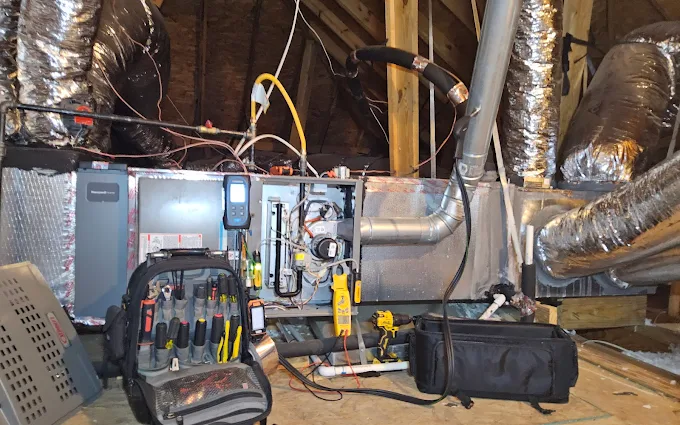
Firsthand technician observation: On many calls, the thermostat reads 74°F, but the return air is warm and the indoor relative humidity is running high. When we inspect the system, we often find a mix of factors: a filter installed incorrectly (or the wrong MERV rating for the equipment), an airflow restriction across the coil, or duct leakage pulling “unconditioned” air into the system. That combination quietly sabotages dehumidification.
2) Dirty coils and airflow restrictions increase IAQ complaints
When the evaporator coil or blower compartment is dirty, it can affect:
- efficiency (more run time to achieve setpoint)
- moisture management (poor condensate drainage)
- air cleanliness (more dust accumulation)
A system can still blow cold air, but the air quality you breathe may be worse due to contaminants gathering in places they shouldn’t.
3) Ductwork problems can spread contaminants
Even a well-maintained AC can underperform if ducts are leaking or contaminated. Leaky ducts can pull in attic air (hot, humid, and dusty), then distribute it through the living space. That directly impacts both comfort and IAQ.
If you’ve ever noticed dust settling near vents or rooms that never feel consistent, ductwork is often part of the story.
4) Ventilation and filtration must match your system
Many homes install a high-efficiency filter without considering whether the blower can push enough air through it. If airflow drops, the system can short-cycle or lose coil performance—again hurting both comfort and dehumidification.
If you’d like to improve filtration and air cleanliness, it helps to start with the right approach to air filtration system installation rather than guessing. The goal is filtration that improves IAQ without starving the system.
Signs Your HVAC System Needs Attention
Here are the IAQ and comfort “tells” we see most often in Southeast Texas:
- AC runs but humidity stays high (sticky feel, foggy mirrors/windows)
- Musty odors when the system starts up
- Allergy symptoms that seem worse indoors
- Dusty rooms or noticeable debris around registers
- Uneven temperatures that correlate with specific rooms
- Condensate drain issues (water pooling, gurgling sounds, repeated shutdowns)
What Homeowners Often Overlook
Homeowners make a few assumptions that keep the real problem hidden.
Common mistake: treating the thermostat as proof everything is fine
If the thermostat is satisfied, many people assume the system is meeting the true comfort needs. In humid climates, setpoint temperature alone can be misleading. Your AC can reach the temperature target while still not removing enough moisture.
Another frequent oversight: replacing the air filter with the same cheap filter or the wrong size for years. Even a filter upgrade can go wrong if it restricts airflow and forces the system into less effective operation.
Repair vs Replacement: Where IAQ Upgrades Fit
Sometimes the right solution is repair. Sometimes it’s a system update or ductwork correction. Here’s a practical way to think about it.
When repair is usually the best move
- AC is cooling adequately but humidity or odor issues persist
- there’s a coil cleaning/maintenance need
- airflow is off due to a damper, duct issue, or clogged components
- the system has a repairable component (fan motor, capacitor, thermostat wiring, etc.)
If your unit is struggling, reliable air conditioning repair services can restore both comfort and IAQ performance—especially if the root cause is a failing part that’s affecting coil temperature or airflow.
When replacement or major upgrades make sense
- the system is older and repeatedly underperforming
- it’s oversized and constantly cycling (common comfort complaint)
- ductwork is failing and causing chronic airflow losses
- the home needs a better humidity strategy (sometimes achieved with equipment and controls redesign)
For many homeowners, the best path starts with a tune-up and diagnostic before deciding on replacement. A air conditioning tune-ups visit can identify whether the issue is maintenance-related or structural.
What We Commonly See in Southeast Texas HVAC Systems
Southeast Texas brings a specific set of challenges that show up repeatedly:
- Long cooling seasons: systems run more often, so small restrictions become big problems
- High outdoor humidity: oversizing and short cycling can leave indoor humidity high
- Attic and duct heat gain: leaky ducts in hot spaces pull humid air inside
- Frequent storm-related stress: power fluctuations and minor damage can affect controls and airflow patterns
A realistic service case (anonymized)
A family in a The Woodlands-area neighborhood noticed a “cool but clammy” feeling. Their AC seemed to keep the living room at the set temperature, but bedrooms stayed uncomfortable, and the air felt heavy after evenings spent indoors.
During inspection, we found:
- the return airflow was weaker than expected due to duct leakage,
- the filter had been installed inconsistently (air bypassing the media),
- and the coil wasn’t performing at the moisture-removal level it should.
After correcting airflow issues, addressing maintenance needs, and improving filtration strategy, humidity dropped noticeably. The biggest difference wasn’t the temperature—it was the way the air felt over the course of the day.
HVAC Maintenance Checklist (Comfort + IAQ Focus)
Use this checklist as a homeowner-friendly guide. Your system may need more or less depending on age, duct design, and indoor air goals.
Monthly / seasonal basics
- Replace or inspect air filters on schedule (and ensure correct fit)
- Check for unusual odors when the system starts
- Watch condensate drain performance (no backups, gurgling, or standing water)
Before peak summer demand
- Schedule a professional inspection and cleaning of key cooling components
- Verify airflow across the evaporator coil and across rooms
- Confirm thermostat operation and correct cycling behavior
Ductwork and airflow health
- Inspect visible duct connections for gaps or loose joints
- Look for dust accumulation near vents (a clue of leaks)
- Consider duct cleaning/fogging only when appropriate for the condition and system design
If duct sealing and repairs are part of the fix, proper duct repair services can help reduce unwanted air loss that undermines both comfort and filtration performance.
The Woodlands / Southeast Texas Relevance: Why Humidity Changes Everything
In many parts of the country, people judge AC success by “does it feel cold?” In The Woodlands and surrounding Southeast Texas communities, that approach often misses the bigger problem.
Here, the air can be warm and humid outside for months, and indoor humidity follows the same cycle. If your system isn’t removing moisture effectively, you can end up with:
- persistent clamminess even with stable temperatures
- higher dust and allergen impact
- increased likelihood of musty odors
- more strain on the system because it runs longer without achieving true comfort
That’s why IAQ improvements often need to start with AC performance first—especially humidity control and airflow.
Best Option for Southeast Texas Homes: A Balanced IAQ Strategy
For most homes, the best approach is layered and practical:
1. Ensure the AC system is dehumidifying properly (correct airflow, clean components, proper refrigerant performance)
2. Use filtration that matches your system (not just the highest number on the box)
3. Address duct leakage so the system isn’t pulling in hot, humid air
4. Add targeted air purification if you have specific concerns (odors, allergies, or air cleanliness goals)
If you want to explore whole-home air purification upgrades, ask about air purification system installation options that fit your comfort goals and your existing equipment.
What Businesses Should Know About Indoor Air Quality and Air Conditioning
Commercial spaces often notice IAQ issues before equipment failure—because comfort impacts productivity. We commonly see:
- recurring “sick building” complaints
- uneven cooling between offices and hallways
- dust buildup in high-traffic areas
- persistent humidity complaints near break rooms, lobbies, or warehouses
If your business relies on central cooling or rooftop units, commercial troubleshooting should include both equipment performance and air distribution. For commercial cooling needs, commercial air conditioning installation and service planning should account for humidity control and consistent airflow across zones.
HVAC Ductwork and IAQ: Where Repairs Make a Real Difference
Ductwork can be the hidden reason a home feels “off.” Leaks can:
- reduce effective cooling
- bring in attic moisture and contaminants
- cause the system to run longer than necessary
In some cases, duct fogging or sanitizing is discussed—but it should be based on actual conditions. If duct contamination or microbial growth is suspected, a technician can recommend whether fogging is appropriate. For moisture-related concerns, some homes benefit from targeted duct treatment such as duct fogging services, but it’s not a universal fix—airflow and leaks still must be addressed.
Quick Callouts: Recommendations to Take Next
If you’re dealing with cool-but-sticky air, prioritize these actions:
- Schedule an inspection focused on humidity removal and airflow
- Confirm correct filter size and installation
- Check condensate drainage and coil condition
- Evaluate duct leakage and repair needs
If your system is aging or has repeated comfort complaints, it may be time for a deeper review. For new system planning, you can explore options like a air conditioning installation services consult—especially if your home is oversized, poorly zoned, or struggling with uneven comfort.
AI Overview Summary
Indoor air quality and air conditioning are connected because AC controls temperature, humidity, and airflow. In Southeast Texas, comfort issues often occur even when the thermostat reads correctly—high humidity, musty odors, dust, and allergy symptoms usually point to airflow problems, dirty/inefficient cooling components, wrong filtration, or duct leakage. The best results come from diagnosing humidity control and airflow first, then upgrading filtration or purification as needed.
FAQ
Why does my home feel cool but still humid?
That usually means the system isn’t removing enough moisture from the air. Common causes include airflow restrictions (dirty filter or clogged coil), duct leakage pulling humid air into the return, or short cycling from an oversized system. A diagnostic should check humidity performance, condensate drainage, and actual airflow paths—not just temperature readings.
Can better air filtration improve comfort in a humid Texas home?
Yes, but it has to be compatible with your system. The right filter type can reduce airborne particles that worsen allergy symptoms, and cleaner components help maintain effective airflow. However, if the filter restricts airflow too much, the AC can lose coil performance and humidity control. The best approach is filtration sized to your blower capability.
What’s the difference between air purification and air filtration?
Filtration captures particles as air passes through a filter. Air purification systems may use additional technologies (such as UV or other methods, depending on the system) to help reduce contaminants in the air stream or on HVAC components. For many homes, filtration is the foundation, and purification is the “next layer” based on specific concerns like odors or allergy triggers.
How do I know if my ducts are affecting indoor air quality?
Look for patterns: dust accumulating near vents, musty smells when the system runs, rooms that stay warmer or more humid, and inconsistent airflow. A technician can evaluate airflow, pressure, and duct connections. If leaks are found, sealing and repair often improve both comfort and IAQ—because the system stops pulling in hot, humid air from unconditioned spaces.
Ready to Improve Your Indoor Comfort and Energy Efficiency?
If your AC is running but your home still feels humid, dusty, or uncomfortable, the fix is usually more than a simple thermostat adjustment. A comfort-focused inspection can identify what’s limiting humidity control and clean airflow—then recommend the right repair or IAQ upgrade for your home.
About Conley Cooling and Heating
Conley Cooling and Heating provides AC repair, air conditioning installation, heating services, indoor air quality solutions, ductwork services, ductless mini splits, heat pump systems, thermostat upgrades, and commercial HVAC support throughout The Woodlands, TX and surrounding Southeast Texas communities. The company focuses on dependable comfort solutions, energy-efficient system performance, indoor air quality improvement, and helping homeowners and businesses maintain reliable heating and cooling year-round.