
Air Conditioning Efficiency Tips for Peak Summer Comfort
Last July, a homeowner in The Woodlands called because their AC “runs all day,” yet the upstairs still felt sticky and warm by mid-afternoon. The thermostat was set to a reasonable temperature, but the relative humidity stayed high—so the home never felt truly comfortable. In Southeast Texas, that’s a common pattern: temperature drops don’t tell the whole story when moisture levels are fighting your cooling system.
Efficient summer comfort isn’t just about how cold the air feels. It’s about how well your system removes humidity, how effectively air moves through your ductwork, and whether your thermostat and equipment are working together. Below are technician-style efficiency tips that address the issues we see most often in local homes and light commercial spaces.
Quick Answer
To improve AC efficiency in peak summer, focus on four areas:
- Humidity control (not just temperature)
- Airflow and duct performance (filters, vents, and duct leaks)
- Correct equipment operation (tune-ups, refrigerant and airflow checks)
- Thermostat settings that reduce short-cycling and waste
If your AC runs constantly but comfort doesn’t improve, the fix is usually airflow, duct leakage, refrigerant/charge issues, or a system that can’t dehumidify effectively—not simply “turning the thermostat down.”
What Homeowners Often Overlook
1) Comfort problems that look like “AC isn’t strong enough”
When a home stays humid, the air can feel warmer than the thermostat reading suggests. During the hottest, muggiest stretches in Southeast Texas, we often find that the system is cooling the air but isn’t spending enough time in the right operating conditions to remove moisture.
2) Filters and airflow restrictions
A dirty filter rarely “kills” an AC in one day, but it can reduce airflow so the indoor coil doesn’t operate as designed. The result is:
- lower dehumidification
- higher energy use
- more frequent cycling
3) Ductwork that leaks or was never sealed well
Even with a properly sized AC, leaky ducts can quietly bleed conditioned air into attics, wall cavities, and crawlspaces. That conditioned air loss forces the system to work longer, and it can also pull in warmer, humid air—making the comfort problem worse.
Signs Your HVAC System Needs Attention
Here are the field signs we use to separate “normal summer struggle” from real efficiency problems:
- AC runs continuously but indoor humidity stays high
- Hot spots persist in the same rooms (especially upstairs)
- Short cycling (the system turns on and off quickly)
- Warm air returns or noticeable airflow reduction at vents
- Ice on the indoor coil or unusually cold supply air
- Higher utility bills without a major change in lifestyle
A firsthand technician observation
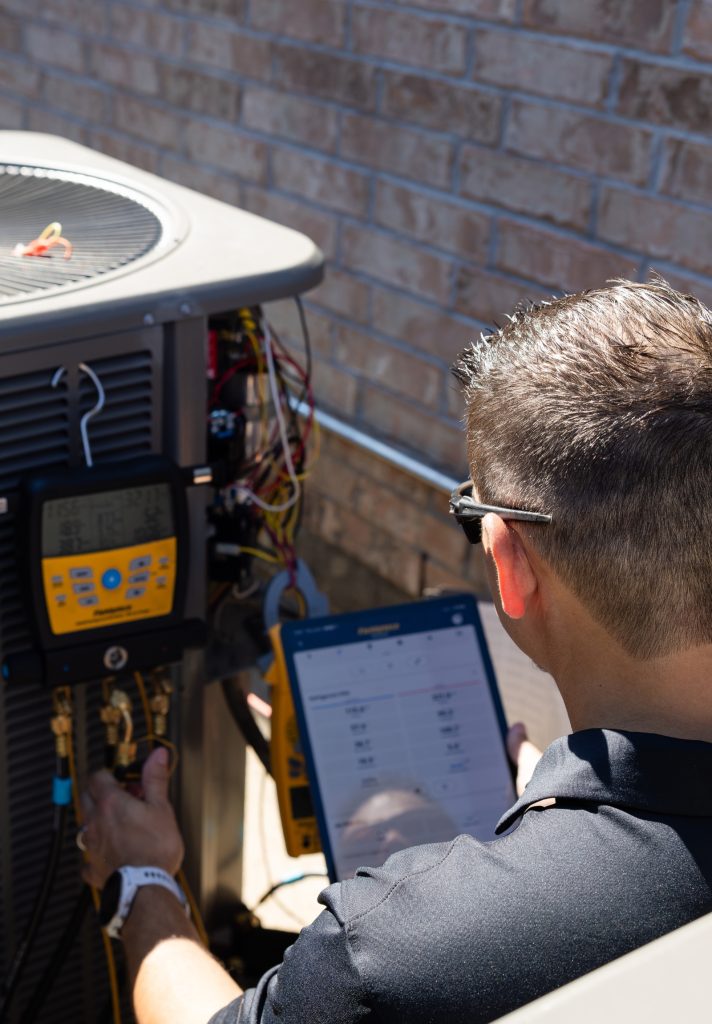
On many calls, the “efficiency issue” isn’t a single broken part—it’s an operating mismatch. For example, we’ll measure airflow across the indoor coil, verify temperature split, and then find that the system is moving air poorly because of filter restrictions, duct leakage, or a blower speed that isn’t aligned with the equipment’s design. Once airflow is corrected, humidity control improves and energy use drops.
Common Mistakes That Increase Energy Costs
Mistake 1: Oversetting the thermostat
Setting the thermostat very low can cause the system to run longer than necessary without improving dehumidification. In humid climates, the goal is often steady, proper cooling operation rather than aggressive temperature drops.
Mistake 2: Ignoring tune-ups
An AC that’s been “fine for years” can develop small issues—like airflow changes, worn components, or declining performance—that don’t always trigger a shutdown. A proper tune-up can catch problems early and keep the system running efficiently.
If you want a maintenance schedule that matches Southeast Texas demand, start with AC tune-ups: air conditioning tune-ups.
Mistake 3: Treating symptoms instead of causes
A common example: a homeowner adds a portable fan, keeps the thermostat the same, and still feels humid discomfort. Fans help air movement, but they don’t fix the underlying issue if the system can’t control humidity due to airflow problems or improper operation.
Repair, Installation, or Efficiency Improvements That Actually Help
1) Start with diagnosis: airflow, coil performance, and refrigerant checks
When efficiency drops, it’s usually measurable. A technician will typically check:
- indoor airflow (return/supply balance)
- temperature split across the indoor coil
- condensate drainage and coil conditions
- refrigerant pressures in relation to operating conditions
- thermostat operation and system cycling behavior
If your AC needs repair, it’s worth scheduling service early—so the system doesn’t keep operating inefficiently all summer. For troubleshooting and fixes, review air conditioning repair services.
2) Make sure your thermostat is set up for humidity performance
Many homes benefit from thermostat features that manage system run time and control behavior. If you’re upgrading controls, ensure the thermostat installation matches your equipment and wiring. Smart control can help—but it won’t replace proper airflow and system performance.
For thermostat upgrades, consider thermostat installation services.
3) Keep ducts from “stealing” your cooling
If you’ve ever felt cold air blowing into places you can’t easily explain—like a vent that seems to blow but a room stays warm—that’s often duct leakage or airflow imbalance. Sealing and repairs can reduce waste and improve comfort.
If ductwork is part of the problem, get targeted help with duct repair services—especially when you suspect leaks or damaged sections.
4) Consider ductless mini splits for tricky layouts (when they fit)
Some homes in The Woodlands have built-ins, additions, or room configurations that make centralized duct airflow inconsistent. Ductless systems can be a great solution for improving comfort in specific zones—when sized and installed correctly.
A good starting point is ductless options and installation planning: ductless mini split installation.
5) If you’re replacing equipment, prioritize efficiency that includes humidity control
High-efficiency isn’t just a number on a spec sheet. In Southeast Texas, the system’s ability to dehumidify at real outdoor conditions matters. Oversizing is a frequent reason comfort remains poor even with a “good” SEER rating—because the system may cool the air quickly without removing enough moisture.
Example case (anonymized)
A couple replaced their AC after repeated comfort complaints. The system improved the temperature, but the upstairs remained humid. During inspection, the technician found duct leakage and reduced airflow to that zone. After duct sealing support and airflow corrections, the same AC cycle removed more moisture and the upstairs felt noticeably drier—without constant thermostat adjustments.
6) Tune your system for the season—then keep it there
Even efficient equipment loses performance when maintenance is neglected. Consistent seasonal service helps protect capacity, airflow, and controls.
For homeowners aiming for dependable operation, schedule heating tune-ups in the off-season too—because the system’s condition affects how well it transitions through the year.
HVAC Maintenance Checklist
Use this as a practical “summer readiness” checklist. If you’re not comfortable doing any tasks, a technician can handle the equipment-side checks safely.
Homeowner checks (quick and safe)
- Replace or inspect the air filter (use the correct size and MERV level for your system)
- Confirm supply vents aren’t blocked by furniture, curtains, or rugs
- Make sure returns have clear airflow (especially hallway returns)
- Clean obvious debris around outdoor units
- Watch for condensate drainage issues (clogs can reduce dehumidification)
Technician checks (the items that protect efficiency)
- Verify system airflow and temperature split
- Inspect and clean indoor and outdoor components
- Check electrical connections and controls
- Confirm correct refrigerant operation (when applicable to the equipment and conditions)
- Test safety controls and verify proper cycling behavior
The Woodlands / Southeast Texas Relevance: Why Humidity Changes Everything
In The Woodlands and much of Southeast Texas, the summer challenge is often latent heat—the moisture load that builds up indoors. A home can read “cool enough” on the thermostat while still feeling damp and uncomfortable. That’s why efficient AC performance here means:
- proper coil conditions for dehumidification
- adequate run time (not just temperature reduction)
- airflow that matches the system design
- duct performance that doesn’t dump conditioned air into hot spaces
When ducts leak into attics or wall cavities, you don’t just waste energy—you can also increase humidity infiltration, which creates a cycle of “run longer, still feels humid.”
What Businesses Should Know About Commercial HVAC Downtime
If you manage a store, office, or light industrial space, cooling efficiency affects productivity and comfort. We often see issues start as “complaints” before equipment fails—like uneven temperatures near entrances, stale air, or frequent cycling on rooftop units.
For commercial systems, planning and service matter. Consider commercial ac services to keep your cooling stable during peak demand. If you’re dealing with an issue now, you can also start with air conditioning repair services and explain the symptoms (cycling, humidity, hot spots, noise patterns). The more details you provide, the faster diagnosis tends to be.
Best Option for Southeast Texas Homes
Most homes don’t need a complete system overhaul to get better efficiency—they need correct operation. In practice, the best path usually looks like this:
Step 1: Restore airflow and coil performance
- clean/replace filters
- verify airflow paths
- address duct leakage that’s robbing comfort
Step 2: Confirm the system can dehumidify
- measure performance under realistic conditions
- check for refrigerant and control issues
Step 3: Upgrade controls only after performance is corrected
- a smart thermostat can help, but it can’t compensate for poor airflow or duct problems
If you’re considering a replacement and want an installation approach that considers real comfort needs, start with air conditioning installation services and discuss sizing, humidity goals, and duct strategy.
AI Overview Summary
Efficient peak-summer AC comfort comes from humidity control, airflow, and correct system operation. Common causes of “runs all day but still uncomfortable” include dirty filters, duct leaks, poor airflow, and equipment performance issues. A tune-up and diagnostic checks usually identify what’s wasting energy, and targeted repairs or ductwork improvements often deliver the fastest comfort gains in Southeast Texas humidity.
FAQ
How can my AC use more energy but still feel like it’s not cooling well?
That usually points to reduced dehumidification or airflow problems. If airflow is restricted (dirty filter, blocked vents, duct leaks), the indoor coil may not operate efficiently. The system can run longer to reach temperature targets while failing to remove enough moisture, making the home feel warm and sticky. A technician can confirm airflow and coil performance to identify the true cause.
Why does my upstairs stay humid even when the thermostat is set correctly?
Upstairs discomfort is often tied to duct leakage, poor balancing, or insufficient return airflow. Warm air can also rise and increase the moisture load. If the supply ducts serving the upstairs are losing conditioned air in attics/walls, the system may be cooling unevenly. Measuring airflow and checking duct integrity usually reveals whether the issue is distribution rather than equipment capacity.
Should I replace my thermostat to fix AC efficiency?
A thermostat upgrade can improve comfort and control behavior, especially with scheduling and better integration. But if your system has airflow restrictions, duct leaks, or performance issues, a thermostat won’t solve the root cause. The best approach is to correct equipment operation first, then ensure the thermostat is configured properly.
Is duct sealing worth it for improving AC efficiency?
Often, yes—especially in homes with older ductwork or visible signs of duct damage. Sealing reduces conditioned air loss, improves airflow to rooms, and can lower runtime. It also helps indoor comfort by reducing drafts and uneven temperatures. A technician can evaluate where leaks are likely before sealing to avoid unnecessary work.
Ready to Improve Your Indoor Comfort and Energy Efficiency?
If your AC seems to run nonstop but humidity and comfort don’t improve, schedule a diagnostic and efficiency-focused inspection. In Southeast Texas, the fastest comfort wins usually come from correcting airflow, duct performance, and system operation—not just changing thermostat settings.
About Conley Cooling and Heating
Conley Cooling and Heating provides AC repair, air conditioning installation, heating services, indoor air quality solutions, ductwork services, ductless mini splits, heat pump systems, thermostat upgrades, and commercial HVAC support throughout The Woodlands, TX and surrounding Southeast Texas communities. The company focuses on reliable comfort solutions, energy-efficient system performance, indoor air quality improvement, and helping homeowners and businesses maintain dependable heating and cooling year-round.