
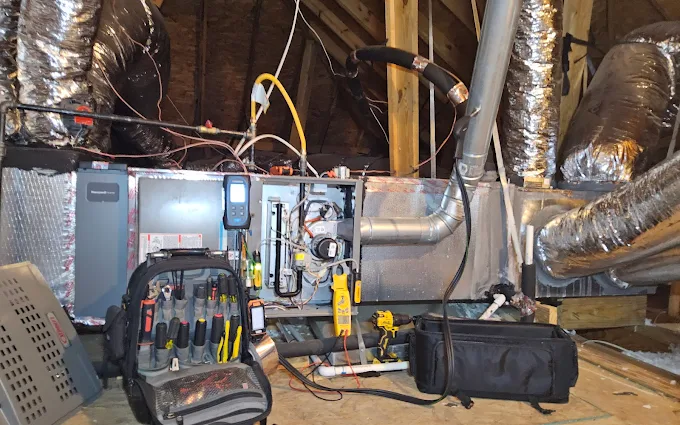
Air Conditioning System Sizing: Perfect Fit, Perfect Chill
August in The Woodlands can feel like walking into a sauna the second you step outside. On those 98° afternoons with humidity pushing past 80%, your air conditioner isn’t a luxury—it’s survival gear. Yet many homes and small businesses across Montgomery County are running systems that are either too big, too small, or mismatched for their space. The result? Hot and cold spots, sky-high energy bills, and equipment that seems to need repairs every season.
National studies show that nearly 50% of AC systems in U.S. homes are improperly sized. In hot, humid climates like ours, that number is often even higher. And in a place where cooling can make up over half of your annual energy bill, an incorrectly sized system is more than just an annoyance—it’s expensive.
This guide breaks down how proper AC sizing works, why it matters so much in The Woodlands, and what to expect from a professional design and air conditioning installation services visit. You’ll learn how sizing affects comfort, humidity, noise, and long-term costs—and how to make sure your next system is the perfect fit.
Key Insight: The right AC size isn’t about “bigger is better”—it’s about matching your system to your home, your lifestyle, and our Gulf Coast climate so you get steady comfort, healthy humidity, and lower operating costs.
Why “Rule of Thumb” AC Sizing Fails in The Woodlands
Walk into some showrooms and you’ll still hear rules like “one ton per 500 square feet.” That might sound simple, but in a place like The Woodlands—with two-story homes, open floor plans, and heavy tree cover—it’s a recipe for problems.
A 2,400-square-foot home in Alden Bridge, for example, recently called us about short cycling and clammy air. They had a 5-ton unit installed by a builder who used square footage alone. After a full load calculation, we found the house only needed 3.5–4 tons thanks to good insulation, newer windows, and shade from mature trees.
“Most comfort complaints are not about the brand of the equipment—they’re about design and sizing.” — HVAC Design Pro, ACCA Manual J Committee
Why square-foot estimates fall short here:
- Different sun exposure: A west-facing home in The Woodlands Hills bakes in the afternoon sun, while a heavily shaded Panther Creek home may need less capacity.
- Varied insulation levels: Older neighborhoods often have less attic insulation than newer builds in Creekside Park.
- Window types and sizes: Big two-story windows on the south or west side drastically change the cooling load.
- Occupancy and lifestyle: A home with five people working and learning from home needs more cooling than a similar-sized home with two retirees.
Professional central air conditioning installation company standards call for detailed calculations that factor in construction, orientation, insulation, windows, duct design, and more. In The Woodlands’ climate, skipping that step almost guarantees discomfort or high bills—or both.
How Proper AC Sizing Works: Manual J, D, and S in Real Life
Proper sizing is more science than guesswork. Reputable contractors use ACCA (Air Conditioning Contractors of America) design standards—primarily Manuals J, D, and S—to match equipment to your home.
Manual J: Calculating Your Home’s Cooling Load
Manual J is the industry-standard method for determining how much cooling your space really needs. A thorough Manual J for a home in The Woodlands considers:
- Square footage and ceiling heights
- Insulation levels in walls and attic
- Window size, orientation, and shading
- Air leakage and construction quality
- Number of occupants and typical usage
- Internal heat from lights, electronics, and appliances
Example:
We recently evaluated a 3,000-square-foot home near Hughes Landing. Square-foot rules suggested a 6-ton unit. Manual J, factoring in spray foam insulation, high-performance windows, and deep roof overhangs, showed a cooling load of just 4 tons. Installing 6 tons would have caused constant short cycling and poor humidity removal.
Manual D: Matching the Ductwork
Even the best-sized system will struggle with bad ducts. Manual D focuses on duct design:
- Correct duct sizing and layout
- Balanced airflow to each room
- Proper return air sizing
- Static pressure and airflow targets
Pairing a new system with old, undersized ducts is one of the most common mistakes we see in The Woodlands, especially in homes that have been added onto over the years.
Manual S: Selecting the Actual Equipment
Once the load is known, Manual S matches that load to specific equipment:
- Choosing capacity that matches—not exceeds—calculated loads
- Accounting for real-world performance in high heat and humidity
- Selecting appropriate blower and fan speeds
Oversized vs. Undersized Systems: How Each One Hurts You
Improperly sized systems usually fall into two camps: oversized (too big) or undersized (too small). Both create real problems, especially in our humid Gulf Coast climate.
Oversized Systems: Quick Bursts, Constant Discomfort
An oversized unit cools the air temperature rapidly, then shuts off. That might sound efficient, but it creates:
- Poor humidity control: The system doesn’t run long enough to remove moisture, leaving the house cool but clammy.
- Short cycling: Frequent starts and stops wear out compressors and parts faster.
- Temperature swings: Rooms feel alternately chilly and warm, instead of consistently comfortable.
- Higher bills: Start-up is when ACs use the most energy; more cycles mean more cost.
Case in point:
A family in Cochran’s Crossing upgraded to a larger unit after a particularly hot summer, thinking “more power” would solve their issues. Their home felt colder, but musty odors and condensation on vents became a weekly complaint. A humidity reading showed indoor levels hovering around 65–70%. We replaced the oversized system with a properly sized variable-speed unit and adjusted the ducts—humidity dropped into the 45–50% range, and odors disappeared.
Undersized Systems: Always Running, Never Catching Up
Undersized units struggle to keep up on 95° days:
- Constant run time: The system runs almost non-stop, driving up energy costs and wear.
- Inadequate cooling: Upper floors or sunny rooms never quite cool down.
- Stressed components: Prolonged operation at full capacity shortens system life.
A small office near Market Street had a residential-sized, undersized system trying to cool a space with full glass frontage. The system ran from 10 a.m. to 7 p.m. without stopping and still couldn’t keep the lobby below 78°. After a proper load calculation, we installed a right-sized light commercial system and redesigned the ductwork. Run time and noise dropped dramatically, and indoor temps stabilized around 74°.
Quick Comparison
| Issue | Oversized System | Undersized System |
|---|---|---|
| Run Time | Short, frequent cycles | Long, almost continuous |
| Humidity Control | Poor – air feels clammy | Fair – but temps may never reach setpoint |
| Wear and Tear | High (short cycling) | High (constant running) |
| Comfort | Temperature swings, drafts | Hot spots, especially upstairs |
| Typical Energy Use | Higher than right-sized | Higher than right-sized |
Both extremes cost more to run and maintain than a properly sized system. Working with a professional ac system installation team that prioritizes sizing prevents these expensive headaches.
Matching System Type to Your Space: Central, Ductless, or Heat Pump?
Sizing isn’t just about tonnage; it’s also about choosing the right type of system for your home or business in The Woodlands.
Central Split Systems
Most single-family homes here use central split systems with ductwork. When sized and installed correctly, they offer:
- Even whole-home comfort
- Wide range of efficiency options
- Compatibility with smart controls and zoning
They rely heavily on duct design. For new homes or major renovations, proper duct installation services are just as important as the unit size.
Ductless Mini Splits
For garages, bonus rooms, sunrooms, or older homes without ducts, ductless mini split installation can be a perfect fit:
- Independent temperature control per room
- No duct losses (which can be 20–30% of energy use)
- Great for additions or problem rooms
Example:
A homeowner in Sterling Ridge finished out a garage workshop and initially tied it into the existing central system. The main home started feeling warmer, and bills spiked. We removed that extra load from the central system and installed an appropriately sized ductless unit for the garage. The main house returned to normal comfort, and the workshop finally held a steady, cool temperature.
High-Efficiency Heat Pumps
Modern heat pumps are excellent for The Woodlands’ mild winters and long cooling seasons. With good heat pump installation services and proper sizing, they can:
- Deliver efficient cooling in summer
- Provide economical heating in winter
- Pair with gas furnaces in dual-fuel setups
Choosing between central, ductless, or heat pump solutions is part of the sizing conversation. A seasoned contractor will walk you through these options based on your layout, comfort goals, and budget.
The Hidden Role of Ductwork, Humidity, and Controls in “Right-Sized” Comfort
Even a perfectly sized unit can underperform if the supporting systems aren’t up to par. In The Woodlands’ climate, three factors stand out: ducts, humidity control, and thermostats.
Ductwork: The Highway for Your Cool Air
Leaky, undersized, or poorly routed ducts can make a right-sized system act undersized. Common issues we see:
- Supply ducts too small for the new system
- Return air undersized, choking airflow
- Leaky joints dumping cold air into the attic
- Poorly balanced branches leading to hot and cold rooms
One Creekside Park homeowner upgraded to a high-efficiency system but saw almost no improvement in upstairs comfort. A quick inspection showed major duct leaks and an undersized return. With targeted duct repair services and added return capacity, the same unit suddenly delivered the comfort it was designed for.
Humidity Control: Comfort You Can’t See
In our area, humidity control is as important as temperature. Proper sizing directly affects:
- How long the system runs (and dehumidifies)
- Whether you need supplemental humidity control services
- Risk of mold growth and musty odors
A slightly smaller, longer-running system often does a better job managing humidity than a larger, short-cycling unit.
Thermostats and Controls
Smart controls can fine-tune a correctly sized system:
- Programmable and smart thermostats allow precise scheduling
- Multi-stage systems need compatible controls to operate efficiently
- Zoning can tailor comfort to different floors or wings
Upgrading during installation with thermostat installation services—especially to a smart thermostat—helps your new system deliver on its efficiency promises.
“Think of your AC as part of a system. The equipment, ducts, controls, and even your habits all work together to create comfort—or frustration.” — Senior Comfort Specialist, Conley Cooling and Heating
Cost, Efficiency, and Lifespan: What Proper Sizing Saves You
Right-sized systems aren’t just more comfortable—they’re more economical over the life of the equipment.
Upfront vs. Lifetime Cost
Homeowners sometimes pick a bigger system thinking it will “future-proof” their home. In reality, this often means:
- Higher purchase cost for larger equipment
- Higher installation cost (larger electrical, bigger ducts, etc.)
- Higher operating costs due to inefficiency
A properly sized system balances initial investment with long-term savings.
Typical Local Cost Comparison (Illustrative)
| System Choice | Upfront Cost (Relative) | Est. Annual Energy Use | Expected Lifespan | Notes |
|---|---|---|---|---|
| Undersized Budget System | Low | High | Shorter | Constant running, frequent repairs |
| Oversized “Comfort” System | High | High | Shorter | Short cycling, poor humidity control |
| Right-Sized, Mid-Efficiency System | Moderate | Moderate | Standard | Best balance of cost and comfort |
| Right-Sized, High-Efficiency System | Higher | Lowest | Standard+ | Best for long-term savings and comfort |
In The Woodlands, where AC may run 8–10 months a year, even a 10–15% efficiency improvement can add up to hundreds of dollars saved annually.
Maintenance and Repairs
Right-sized systems also tend to:
- Require fewer emergency repairs
- Experience less compressor and motor stress
- Benefit more from regular air conditioning tune ups
A local business in Town Center that upgraded from an oversized 15-ton rooftop unit to two properly sized, staged units saw service calls drop by more than half over three years, simply because the new equipment wasn’t constantly cycling itself to death.
What This Means for Businesses and Homeowners in The Woodlands, TX
The Woodlands isn’t just “hot”—it’s hot, humid, and growing fast. New construction, remodels, and commercial build-outs are happening constantly, and each one needs cooling that’s tailored, not generic.
For homeowners, that means:
- Avoiding “builder grade” shortcuts that size systems by square footage alone
- Re-evaluating sizing when you add rooms, enclose patios, or finish garages
- Considering ductless or zoning options for multi-story or complex layouts
For local businesses—boutiques in Market Street, restaurants on Waterway Avenue, medical offices near St. Luke’s—proper sizing affects:
- Customer comfort (and how long they stay)
- Employee productivity
- Equipment reliability during peak summer hours
A local café near Lake Woodlands struggled with uneven cooling—customers near the windows roasted, while the counter staff froze. Their original rooftop system was oversized for the space and poorly ducted. After redesigning their commercial ac services setup with right-sized units and better distribution, the space became consistently comfortable, and their utility costs dropped.
Because our climate puts such a heavy load on cooling systems, the cost of getting sizing wrong is higher here than in milder areas. On the other hand, getting it right delivers:
- Steady, even temperatures throughout your space
- Drier, healthier indoor air
- Lower monthly bills and fewer emergency calls
- Longer system life and better return on your investment
For The Woodlands community—where we value comfortable homes, thriving local businesses, and long-term planning—proper AC sizing isn’t a detail. It’s a foundation.
Frequently Asked Questions
Q: How do I know if my current AC system is the wrong size?
A: There are several warning signs. If your system turns on and off frequently, cools the house quickly but leaves it feeling humid or clammy, it may be oversized. If it runs almost constantly on hot days and still struggles to reach your set temperature, it may be undersized. Uneven temperatures between rooms or floors, frequent air conditioning repair services, or sudden jumps in your energy bills can also indicate sizing or design issues. A professional assessment, including a load calculation and duct inspection, is the most reliable way to know for sure.
Q: What is a Manual J calculation and is it really necessary?
A: A Manual J calculation is the industry-standard method for determining how much cooling and heating your specific home or building needs. It accounts for square footage, insulation, windows, orientation, occupancy, and more. In a climate like The Woodlands, with high humidity and intense sun, a proper Manual J is essential to ensure your system is neither too big nor too small. Skipping it and relying on rules of thumb often leads to oversized units, poor humidity control, and higher bills. Any reputable hvac thermostat installation contractor or installer should be familiar with Manual J and able to provide or explain the results.
Q: Will a bigger AC cool my home faster and better in our Texas heat?
A: It may cool the air temperature faster, but that doesn’t mean better comfort. In The Woodlands’ humidity, bigger systems often shut off before they’ve removed enough moisture from the air, leaving your home cool but sticky. Oversized units also short cycle, which increases wear and tear and reduces efficiency. You’ll likely see more noise, more repairs, and higher energy bills. A correctly sized system, possibly with multi-stage or variable-speed technology, will run longer cycles at lower output, providing more even cooling and better humidity control.
Q: We’re adding a room and enclosing a patio—do we need a new system or can we tie into the old one?
A: That depends on the capacity of your existing system and how close it already is to its design limits. Simply tying new spaces into existing ducts without recalculating the load is a common mistake in The Woodlands and often leads to comfort issues in both the original and new areas. A contractor should perform a fresh load calculation for the entire home, including the addition, and then determine whether your current system can handle it or if you’d be better off with a larger central unit, a second system, or a dedicated mini split ac installation contractor solution for the new space.
Q: How does proper sizing affect indoor air quality and humidity?
A: Proper sizing is crucial for humidity control. A right-sized system runs long enough each cycle to pull moisture from the air, keeping indoor humidity in the comfortable 40–55% range. Oversized systems short cycle and often leave humidity too high, which can encourage mold growth, dust mites, and musty odors. Undersized systems may run constantly yet still struggle during peak heat. Pairing a right-sized system with good filtration or air purification system installation and, if needed, dedicated indoor humidity control solutions gives you both comfort and healthier air.
Q: What’s different about sizing AC for a business versus a home in The Woodlands?
A: Commercial spaces often have higher internal loads from people, lighting, and equipment, plus more glass and varying occupancy throughout the day. A restaurant on Lake Woodlands Drive, for example, experiences big swings between lunch rush and midafternoon lull. Properly designed commercial ac services account for these variables, often using zoning, staged equipment, and more robust ventilation. While the same Manual J/D/S principles apply, commercial design also considers code requirements, fresh air needs, and building usage patterns more heavily than in residential projects.
Q: If my system is the wrong size, do I have to replace it immediately?
A: Not always. If the system is relatively new and only slightly mis-sized, improvements to ductwork, controls, and seasonal heating maintenance services can sometimes mitigate the issues. For example, adjusting airflow, adding returns, or installing a variable-speed blower can help. However, if your system is significantly oversized or undersized and you’re facing frequent repairs or high utility bills, replacing it with a properly sized unit often makes financial sense. A trusted contractor can provide a cost-benefit comparison so you can decide whether to repair, adapt, or replace.
Ready to Get Started?
The hottest months in The Woodlands put every weakness in your cooling system under a spotlight. If your home feels clammy, unevenly cooled, or your AC seems to run constantly, now is the time to address sizing and design—not after another season of high bills and emergency calls.
A professional assessment from Conley Cooling and Heating includes a detailed load calculation, duct evaluation, and a clear set of options tailored to your home or business. Whether you’re planning a full new air conditioner installation near me, considering furnace and heating system installation as part of a full HVAC upgrade, or simply want to understand how well your current system is matched to your space, taking action before peak summer gives you more choices and better scheduling.
Conley Cooling and Heating is locally rooted, fully licensed and insured, and committed to doing the job the right way—by design, not guesswork. Schedule your evaluation today and make sure your next system is a perfect fit for perfect chill, all year long.
About Conley Cooling and Heating
Conley Cooling and Heating serves homeowners and businesses throughout The Woodlands, TX, and surrounding communities with expert HVAC design, installation, repair, and maintenance. Our team focuses on proper system sizing, quality workmanship, and long-term comfort solutions tailored to the Gulf Coast climate. From high-efficiency AC and heat pumps to indoor air quality and ductwork, we bring years of hands-on local experience to every project. Learn more about our services and story at Conley Cooling and Heating’s website.