
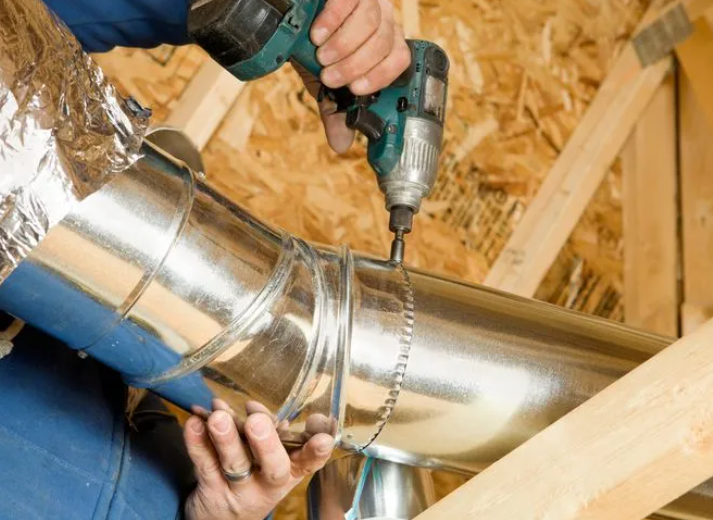
Duct Installation: Enhancing Energy Efficiency
On a 98-degree afternoon in The Woodlands, you expect your AC to keep up. Yet many homes and offices here struggle with hot rooms, high bills, and systems that seem to run nonstop. In a lot of cases, the problem isn’t the air conditioner itself—it’s the ductwork moving that cooled air through your building.
According to the U.S. Department of Energy, typical duct systems lose 20–30% of the air moving through them due to leaks, poor design, or bad installation. In a climate like ours—hot, humid, and with long cooling seasons—that wasted air turns into hundreds of dollars a year in lost energy.
This is why duct installation isn’t just a construction detail; it’s a major factor in your comfort, indoor air quality, and operating costs.
In this guide, you’ll learn how properly designed and installed ductwork can dramatically improve energy efficiency, what modern duct systems look like, how to evaluate your current setup, and when to consider upgrades or alternatives in your Woodlands home or business.
Key Insight: Thoughtful, professional duct installation can turn the same AC or heating equipment into a quieter, more comfortable, and significantly more efficient system—without sacrificing comfort in any room.
Why Ductwork Matters More Than Most People Realize
Most people focus on the “big box” outside or in the attic, but your ducts are the highway that delivers conditioned air where you actually live and work. If that highway is full of potholes, dead-ends, and bottlenecks, even the best system will underperform.
In The Woodlands, we see several recurring duct problems:
- Long, undersized flex runs in hot attics
- Poorly sealed joints and connections
- Supply vents in the wrong locations
- Return air that’s too small (or missing in key rooms)
A homeowner in Alden Bridge recently called us because their upstairs bedrooms were 7–8 degrees warmer than downstairs. Their system was relatively new, installed by a large central air conditioning installation company. The equipment wasn’t the issue. When we inspected the ductwork, we found:
- Two major leaks near the plenum
- Kinked flex duct restricting airflow
- No dedicated return in the hottest bedroom
By redesigning and reinstalling portions of the duct system, we dropped the temperature difference to 1–2 degrees and cut their summer electric bill by about 15%. The AC unit didn’t change—only the ductwork.
“Ducts are part of the system, not an afterthought. If they’re wrong, everything else pays the price.” — Senior HVAC Designer, Conley Cooling and Heating
CALLOUT: If you’ve ever said, “This room is always hot,” you likely have a ductwork issue, not just an equipment problem.
Designing High-Efficiency Duct Systems for Texas Heat
Efficient duct installation starts long before the first piece of metal or flex goes in. It begins with design. For new homes, remodels, and commercial build-outs in The Woodlands, we follow ACCA Manual D and Manual J standards to size and lay out duct systems correctly.
What goes into a good duct design?
- Accurate load calculation – How much heating and cooling each room really needs
- Right-sized ducts – Too small causes noise and poor airflow; too large wastes money and space
- Short, direct runs – Minimizing turns and distance reduces friction and energy use
- Balanced supply and return – Each room gets what it needs and can “breathe” properly
- Insulation and sealing strategy – Especially critical in hot Texas attics
For a recent new construction project off FM 1488, the builder initially planned a typical “cookie-cutter” duct layout. We redesigned it to:
- Shorten several long attic runs
- Increase return air capacity in the living room
- Add zoning to separate the master suite from the main living area
The result: the homeowner was able to install a slightly smaller system than originally specified, and the ductwork cost only marginally more. Their monthly bills are lower, and comfort is more consistent.
If you’re planning new air conditioner installation near me or a major remodel, getting the duct design right from the start can:
- Reduce equipment size (and cost)
- Lower long-term energy bills
- Prevent hot/cold spots and noise issues
Modern Duct Materials and Methods vs. “Old School” Approaches
Not all duct systems are created equal. Older homes around Grogan’s Mill and Panther Creek often have a mix of metal ducts, aging flex, and sometimes even uninsulated runs. Modern systems use better materials and techniques to boost efficiency and durability.
Here’s a comparison of common approaches we see in The Woodlands:
| Aspect | Traditional / Older Ducts | Modern, High-Efficiency Ducts |
|---|---|---|
| Material | Bare metal, thin flex, sometimes uninsulated | Rigid metal + high-quality insulated flex |
| Sealing | Duct tape, loose fittings | Mastic sealant, UL-rated tapes, tight fittings |
| Insulation Level (Attic) | R-4 to R-6 or none | R-8 or higher, per current best practices |
| Layout | Long runs, sharp bends, “spider” layouts | Short runs, smooth transitions, trunk-and-branch |
| Sizing | Rule-of-thumb, “what we’ve always done” | Manual D calculations and friction-rate design |
| Performance | 20–30% air loss common | Single-digit leakage achievable |
We recently upgraded the ductwork in a 20-year-old office building near Market Street. The original system had leaky metal ducts with minimal insulation. We replaced key sections with properly sealed and insulated ducts, rebalanced the airflow, and tied it into their existing rooftop units.
The building manager reported:
- Quieter operation in open office areas
- Fewer hot complaints from corner offices
- Noticeable drop in summer demand charges from their utility
If your system is older and you’re already scheduling air conditioning repair services regularly, evaluating your ducts at the same time can uncover hidden efficiency gains.
“Upgrading ducts can sometimes deliver more real-world savings than simply buying a higher SEER unit.” — Energy Auditor, Houston Metro
Duct Installation, Indoor Air Quality, and Comfort
Ducts don’t just move air; they shape the quality of the air you breathe. Leaky, poorly installed ductwork can pull dusty, hot attic air into your system, or push conditioned air into spaces you don’t want to heat or cool.
In The Woodlands, with our pollen, mold, and humidity challenges, that can lead to:
- Excess dust in living and work spaces
- Musty smells from attics or crawlspaces
- Aggravated allergies and respiratory issues
- Condensation problems on vents and duct surfaces
A family in Cochran’s Crossing came to us with complaints of musty odors whenever the AC kicked on. They were considering air purification system installation to address allergies. During our inspection, we found multiple return ducts pulling air from the attic due to disconnected boots and gaps.
We:
- Repaired and sealed the duct connections
- Added proper insulation where it was missing
- Recommended targeted air filtration system installation to complement the fixed ductwork
Once the duct leakage was resolved, the odor disappeared and allergy symptoms improved even before the new filtration was installed.
CALLOUT: Before investing in high-end filtration or purification, make sure your duct system isn’t the source of the problem. Sealing and correcting ductwork is often the most cost-effective first step.
For homes and businesses with serious contamination concerns, we may recommend:
- Duct fogging services for sanitizing and treating microbial growth
- Additional humidity control services to keep moisture in check
- Strategic returns and supplies to promote better circulation and filtration
When Traditional Ducts Aren’t the Best Answer
While well-designed ducts work beautifully in many Woodlands homes and offices, there are situations where traditional ducted systems are inefficient, impractical, or too invasive to install.
Common examples:
- Room additions or garage conversions
- Older homes with limited attic or crawlspace access
- Detached offices, studios, or guest suites
- Commercial spaces with changing layouts
In these cases, we often recommend ductless mini split installation as a smart alternative. Ductless systems deliver:
- High efficiency (often 20+ SEER)
- Individual room control
- No duct losses in hot attics
- Minimal construction or disruption
We recently helped a small business owner off Research Forest who turned a warehouse corner into a podcast studio. Extending the existing duct system would have required major construction and risked unbalancing the rest of the building. Instead, we installed a single-zone ductless system.
The benefits were immediate:
- Quiet, precise temperature control for recording sessions
- No impact on the rest of the building’s airflow
- Lower operating costs compared to extending ductwork
For larger homes, we sometimes combine both approaches—central ducts for main living areas and multi zone mini split installation for bonus rooms, upstairs game rooms, or sunrooms that are hard to keep comfortable.
If you already have ductless equipment, proper ductless mini split repair services and maintenance are just as important as duct care in a traditional system.
Integrating Duct Installation with Your Overall HVAC Strategy
Your ductwork shouldn’t be planned in isolation. It needs to work hand-in-hand with your equipment, controls, and usage patterns. In The Woodlands, where you may run cooling most of the year and heat only during short cold snaps, smart system integration can pay off quickly.
Key pieces that should be planned together:
- Equipment type and size
- High-efficiency systems like energy efficient heat pump systems or variable-speed units often need carefully sized and balanced ducts.
- Controls and zoning
- A well-designed duct system paired with professional thermostat installation services and zoning can give you precise control room-by-room.
- Ventilation and filtration
- Duct layout should support your indoor air quality goals, including whole house air filtration services or UV purification.
- Future expansion
- Planning for potential add-ons or remodels can avoid costly duct rework later.
A recent whole-home upgrade in Creekside Park illustrates this. The homeowners were replacing an aging furnace and AC with a dual fuel heat pump installation. Instead of just swapping equipment, we:
- Reassessed the existing duct design
- Upsized a few key runs to support variable-speed airflow
- Added additional returns in the master suite
- Installed a smart thermostat through a smart thermostat installation company partner
The result was a quiet, even comfort level throughout the house and significantly lower utility bills, especially during shoulder seasons when the heat pump could operate at its most efficient settings.
“The biggest efficiency gains usually come from treating the home as a system, not a collection of parts.” — Home Performance Consultant, Montgomery County
Evaluating and Upgrading Existing Ductwork in The Woodlands
If you already have a central system, how do you know whether your ducts are helping or hurting your efficiency? There are some telltale signs that it’s time to bring in an experienced hvac ductwork installation contractor for an evaluation.
Red flags to watch for
- Rooms that are always hotter or colder than others
- Excessive dust or musty smells
- High energy bills despite newer equipment
- Noisy airflow or whistling vents
- Visible ductwork in the attic that is crushed, kinked, or disconnected
In a townhouse near Hughes Landing, a client called us for residential air conditioner repair because their system “couldn’t keep up.” The AC checked out fine, but a duct inspection revealed:
- Several flex runs crushed under stored boxes in the attic
- Leaky boots where ducts met ceiling registers
- Poorly insulated runs passing through hot attic spaces
By performing targeted duct repair services, sealing leaks, and improving insulation, we restored airflow and significantly improved comfort—without replacing the AC.
Here’s a simple way to think about your options:
| Situation | Best First Step |
|---|---|
| Older ducts, recurring comfort issues | Duct inspection and leakage testing |
| New system with existing older ductwork | Duct evaluation during professional ac system installation |
| Renovation or addition planned | New duct design / new construction duct installation |
| Localized problem area (one room/zone) | Targeted residential ductwork repair services or ductless |
| Major layout or usage change in building | Full system redesign (ducts + equipment + controls) |
What This Means for Businesses in The Woodlands, TX
For local businesses—from medical offices along I-45 to retail shops at Market Street—duct efficiency directly affects operating costs and customer comfort. Commercial buildings often have more complex duct systems and longer runs, which magnify any design or installation flaws.
Poorly installed or aging ducts in a commercial space can lead to:
- Hot and cold zones that frustrate staff and customers
- Higher demand charges from running rooftop units harder than necessary
- Indoor air quality issues that impact productivity and customer experience
We’ve seen restaurants with overworked kitchen staff because dining areas were comfortable while prep areas baked, all due to unbalanced ductwork. In another case, a professional office near The Woodlands Mall was considering a full system replacement. After a thorough review, targeted duct modifications and balancing, plus some commercial ac services, delivered much of the improvement they were seeking at a fraction of the cost.
If you manage or own a commercial property, pairing high-quality duct design and installation with services like commercial air conditioning installation, commercial heating services, and planned maintenance can:
- Lower your total cost of ownership
- Extend equipment life
- Create a more consistent, pleasant environment for customers and employees
In a climate like The Woodlands, where HVAC is one of the largest line items on your utility bill, well-designed and maintained ductwork isn’t optional—it’s a smart business decision.
Frequently Asked Questions
Q: How much energy can I really save by improving my ductwork?
A: In our experience around The Woodlands, sealing and correcting poorly installed ducts can reduce heating and cooling costs by 10–30%, depending on the starting condition. National studies back this up, showing that typical systems lose a significant portion of conditioned air through leaks and design flaws. If you’re already investing in air conditioning installation services or high-efficiency equipment, pairing that with efficient ductwork ensures you actually see the savings you’re paying for. We often recommend a duct evaluation when homeowners complain about high bills, uneven temperatures, or noisy airflow.
Q: Can I just patch or tape my ducts myself?
A: You can address minor visible issues, but there are some limitations. Standard “duct tape” actually performs poorly on real duct systems over time. Professionals use mastic sealant, UL-rated foil tapes, and proper fittings to create durable seals that withstand our heat and humidity. More importantly, many of the most damaging leaks and restrictions are hidden in attics, behind walls, or at equipment connections. A trained technician from a local air duct repair contractor can test for leakage, assess airflow, and ensure any fixes don’t accidentally create other problems like noise or pressure imbalances.
Q: My AC is new. Do I still need to worry about the ducts?
A: Yes—especially if your ductwork wasn’t upgraded when the system was replaced. We frequently see homes in The Woodlands with brand-new equipment connected to 20-year-old ducts. That’s like putting a new engine in a car with a clogged exhaust. When you schedule residential ac installation contractor services, ask whether your duct system has been evaluated for size, layout, and leakage. Sometimes minor improvements, such as adding returns, resizing key runs, or sealing joints, can unlock the full performance of your new unit and protect your investment.
Q: Is ductless a better option than ducts for my home?
A: It depends on your layout, comfort issues, and budget. Ductless systems are excellent for specific situations—additions, bonus rooms, or parts of the home that are hard to reach with ducts. They’re also extremely efficient and flexible. However, for many standard floorplans in The Woodlands, a well-designed ducted system remains the most cost-effective way to heat and cool the entire home. We often recommend a mix: central ducts for main living areas, plus targeted mini split ac installation contractor solutions for problem zones. A professional assessment will help determine what combination gives you the best comfort and efficiency.
Q: How do ducts affect my indoor air quality and allergies?
A: Ducts play a major role in how clean and healthy your indoor air is. Leaky returns can pull dust, insulation fibers, and attic air into your system, while poorly insulated ducts can create condensation that encourages mold growth. In homes where we’re adding whole home air purification services or hepa air filtration systems, we often start by sealing and correcting duct issues first. That way, your filtration and purification equipment isn’t fighting against a leaky, contaminated distribution system. In some cases, we also recommend air duct disinfection services as part of a comprehensive indoor air quality plan.
Q: How long does professional duct installation or replacement take?
A: Timing depends on the size and complexity of your system. For a typical single-family home in The Woodlands, a full duct replacement may take one to two days, including removal of old materials, installation, sealing, insulation, and balancing. Partial upgrades or targeted hvac duct sealing and repair can often be completed in less time. For commercial projects, timelines vary widely based on building size and whether work is done after hours to minimize disruptions. We always walk you through a detailed plan and schedule before starting any major duct project.
Q: Should I address ductwork before or after replacing my AC or furnace?
A: Ideally, you assess and design both together. When we provide heating installation services or furnace and heating system installation, we evaluate the ducts at the same time to ensure they’re properly sized and configured for the new equipment. If your budget requires a phased approach, we can prioritize the most critical duct issues first, then revisit additional improvements when you schedule new heating system installation near me or AC replacement. The key is to treat the duct system as part of the overall upgrade, not an afterthought.
Ready to Get Started?
Hot spots, high bills, and constant dust don’t have to be “just the way your house is.” In a demanding climate like The Woodlands, your duct system can either fight against you or quietly support year-round comfort and efficiency.
If you’re planning equipment upgrades, noticing uneven temperatures, or simply wondering whether your ducts are costing you money every month, this is the ideal time to act. Seasonal extremes in our area mean your system works hard for much of the year—any improvements you make now pay you back quickly in comfort and lower energy usage.
Conley Cooling and Heating can evaluate your current ductwork, recommend practical options—from targeted repairs to complete duct installation services—and coordinate them with your AC and heating needs, whether that’s heat pump installation services, tune-ups, or smart thermostat upgrades. Our team understands local homes, local buildings, and local weather, and we design solutions that work in the real world, not just on paper.
About Conley Cooling and Heating
Conley Cooling and Heating is a locally trusted HVAC expert serving The Woodlands and surrounding communities. Our team brings years of hands-on experience in system design, furnace installation and replacement, AC upgrades, and custom ductwork for both homes and businesses. We follow industry-leading standards, stay current with modern technologies, and take pride in doing the job right the first time. Whether you need a simple repair, a full residential air duct installation, or help improving indoor air quality, we’re here to help you create a more comfortable, efficient space.