
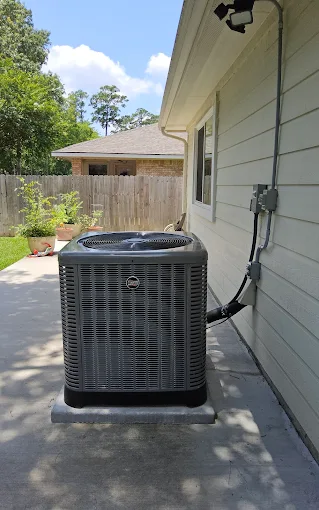
Air Conditioning Troubleshooting Tips for Homeowners
On a 98° afternoon in The Woodlands, a quiet AC isn’t just an inconvenience—it’s an emergency. Between May and September, our area routinely sees heat indexes over 105°, and CenterPoint’s usage data shows summer electric demand in Montgomery County can spike more than 40% compared to spring. When your system struggles during those peak hours, your home heats up quickly, indoor humidity soars, and energy bills climb.
That’s why knowing a few smart air conditioning troubleshooting steps can make a big difference. You can often spot small issues early, avoid unnecessary service calls, and protect your system from major damage. And when a problem is beyond a DIY fix, you’ll know what to tell your technician so they can solve it faster.
You’ll learn how to recognize common AC symptoms, what to check safely on your own, when it’s time to call a pro, and how to prevent repeat breakdowns—all tailored to homes here in The Woodlands and surrounding communities.
Key Insight: A few minutes of smart troubleshooting can protect your comfort, lower your bills, and keep your system from failing when you need it most.
1. Start with the Basics: Power, Thermostat, and Airflow
Many AC “emergencies” in The Woodlands end up being something simple. Before you assume the worst, run through a quick checklist. Homeowners are often surprised how many no-cool calls are solved with a thermostat setting or a tripped breaker.
Check your thermostat first
If your system isn’t turning on or isn’t cooling:
- Make sure it’s set to Cool, not Heat or Fan.
- Confirm the set temperature is a few degrees lower than the room temp.
- Replace batteries if it’s a battery-powered model.
- Look for error codes or blank screens.
If you’ve recently upgraded to a smart model through smart thermostat installation company services, double-check Wi-Fi and app settings. More than once, we’ve seen a Woodlands homeowner accidentally put their system in “Eco” mode while out of town, only to come home to a warm house.
“Always rule out thermostat and power issues before assuming your AC has failed.” — Senior Tech, Conley Cooling and Heating
Confirm the system has power
If nothing happens when you lower the thermostat:
- Check the indoor unit switch (often looks like a light switch near the furnace or air handler).
- Inspect your breaker panel for any tripped breakers and reset once.
- Some outdoor units have a disconnect box nearby—make sure it’s in the ON position.
If the breaker trips again immediately, stop there. That usually means a deeper electrical or mechanical problem that needs air conditioning repair services.
Don’t forget airflow
Insufficient airflow can make a healthy system look like a failing one:
- Replace a dirty filter (or at least inspect it). In our humid climate, filters clog faster with dust and biological growth.
- Open supply vents in rooms that feel too warm.
- Ensure large furniture, rugs, or drapes aren’t blocking vents or returns.
CALLOUT: If your thermostat looks normal, breakers are set, and airflow seems fine but you still have no cool air, it’s time to move beyond the basics and look at specific symptoms.
2. When the AC Runs but Doesn’t Cool: Temperature & Humidity Clues
One of the most common complaints we hear is, “The system runs all day, but the house never gets comfortable.” In The Woodlands, that often shows up as high indoor humidity, stuffy rooms, and a thermostat that never reaches the set temperature.
Is it really “not cooling,” or just working hard?
During extreme heat waves, even a properly sized system may run longer. But if your home can’t get within 3–4 degrees of the setpoint, something’s off.
Check:
- Supply air temperature: Place a simple thermometer at a supply vent and another at a return grille.
- You should see a 15–20°F difference.
- If the difference is less than 12°F, you may have low refrigerant, airflow issues, or coil problems.
- Indoor humidity: If it feels sticky, your system might be short-cycling or oversized.
Homeowners who recently invested in air conditioning installation services sometimes report “cool but clammy” homes. That can indicate an oversized system or duct issues, not necessarily a bad unit.
Common causes you can spot
If the air is on but not cool:
- Check the outdoor unit:
- Is the fan spinning?
- Do you hear the compressor humming or clicking repeatedly?
- Look at the refrigerant lines:
- Heavy frost or ice is a red flag—turn the system off and let it thaw.
If you see ice, don’t chip it off. That can damage the coil. Shut the system down and switch the thermostat fan to “On” to help thaw, then call a local ac repair company for a proper diagnosis.
A real-world example
A family near Creekside Park called us because their system ran nonstop but the upstairs stayed at 80°. Filter was clean, thermostat fine. Our tech found a severely clogged indoor coil and undersized return ductwork. After cleaning the coil and correcting the return duct, their temperature split improved from 9°F to 18°F, and the upstairs finally matched the downstairs.
CALLOUT: If your AC runs constantly, your energy bills spike, and rooms stay warm, you may be losing money every hour you delay a professional evaluation.
3. Strange Noises, Smells, and Leaks: What They’re Telling You
Unusual sounds, odors, or water around your system are like warning lights on your car’s dashboard. Ignoring them can turn a small fix into a major repair—especially in our hot, humid climate where issues escalate quickly.
Noises that shouldn’t be ignored
Pay attention to:
- Grinding or screeching: Could be a failing blower or outdoor fan motor.
- Loud banging or clanking: Possible loose or broken components in the compressor or blower.
- High-pitched whistling: Often indicates duct leaks or a severely restricted filter.
One homeowner off Research Forest heard a “hissing” noise from a closet air handler. They assumed it was normal. Weeks later, the system froze up, and we found a significant refrigerant leak. Early attention could have saved them from a more expensive repair.
Odors and what they might mean
- Musty or “dirty socks” smell: Often indicates biological growth on coils or in ductwork.
- Burning smell (especially at startup): Could be dust burning off, but if it persists, it may be electrical.
- Chemical or refrigerant-like odor: Time to shut the system down and call a pro.
For recurring musty odors, many Woodlands homeowners benefit from hvac duct sanitizing and fogging or whole home air purification services to address contamination inside the system.
Water where it doesn’t belong
A small amount of condensation is normal, but you should not see:
- Water pooling around the indoor unit
- Stains on the ceiling below an attic air handler
- A constantly full drain pan
In The Woodlands, algae growth in condensate lines is a frequent culprit. A clogged drain can cause float switches to shut your system off—or worse, leak into your ceiling.
“A clogged drain line can turn into a ceiling repair in less than 24 hours during peak humidity.” — Conley Cooling and Heating Service Manager
CALLOUT: Any new noise, smell, or leak that appears suddenly is your cue to shut the system off and get it checked before serious damage occurs.
4. Ductwork, Airflow, and Hot/Cold Spots in Your Home
If some rooms in your home feel like the Arctic while others feel like a sauna, the problem may not be your AC unit at all—it could be your ductwork. In The Woodlands, where many homes have complex layouts and multiple stories, duct design and condition make a huge difference.
Signs of duct or airflow problems
- One or two rooms never reach the right temperature
- Very weak airflow from certain vents
- Excessive dust despite regular cleaning
- High energy bills even after seasonal heating maintenance services and AC tune-ups
Sometimes we find disconnected ducts in the attic, crushed flexible duct runs, or poorly sealed joints leaking conditioned air into the attic instead of your living spaces.
Traditional vs. modern airflow solutions
Here’s a quick comparison of common approaches we see in local homes:
| Approach | Pros | Cons |
|---|---|---|
| Closing supply vents | Easy DIY, no cost | Can increase static pressure, strain system |
| Booster fans on vents | Helps a specific room | Band-aid fix, may be noisy |
| Duct sealing and repair | Reduces leaks, improves overall comfort | Requires professional assessment |
| Zoning with separate dampers | Custom control by area | Higher upfront cost, best in larger homes |
| multi zone mini split installation | Excellent control, efficient | Additional equipment needed |
In many Woodlands homes, especially those with additions or converted spaces, adding a ductless mini split installation for problem areas is more effective than trying to force more air through already maxed-out ducts.
Real-world fix
We worked with a homeowner in Alden Bridge whose bonus room was always 8–10 degrees hotter than the rest of the home. Instead of oversizing the main system, we installed an energy efficient ductless systems unit dedicated to that room. Their main system ran less, humidity improved, and the bonus room became usable year-round.
CALLOUT: If your AC seems fine but comfort is inconsistent from room to room, a duct inspection or targeted duct repair may solve more than a new unit would.
5. When Is It Time to Repair, Upgrade, or Replace Your System?
Troubleshooting often leads to a bigger question: “Is it worth fixing, or should we replace it?” That decision is especially important in The Woodlands, where AC systems work hard for much of the year.
Key factors to consider
- Age of the system: Most systems last 10–15 years in our climate with proper care.
- Frequency of repairs: Multiple major repairs in a short period are a red flag.
- Energy bills: Older systems can cost significantly more to run.
- Comfort and humidity: Newer technology controls humidity better and runs more efficiently.
If your unit is over 12 years old and needs a major part like a compressor or coil, many homeowners find that a new system installed by a residential ac installation contractor makes more sense long-term.
Repair vs. replacement costs in The Woodlands
While exact pricing varies, here’s a general comparison we see locally:
| Scenario | Short-Term Cost | Long-Term Impact |
|---|---|---|
| Replace capacitor or contactor | Low | Good if system is under 10 years old |
| Replace blower or condenser fan motor | Moderate | Reasonable if system is in good condition |
| Replace compressor on 12+ year-old unit | High | Often better to invest in new system |
| New mid-efficiency central AC | Higher upfront | Lower bills, better comfort, warranty |
| High-efficiency or energy efficient heat pump systems | Highest upfront | Strong energy savings, dual heating/cooling |
We recently helped a Panther Creek homeowner replace a 15-year-old system that had needed three repairs in two summers. Their new high-efficiency system, installed by our professional ac system installation team, cut their summer electric bills by about 25% and dramatically improved humidity control.
CALLOUT: A trusted contractor should walk you through both options with clear numbers—not pressure you into replacement if a repair is still a good choice.
6. Preventive Steps to Avoid Future Breakdowns
Once you’ve made it through an AC scare, the next goal is simple: don’t repeat it. In our hot, humid climate, regular care is the difference between a reliable system and a mid-July breakdown.
Simple maintenance you can do
- Change filters regularly: Every 30–60 days in summer, depending on pets and dust.
- Keep vegetation and debris at least 2–3 feet away from the outdoor unit.
- Pour a small amount of vinegar into the condensate drain line (if accessible) a few times a year to discourage algae.
- Gently hose off the outdoor coil (with power off) to remove dirt and pollen.
Professional maintenance that pays off
Annual or semiannual tune-ups from a qualified contractor can:
- Catch failing parts before they cause a breakdown
- Verify refrigerant levels and performance
- Clean coils and drains
- Check electrical connections and safety components
Many Woodlands homeowners schedule spring AC tune-ups and fall heating tune-ups through seasonal heating maintenance services and AC maintenance visits. That’s especially valuable if you have a heat pump installation services system that runs year-round.
“Preventive maintenance is like an insurance policy for your comfort. It’s far cheaper than an emergency repair in August.” — Owner, Conley Cooling and Heating
Indoor air and humidity
Our Gulf Coast humidity is more than a comfort issue; it affects your system’s workload and health. Consider:
- whole home dehumidifier installation to ease the load on your AC
- whole house air filtration services to keep coils and ducts cleaner
- UV or uv air purification systems to reduce biological growth
CALLOUT: A little consistent care turns your AC from a constant worry into something you barely have to think about, even during our toughest heat waves.
What This Means for Homeowners in The Woodlands, TX
Living in The Woodlands means long, hot summers, quick weather swings, and plenty of humidity. Your air conditioning system isn’t just a luxury; it’s part of your home’s safety and health. Local building designs—with lots of windows, high ceilings, and large open spaces—put additional demands on your HVAC system and ductwork.
For homeowners here, troubleshooting knowledge has real benefits:
- Faster comfort restoration: You can rule out simple issues and restore cooling quickly, especially during evening and weekend hours.
- Lower repair costs: Catching problems early—like weak airflow, strange noises, or small leaks—can keep them from turning into major component failures.
- Better long-term planning: Understanding the signs of an aging or undersized system helps you plan for upgrades instead of being forced into an emergency replacement.
You’re also operating in a competitive energy market. With high summer usage and frequent air conditioning, even modest improvements in efficiency—from better filtration to duct repairs or a smart thermostat—can add up over the course of a season.
Conley Cooling and Heating has worked on systems all over The Woodlands, from older homes near Grogan’s Mill to new builds in Creekside. We’ve seen how a tailored approach—considering your home’s layout, insulation, duct design, and lifestyle—delivers better comfort than one-size-fits-all fixes.
Bottom line: if you learn to recognize the early warning signs and pair that with a trusted local partner for maintenance and repairs, you’ll spend more time enjoying your cool, comfortable home and less time worrying about your AC holding up through the next heat wave.
Frequently Asked Questions
Q: My AC stopped cooling suddenly on a hot day. What should I check before calling for service?
A: Start with the easy items: Make sure your thermostat is set to Cool and a temperature lower than the room. Check that the display is on and replace batteries if needed. Look at your breaker panel for any tripped breakers and reset once if safe to do so. Inspect your air filter and replace it if it’s dirty, and confirm that supply and return vents are open and unobstructed. If the outdoor unit isn’t running at all or you hear clicking but no startup, it’s time to call a residential air conditioner repair specialist to prevent further damage.
Q: How can I tell if I need repair or full replacement of my AC system?
A: Consider the system’s age, repair history, and performance. If your unit is under 10 years old and has been reliable, a targeted repair from a same day ac repair service often makes sense. If it’s 12–15 years old, uses R-22 refrigerant, and you’re facing a major repair like a compressor or coil replacement, investing in a new system from a central air conditioning installation company can be more cost-effective. Also factor in your energy bills and comfort—if your home stays humid or certain rooms never cool, a properly sized new system may solve multiple issues at once.
Q: Are ductless mini-splits a good option for bonus rooms or garages in The Woodlands?
A: Yes, ductless systems are excellent for spaces your main ductwork doesn’t serve well, such as bonus rooms, sunrooms, or finished garages. A mini split ac installation contractor can provide a dedicated unit that delivers both cooling and heating with high efficiency. This avoids overloading your existing system or trying to extend ducts where they don’t fit. Many homeowners in The Woodlands choose ductless mini split repair services and installations to solve persistent hot spot issues without replacing the entire central system.
Q: How often should I schedule professional AC maintenance in our climate?
A: In The Woodlands, once a year is the bare minimum; twice a year is ideal, especially if you have a heat pump that provides both heating and cooling. A spring tune-up prepares your system for the heavy summer workload, while a fall visit checks heating components. During maintenance, a technician will clean coils, inspect electrical connections, test safety controls, and verify performance. Many issues we see during heating repair services or summer breakdowns could have been caught early with routine tune-ups.
Q: My AC runs but the air feels sticky and humid. What’s wrong?
A: High indoor humidity can result from an oversized system that cools too quickly without enough runtime to dehumidify, or from airflow and duct problems. Dirty coils, low refrigerant, and leaky ducts can all reduce moisture removal. In our climate, adding hvac humidity control systems like a whole-home dehumidifier can make a big difference. A professional can also check if your system is correctly sized and if your fan settings (like running the fan constantly) are contributing to the problem.
Q: Are smart thermostats really worth it for homes in The Woodlands?
A: For most households, yes. With proper thermostat installation services, smart models can adapt to your schedule, optimize runtime, and provide remote control when you’re away. That’s especially helpful during summer trips when you want to avoid cooling an empty home, but still return to comfort. A qualified hvac thermostat installation contractor will ensure compatibility with your system—particularly important if you have a heat pump or multi-stage equipment—and help you set it up correctly to avoid short-cycling or comfort issues.
Q: What can I do to improve my home’s air quality while running the AC more in summer?
A: Start with regular filter changes and consider upgrading to higher-quality filtration if your system can handle it. For added protection, many Woodlands homeowners choose hepa air filtration systems or hvac air purifier installation to capture finer particles and reduce airborne contaminants. If you’ve noticed musty odors or have had water issues, air duct disinfection services can help sanitize the system and ducts. A professional evaluation will ensure any upgrades work well with your existing equipment.
Ready to Get Started?
The hottest days in The Woodlands don’t wait for your AC to catch up—and neither should you. If you’re already noticing weak airflow, strange noises, or rooms that never quite cool down, those are early warning signs that your system needs attention. Addressing them now, before we hit the peak of summer, gives you more options and typically lowers your overall costs.
Whether you need quick troubleshooting help, a thorough system checkup, or you’re considering a more efficient upgrade, Conley Cooling and Heating is here with honest guidance and responsive service. Our local technicians understand the specific demands of homes in The Woodlands—from attic installations and complex duct layouts to humidity and indoor air quality concerns.
Take the next step toward a more comfortable, reliable home. Reach out today to schedule a visit, ask questions, or plan ahead for a replacement before your current system calls it quits on the hottest day of the year.
About Conley Cooling and Heating
Conley Cooling and Heating is a locally owned and operated HVAC company serving The Woodlands, TX, and surrounding communities. Our team brings years of hands-on experience in residential and light commercial heating, cooling, and indoor air quality solutions. We focus on clear communication, honest recommendations, and quality workmanship—whether we’re handling a simple repair, a full system replacement, or a custom comfort solution for your home. Learn more about our services and values on our website.